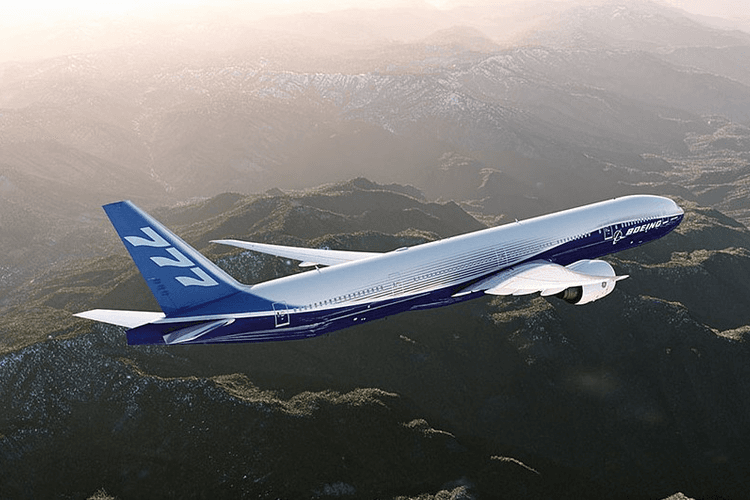
Humans scored a victory in the perceived battle for jobs versus robots this week, as aerospace manufacturing giant Boeing said it is abandoning a robotic system used to assemble fuselages for the company’s 777 jetliners and relying more on skilled mechanics for the job.
The robotic system had been used for the past four years at Boeing’s Everett, Washington production facilities and was in development for two years prior, but never paid off on its promise to reduce hand labor and errors in assembly — often requiring mechanics to complete the robots’ work and taking more total time than if done by hand from the start.
Reports from Bloomberg and The Seattle Times cited Boeing on Wednesday stating there are no planned changes in total staffing as a result of the changeover, which began in the company’s second quarter and should be finished by 2019’s end.
Going forward, the new human-plus-machine process will involve mechanics manually inserting fasteners into holes drilled along the circumference of the fuselage by an automated “flex tracks” system that has been long-used by Boeing on its 787 Dreamliner.
“The flex track solution has proven more reliable, requiring less work by hand and less rework, than what the robots were capable of,” Boeing spokesman Paul Bergman reportedly said in a statement.
The purely robotic system involved holding the 777 fuselage’s large curved metal panels right-side-up in a cradle as the robots stitched the panels together by simultaneously drilling holes and adding thousands of fasteners.
The Seattle Times noted that the technology was gradually implemented starting in 2015 at the Everette site, but the robots immediately proved error-prone and difficult to set up, resulting in damaged fuselages and some that were assembled incomplete and had to be manually finished.







![Industrial 3D Printing Market Expected to Hit $16 Billion by 2020 [Report]](https://machinerys.net/upload/cache/202507/industrial-3d-printing-market-expected-to-hit-16-billion-by-2020-report.webp)