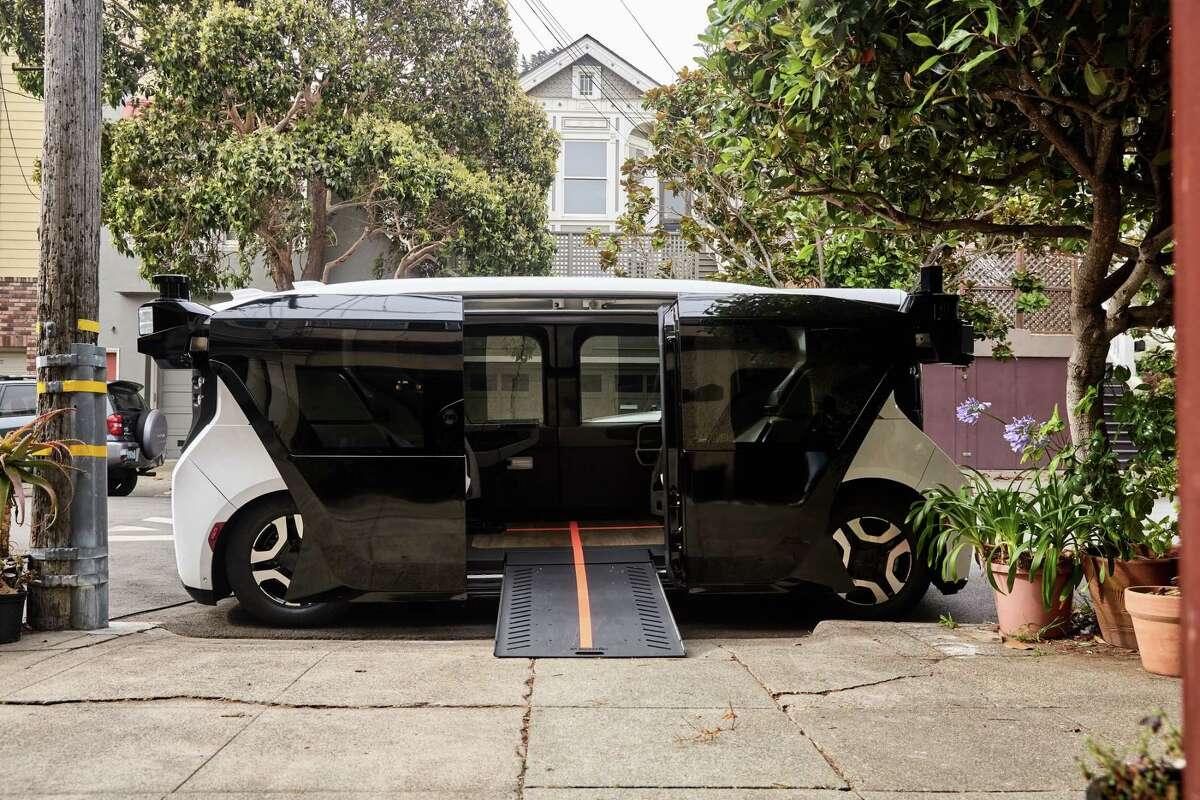
Cruise, an autonomous vehicle company owned by General Motors, revealed Cruise WAV, a self-driving vehicle that can accommodate people with disabilities.
The vehicle is based on the company’s autonomous Origin model, which omits pedals and a steering wheel and is designed for passengers to sit facing each other. The rectangular WAV features a retractable ramp for curb access without assistance, a dock-based system for power wheelchairs, and straps for manual wheelchairs. After testing, Cruise plans to update the design based on user feedback.
Reuters reported that the company announced plans to begin closed-course testing for the WAV in October and to launch the vehicle with a pilot for a select group of users in 2024. The WAV comes from three years of testing and development between GM, Cruise, and accessible vehicle design partners Q’Straint and BraunAbility.
Cruise is awaiting a decision from the National Highway Traffic Safety Administration (NHTSA) on a petition to deploy 2,500 Origins per year. The WAV would also need regulatory approval before Cruise can offer its services in cities.
In August, the California Public Utilities Commission (CPUC) authorized Waymo, an Alphabet-owned autonomous driving technology company and a competitor of Cruise, to offer commercial passenger services using driverless vehicles in San Francisco.
Image Credit: Cruise/Raymond Rudolph Photography