SaaS, IaaS, DRaaS, UCaaS, PaaS, CCaaS… Just when you thought there wasn’t anything else that could be packaged “as-a-service,” robots are joining the game.
With RaaS, businesses lease robots on the cloud or rent the devices. With cloud service, businesses gain access to data collected by the robots (e.g. on manufacturing lines, in warehouses, or stores) and stored in the cloud. Otherwise, the business rents the robots and subscribes to a shared software model, a popular model as it is cost-effective, broadly accessible, and attainable for businesses of diverse scale.
Making robots available as a service is contributing to the “democratization” of robotics. This trend, according to RaaS provider Niryo, rests on several advantages:
-
Connected with the Internet of Things, they are expanding automation’s reach
-
With a service model, it’s easier to stay up-to-date with the latest versions of the technology
-
Robots can be managed and monitored via web, reducing location constraints
-
Programming can synchronize multiple robots to work together
Robots have already been put in service in many industrial areas such as manufacturing, retail, and warehouses.
RaaS in Manufacturing
Robots are evolving to handle more data, improve their data perceptions, and enhance their decision-making skills. By utilizing programmable and customizable robots, manufacturers become more agile and efficient.
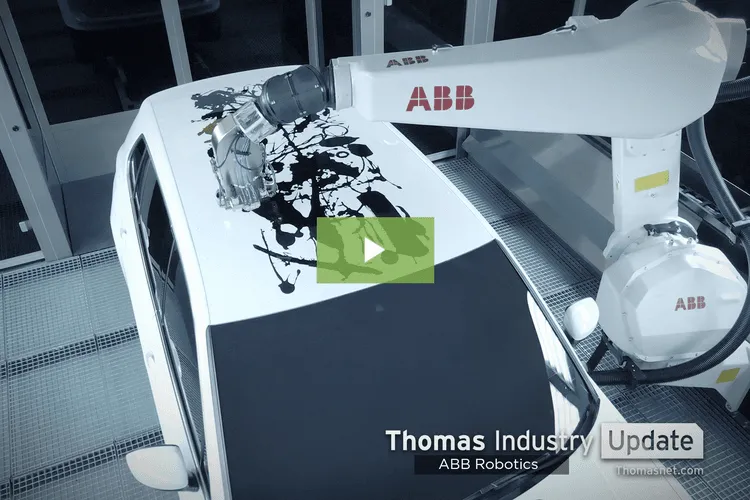
While the RaaS model is already common in the automotive industry, other manufacturing areas are now also starting to utilize the digital solution. Metal foundries, fabrication, food, and consumer goods manufacturers have all quickly embraced robotics prompted by growing labor costs, increasing difficulty in hiring skilled workers, and the dropping cost of robotics systems. Additionally, the maintenance costs for a leased robot fall on the service provider, which takes away the risk of unexpected repair expenses.
RaaS in Retail
It’s unlikely we’ll be seeing boutique retailers employing robots soon, but for mid-segment and big-box retailers, there are major advantages. Stock monitoring and inventory control can be performed accurately and efficiently with RaaS. Meanwhile, larger brands such as Walgreens, Staples, and Gap are using robotics to improve customer interaction, predict consumer trends, and improve shipping and delivery practices.
Other examples include:
-
Walmart using mobile robots to more accurately identify shelving label problems using cameras
-
Nestle putting a humanoid robot in Japanese department stores to help sell its coffee makers
-
Target using a robot to scan item placement in aisles and check inventory levels
RaaS in the Warehouse
Logistics fulfillment is another prime area for RaaS solutions. “Funding in robotics has been incredible over the past several years, and for good reason,” said John Santagate, research director IDC, in a statement to TechCrunch. “Products must move faster and more efficiently through the warehouse today to keep up with consumer demand, and autonomous mobile robots offer a cost-effective way to deploy automation to enable speed, efficiency, and flexibility.”
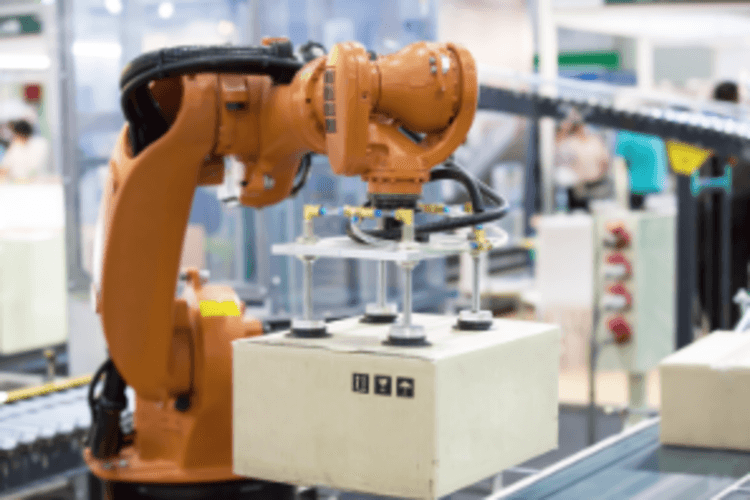
Los Angeles-based InVia Robotics in August 2018 gained $20 million in funding for its subscription-based robot platform. InVia’s movable puck-shaped base has a scissor lift that can raise and lower a platform with a robotic arm attached. The extendable arm, with a suction pump attached, can pull boxes forward and backward to take them to the employee pick-and-pack platform.
InVia sells the robots as a service. Their contracts are based on work the robot does, CTO Randolph Voorhies told TechCrunch. “We’re essentially charging them every time a robot has to bring a tote and present it in front of a person. The faster we’re able to do that and the less robots we can use to present an item the better our margins are.”
The Future of RaaS Solutions
The RaaS solution continues to evolve. Robots are developing to adapt in dynamic environments, manipulate objects more effectively, and interact in a way that better mimics human interaction. Robots are no longer the stuff of the future in supply chain – they are the now.