In the ever-evolving logistics landscape, last-mile delivery has become a focal point for innovation. Among the cutting-edge technologies reshaping this sector, delivery robots have emerged as a transformative force, streamlining the last leg of the supply chain and boosting efficiency.
Below, we do a deep dive into delivery robots by profiling key players in the field, delving into upcoming innovations, and evaluating the pros and cons of integrating robots into last-mile logistics operations.
What Are Delivery Robots?
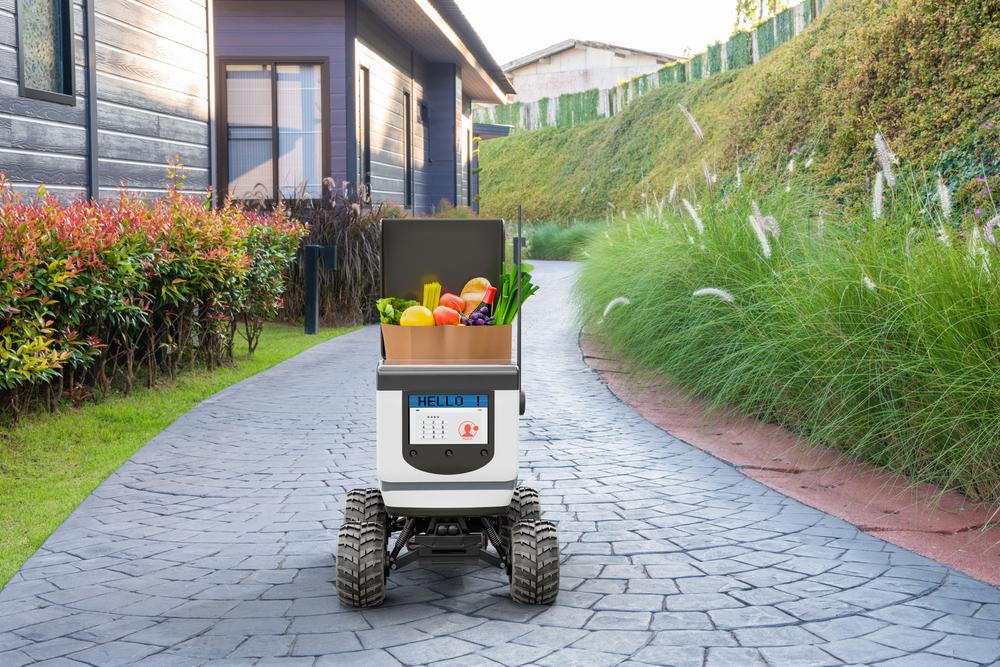
Delivery robots, autonomous ground vehicles (AGVs), or autonomous mobile robots (AMRs) are robotic systems that transport goods from a distribution center or hub to the end consumer’s doorstep.
These machines have cameras, sensors, and highly advanced algorithms that allow them to navigate urban environments, avoid obstacles, and adhere to traffic rules.
One notable example is the Serve robot, developed by Postmates and now owned by Uber. Serve is an electric, four-wheeled robot that carries food orders and packages directly to customers. These robots manifest the ongoing drive to automate and optimize the last leg of the delivery process, reducing costs and enhancing efficiency.
Related Insights
Major Players in the Delivery Robot Space
Several companies have made significant strides in developing and deploying delivery robots.
Among the major players, Amazon was among the first companies with its Scout delivery robot. Scout is a six-wheeled robot that autonomously navigates sidewalks, delivering packages to customers in select locations. Amazon, however, decided to end its program in 2022, according toBloomberg.
Serve is an eye-catching, box-shaped robot designed to navigate urban environments smoothly. Serve has been deployed in cities like Los Angeles, providing a glimpse into the future of last-mile logistics fulfillment. Recently, the company raised an additional$30 millionand went public as it continues to expand its service area.
Another notable player is Starship Technologies, known for its small, self-driving delivery robot fleet. These compact robots are equipped with multiple cameras and sensors to navigate pedestrian spaces safely, making them suitable for urban environments. According toits website, they have completed over five million deliveries.
Related Insights
Upcoming Innovations in Delivery Robots
The delivery robot landscape is poised for further innovation, strongly emphasizing artificial intelligence (AI) and machine learning (ML). These innovative technologies are critical in enhancing the robots’ ability to adapt to dynamic environments, optimize delivery routes, and interact seamlessly with pedestrians.
Amazon’s recent introduction of AI-powered robots is a testament to this trend. These robots are designed to improve delivery speed by autonomously sorting and packing packages. The integration of AI allows these robots to learn from experience, optimizing their performance over time and adapting to changes in their surroundings.
Machine learning algorithms are also being used to enhance the decision-making capabilities of delivery robots. These algorithms enable robots to adjust routes based on traffic conditions, road closures, and other unforeseen obstacles, ensuring efficient and timely deliveries.
Pros and Cons of Delivery Robots
Looking Ahead
Last-mile delivery robots represent a paradigm shift in logistics fulfillment, offering a glimpse into a future where autonomous delivery vehicles seamlessly navigate our streets, delivering goods efficiently.
As major players continue to invest in AI and ML, the capabilities of these robots are expected to evolve, addressing current limitations and expanding their role in the broader logistics ecosystem.
While challenges persist, the potential benefits, including efficiency, cost savings, and environmental impact, make delivery robots a compelling area of innovation in the rapidly evolving world of logistics.