Logistics on the battlefield are a challenge as conflicts are typically staged in remote or otherwise difficult to access areas. The military has been working on the problem for a while, and last year, the Army Research Lab made progress on 3D printing parts in the field using simple 3D printers to produce high-quality parts.
The idea is for soldiers to carry digital part files rather than traveling with physical parts. Delivering parts and other supplies to the battle arena is not only difficult, but dangerous.
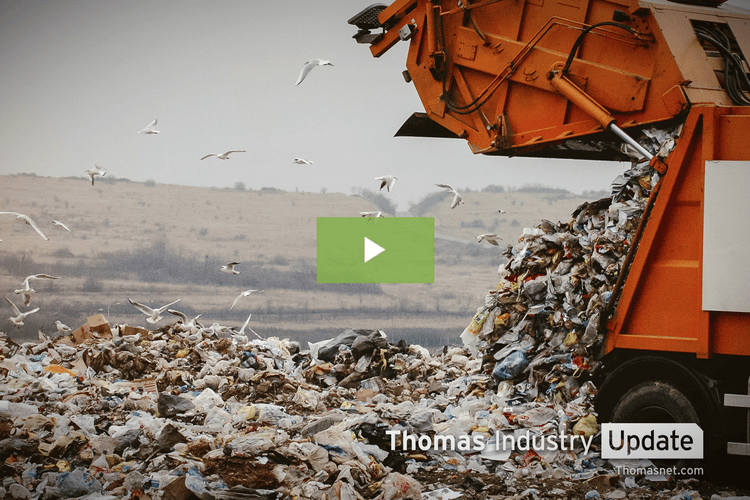
DARPA’s ReSource program has a similar drive. The program is looking for an integrated system that can convert plastics and other energy-dense waste into food and other chemicals that can be reused in the field. The Department of Defense wants a system that can work in extreme environments throughout long-term missions, using single-use wastes and other scavenged materials as feedstock.
For example, as Dr. Blake Bextine, ReSource program manager, says, "There is more energy in the packaging of an MRE than in the MRE itself.” But, ready to eat meals aside, ReSource could help change the ways soldiers receive critical supplies.
DARPA wants a self-contained system that rapidly produces large amounts of supplies from feedstock collected on-site.
In the first phase of the program, teams from Battelle, Iowa State University, MIT, Michigan Technological University, and other government partners submitted proof-of-concept studies that are a step in the right direction.
Battelle partners at the National Renewable Energy Laboratory came up with a way to use bacterial enzymes to digest plastic waste for recycling.
Researchers at MTU and a team at the University of Illinois received the 2021 Future Insight Prize for using microbes to degrade plastic waste and produce protein to generate macronutrients ready for immediate consumption. Sounds like a more sustainable soylent green!
DARPA is working with the FDA to make sure all food safety standards are met.Now, the program will enter Phase II. Teams will try to make their tech work in tougher conditions and process larger amounts of waste using less energy.