Imagine a world where artists throughout history had rejected technological developments for the sake of protecting traditional methods?
Portable paint-tubes and easels (allowing impressionists to paint outside), synthetic color, cameras, and printing would have deprived us of some of the greatest works of art including Monet’s Impression Sunrise, Renoir’s Bal du Moulin de la Galette and Andy Warhol’s Shot Marilyns.
It figures that the major technological advancements of today will filter into the art world as much as anywhere else, and judging by artists’ increased use of technologies such as augmented reality (AR), 3D printing, and interactive and digital art, it’s clear the perception of what defines art is changing.
The Vertwalker
One person who has been a key proponent of the intersection of art, design, and technology is creative engineer Julian Adenauer.
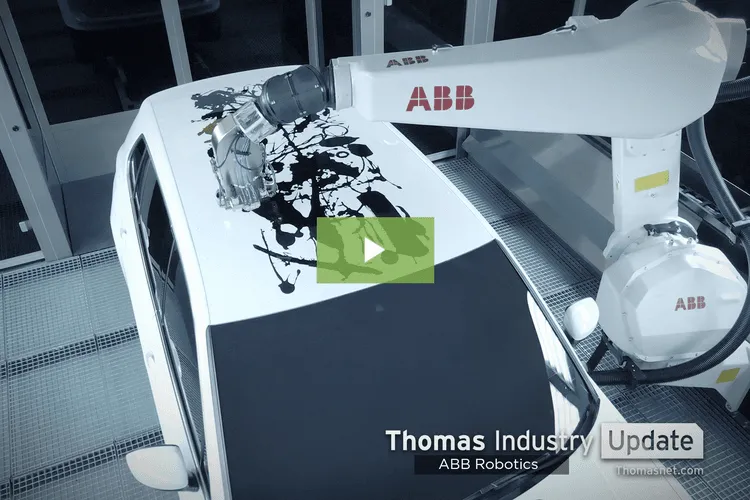
Back in 2014 Berlin-based artist Adenauer and his partner Michael Haas unveiled the third generation of their Roomba-like robot, the Vertwalker. Built with 3D printed materials, the robot walks up vertical surfaces holding a pen, which paints the wall with acrylic paints to create intricate geometrical patterns.
The robot has been exhibited at the Saatchi Gallery in London as part of its Colorspace series, as well as two installations in Berlin – Rising Colorspace and Sensing Colorspace. For each exhibit, the Vertwalker used colors inspired by its location, traveling in various directions or arcs or moving to respond to certain sounds. Some likened the experience of seeing the Vertwalker in action to watching birds peck around a garden.
Retune Festival
It’s six years later, and Adenauer is about to host the fifth biennial Retune Festival in Berlin. Retune describes itself as a Berlin-based platform for digital pioneers. The festival gathers hundreds of creatives to explore the boundaries of technology and the role of design, art, and culture in the future. Speakers come from all over the world to address the critical use of technologies. One of the 2018 speakers was Kimchi and Chips, whose installation series Drawing in the Air (a study of mass and space-time) featured 99 robotic mirrors that reflected sunlight into a cloud of water to create drawings out of sunlight.
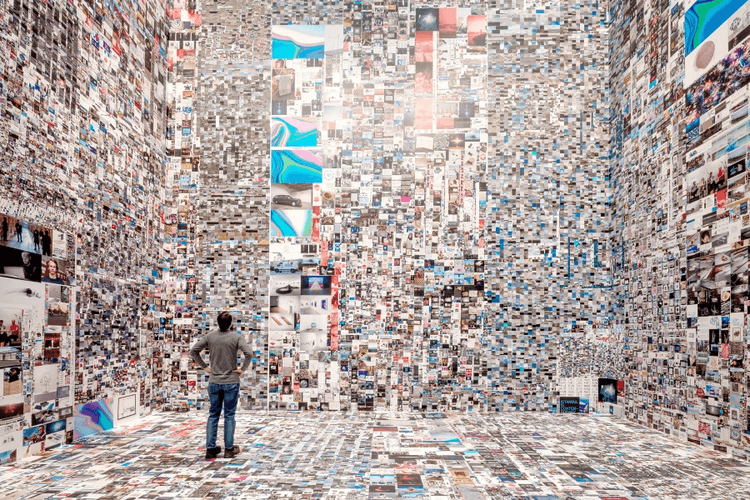
Another speaker, Evan Roth, recently created “Since You Were Born,”which displays an introspective view of his internet browsing data with an installation of saturated images including family photographs, corporate logos, and corners of Google Maps. The work sought to exhibit a new form of storytelling in a technology-obsessed world.
Speakers aside, workshops are a key focus of the festival, which actively encourages attendees to explore and uncover new technologies and push the boundaries of what’s possible for technology in art.
The Future of Technology in Art
Technology has the potential to transform so many aspects of the art world, some of which are listed below.
- As part of an installation – Artists often directly incorporate technology into their finished works of art. For example, Rain Room, an installation from Random International, uses 2,500 liters of water falling at 1,000 liters per minute to immerse visitors in a downpour, without them getting wet. The installation is fitted with motion sensors to stop water flow when it senses human movement below.
- In the creation process – Technology gives artists the means to create unique work using innovative methods. Sterling Crispin, for example, created Cyber Paintings, a series of digital prints on canvas designed through a virtual reality app he created called Cyber Paint.
- Increasing access in marketplaces – The art world has historically been criticized for being exclusive and elitist. There are several ways technology is addressing this. Firstly, technologies like blockchain work to democratize marketplaces. Maecenas, a blockchain app, allows buyers to purchase shares of a piece of artwork. Secondly, the internet (and in particular social media), has given all artists an equal opportunity to reach audiences and share their work. Thirdly, whilst some people would argue that viewing art through a screen devalues it, many don’t have the opportunities or ability to visit galleries in person. Google’s Arts & Culture platform allows users to virtually explore museums and galleries, including NYC’s The Guggenheim.
- Increasing inclusivity – Technology is making it easier for museums and galleries to educate visitors about art via apps that serve as virtual tour guides. The Peabody Essex Museum, for example, employed an in-house neuroscientist to optimize the design and layouts of exhibits to enhance peoples’ experience.
Traditionalists will continue to argue that technology threatens the integrity and value of art, whilst others recognize its enormous and endless potential.
As Steve Jobs once said, "Technology alone is not enough — it’s technology married with liberal arts, married with the humanities, that yields us the results that make our heart sing.”