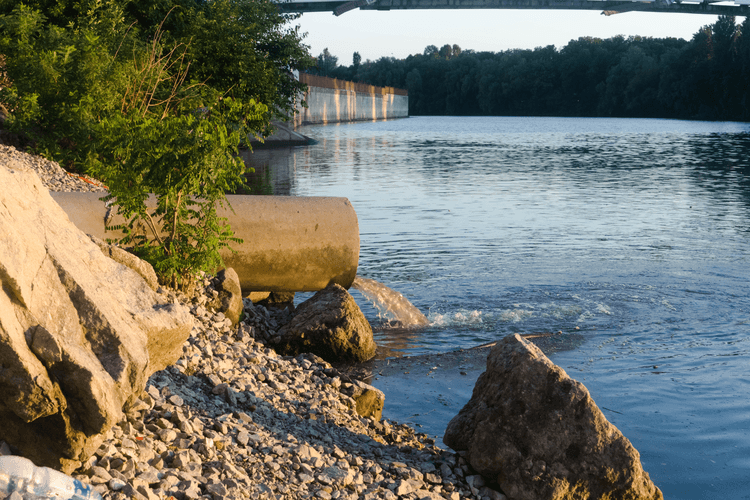
While construction sites have a number of important considerations to keep in mind during the building process, one of the most impactful – yet often less prioritized – is the importance of stormwater runoff.
Not even large-scale construction projects are immune to stormwater runoff and drainage pollution risks. Legoland New York Resort, a new $500 million, 150-acre theme park currently under development in Goshen, New York, recently learned this lesson the hard way.
Since initial concerns first surfaced in May 2018, the New York State Department of Environmental Conservation has cited Legoland for construction runoff and local waterway pollution 28 times in addition to numerous town-issued citations.
The park’s owner has also been fined upwards of $275,000 for failing to adhere to regulations and on-site crews been forced to halt construction numerous times to focus on-site improvements to address the stormwater pollution issues. Because of these repeated delays, the project may be completed later than planned and the theme park may open later than anticipated, further impacting the project’s success.
The Importance of Stormwater Management
To prevent the damage caused by stormwater runoff and pollution, and to adhere to town, state, and national level regulations, industrial and commercial projects like Legoland’s new theme park must implement stormwater management practices specifically focused on on-site assessment and identification of control measures.
In most cases, this means developing a Stormwater Pollution Prevention Plan (SWPPP).
An SWPPP is defined by the Environmental Protection Agency (EPA) as “a written document that identifies the industrial activities conducted at the site, including any structural control practices, which the industrial facility operator will implement to prevent pollutants from making their way into stormwater runoff.”
The Clean Water Act requires many industries to obtain National Pollutant Discharge Elimination Systems (NPDES) permits, which involve developing an SWPPP. These sectors include, among others:
- Heavy manufacturing
- Mining
- Hazardous waste treatment
- Waste management
- Power generation
- Transportation
However, anyone can develop an SWPPP to minimize the stormwater pollution generated by their development project.
How to Develop a Stormwater Pollution Prevention Plan
The EPA breaks down the SWPPP development process into four steps:
- Assembling a team of qualified individuals to handle pollution prevention matters. This team is responsible for creating the plan, as well as assisting the facility with the plan’s implementation.
- Evaluating the site for possible sources of stormwater pollution.
- Choosing relevant control measures that will lead to a reduction in stormwater pollution.
- Establishing monitoring, inspection, and maintenance procedures.
The Advantage of Using Modular Equipment in Stormwater Management Plans
To develop and execute a proper SWPPP, especially when considering steps three and four of its development process, control equipment should not only minimize pollution but also be practical, easy to implement, and cost-effective so as not to negatively impact the overall budget of the construction project.
Modular systems serve as an ideal solution for pollution avoidance on-site, as they:
- Can be designed to meet a variety of requirements
- Typically don’t require construction or specialized permits, saving time, money, and paperwork
- Can be installed quickly and are operational almost immediately
- Are portable, allowing them to be used virtually anywhere
Case Study: Hydro Engineering Modular Equipment Solutions for SWPPPs
To address construction-related stormwater pollution the product development team at Hydro Engineering designed the Hydropad, a patented, self-contained SWPPP wash rack system that’s portable and easily deployed. Because the modular equipment system doesn’t require permits, it can be transported, assembled, and used almost immediately upon site arrival.
Because the Hydropad wash pad is modular, sections can be connected to provide a wide variety of sizes with capacities to 75 tons per axle. Developed using a patented surface that facilitates drainage and a side gutter to collect waste fluids and contaminants, the Hydropad can be deployed on virtually any compacted surface.
A Hydroblaster high-pressure washing system removes heavy layers of dirt, mud, and debris from industrial equipment or vehicles, which, along with the wastewater, are collected in the Hydropad’s patented side gutters.
Finally, collected wastewater is processed, treated, and recycled so it can be used again in the washing system, creating a closed-loop system. To achieve this clean water, the Hydrokleen processing system separates liquids from solids and removes contaminants as small as one micron, including oils, hydrocarbons, heavy metals and chemicals.
Hydro Engineering Modular Equipment for On-site Stormwater Pollution Prevention
Hydro Engineering, an ISO 9001:2015 certified company, has over 30 years of design and engineering experience focused on developing industrial washing equipment solutions all with consideration of safety, conservation, environmental impact, ease of use, and rugged reliability. Our equipment is certified according to appropriate standards, including CE, CSA, and UL, and is proudly manufactured in the United States.
To learn more about our SWPPP solutions, join us for a live demonstration or hands-on walkthrough of our portable wash racks, pressure washing, and wash water filtration systems at the upcoming ConExpo in Las Vegas, Nevada in March 2020.
This article was sponsored by Hydro Engineering.








![IIoT Spending to Jump 40% by 2024 [Report]](https://machinerys.net/upload/cache/202507/iiot-spending-to-jump-40-by-2024-report.webp)