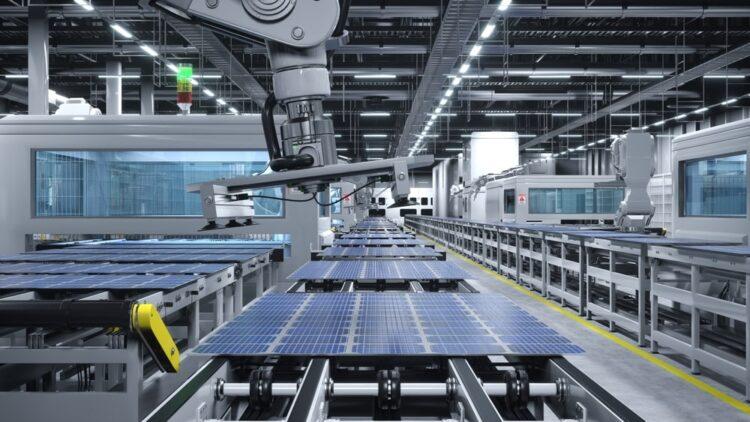
After years of relying heavily on importedsolar panelsand their components, U.S. domestic solar module production capacity is finally on the up. Thanks to major policy shifts and investment incentives, there has been a five-foldincreasein U.S. solar module manufacturing.
Ramping Up Solar Production
The Solar Energy Industries Association (SEIA) announced on February 3, 2025, that the U.S. solar industry has surpassed 50 GW.
This means that, as it stands, the U.S. is now the world’s third-largestsolar module producer, and can produce enough solar panels to meet the country’s demand—at least in theory. To reach 50 GW, all factories would have to be running at full capacity.
Companies On-Board
According to SEIA’s report, companies have committed to 56 GW of new solar cell production, 24 GW of wafer production, and 13 GW of ingots (necessary for key solar panel components). In addition, solar tracker manufacturing (which helps panels follow the sun) has topped 80 GW.
Companies like First Solar and ARRAY Technologies have greatly expanded manufacturing, with ARRAY even doubling its Albuquerque facility to produce 100% U.S.-made solar trackers by 2025.
Policy Incentives
This surge in solar manufacturing hasn’t happened by chance—a lot of work was put in, including the creation of targeted smart policies and incentives. TheInflation Reduction Actintroduced manufacturing production tax credits, making it more attractive for companies to build solar factories in the U.S.
SEIA has also pushed for solar ingot and wafer production to qualify for a 25% investment tax credit under theCHIPS and Science Actof 2022. These incentives have led to new solar cell factories opening in Georgia and South Carolina, with more on the way.
SEIA’s 50 GW Goal by 2030
Back in 2020, SEIA set the goal of reaching 50 GW of U.S. solar module production by 2030. Since the U.S. only had 7 GW of production capacity at the time, the idea of scaling up to 50 GW seemed a touch ambitious.
Exceeding all expectations, the goal was checked off the to-do list five years ahead of schedule.This milestone is a massive step toward energy independence for the USA, and a strong and reliable domesticclean energysupply chain.
Image Credit: Shutterstock/DC Studio