As electric vehicles (EVs) continue to amass popularity, certain standard vehicle features are getting kicked to the curb. While EV features, such as frunks and wireless charging, are making waves in industry, other features, like amplitude modulation (AM) radio, aren’t making the cut.
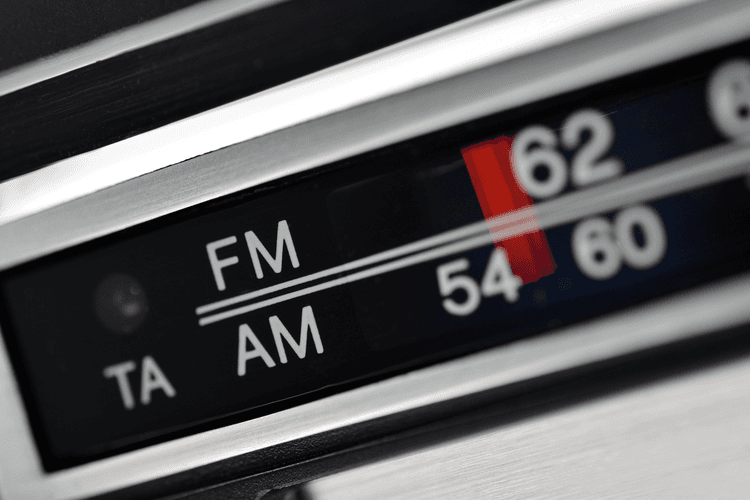
Historically, drivers of gasoline-powered cars have listened to traffic, weather, and entertainment news on AM radio, with 20% of U.S. audiences still tuning in. However, this practice may end with EVs for logistical reasons.
Why AM Radio and EVs Don’t Mix
Because speed controllers, electric motors, and other technologies in EVs emit frequencies like AM radio, electromagnetic interference can cause static when using AM radio in an EV. Frequency modulation (FM) waves, on the other hand, are more resistant to interference.
Radio interference is not an unfamiliar issue for car manufacturers. However, the intrinsic nature of the problem is prompting automakers to leave AM radio out of their vehicles. BMW, for example, started leaving AM radio out of its EVs as far back as 2013 when it launched the BMW i3.
Some EV manufacturers may allow the driver to access AM stations through FM frequencies. Tesla, for example, enables the driver to access AM stations through HD radio. HD radio takes the content of the AM frequencies and broadcasts them on an FM band, which can be picked up by vehicles.
But the fate of HD radio in EVs may also hang in the balance once automakers close the door on AM radio. General Motors already demonstrated this possibility when it removed HD radiofrom its trucks due to microchip shortages in 2021.According to theNew York Times, though, some experts maintain the problem is manageable. Hyundai, for instance, has made it clear that it doesn’t intend to phase out AM radio, which means the automaker may have found a way to work around the radio interference issue.
One reason to keep AM radio, according to Massachusetts Senator Ed Markey, is that AM radio is essential in helping government officials communicate with the public, specifically during emergencies.
Other Technologies Changing with EV Innovation
AM radio isn’t the only feature that isn’t fitting so easily into EV designs.
In the past, if you popped a tire while driving, you could pull over and head to the trunk for a spare. Unless you purchased the Ford F-150 Lightning, one of the only battery electric vehicles to come standard with a spare tire, you may find yourself out of luck when it comes time to change a tire. Today, most EVs do not carry spare tires for a number of reasons. One reason is that the weight of a spare tire can decrease the vehicle’s range. Another reason is that with the advance of tire pressure monitoring, many people know if a tire is getting low on air before it is flat so they take care of it before it becomes an issue. When a blowout occurs on the road, many people call a tow truck because they either don’t know how to change a tire themselves or because the car was damaged requiring it to be towed. Because EVs typically are sent off the lot without a spare, some drivers instead pack emergency tire puncture kits.
Another feature impacting EVs and combustion engine vehicles alike is in-car navigation. The Drive magazine, for example, suggests automakers should stop trying to incorporate in-car navigation into vehicles because automakers simply can’t match the mapping services offered by Apple CarPlay and Android Auto.
Whether or not EV manufacturers include AM radio or spare tires in their vehicles or not, future vehicle innovations are sure to excite.