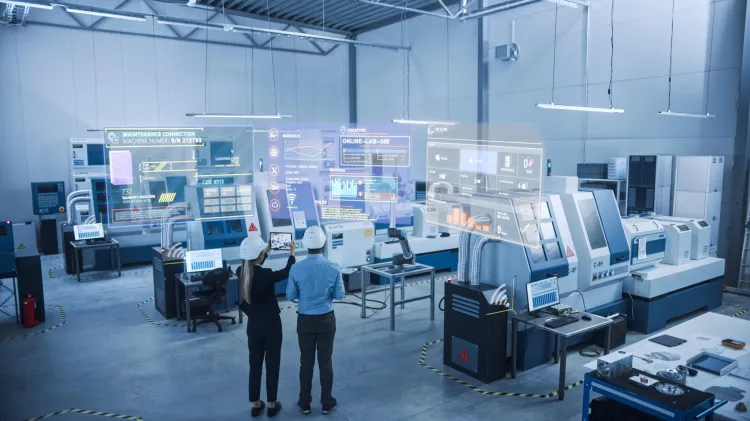

In today’s fast-paced world, cutting-edge technologies are fueling a transformative shift in the manufacturing industry. Among these, generative artificial intelligence (AI) stands out as a game-changer, enabling manufacturers to unlock new levels of efficiency, innovation, and cost-effectiveness.
With the advent of generative AI, the ability to deal with large amounts of data in machine manufacturing has become not only manageable but also an opportunity to gain a competitive edge.
Let’s explore how generative AI is revolutionizing the manufacturing industry, tackling the challenges posed by big data and reshaping the future of machine manufacturing.
The Rise of Generative AI
Generative AI refers to the use of artificial intelligence techniques to create new and innovative solutions autonomously. By leveraging deep learning algorithms, generative AI models are capable of analyzing vast amounts of data, identifying patterns, and generating unexplored designs, ideas, or solutions.
This technology is revolutionizing various industries, including machine manufacturing, by enabling manufacturers to tackle complex problems more efficiently and explore uncharted territories.
The Data Deluge in Machine Manufacturing
Machine manufacturers produce enormous amounts of data at every stage, from design and prototyping to production and quality control. This data holds valuable insights that can be leveraged to optimize processes, improve product quality, and reduce costs.
However, the sheer volume and complexity of this data have posed significant challenges for manufacturers, making it difficult to extract meaningful information and derive actionable insights. This is where generative AI comes into play.
Embracing Generative AI in Machine Manufacturing
Generative AI offers a transformative solution for dealing with the data overload in machine manufacturing. By utilizing technologies to manage large datasets, generative AI algorithms can learn from historical data, identify patterns, and generate optimized solutions.
This empowers manufacturers to streamline processes and optimize manufacturing operations. The adoption of generative AI leads to faster and more efficient decision-making, reducing time-to-market and improving overall productivity.
Generative AI and Optimizing Parts Pricing Strategies
Generative AI plays a big role in enhancing parts pricing strategies for machine manufacturers.
By leveraging advanced algorithms and machine learning techniques, generative AI models can analyze vast amounts of data, such as historical pricing trends, market dynamics, competitor behavior, and customer preferences. This deep analysis enables manufacturers to generate accurate and data-driven pricing recommendations for their spare parts.
Generative AI models can identify patterns and correlations within the data, highlighting key factors that influence pricing decisions. Manufacturers can then optimize their pricing strategies based on these insights, taking into account factors like production costs, demand elasticity, market competition, and customer value perception. The ability of generative AI to quickly process and interpret complex information empowers machine manufacturers to make informed pricing decisions, resulting in increased profitability, improved market positioning, and enhanced customer satisfaction.
Enhancing Production Efficiency
In machine manufacturing, optimizing production processes is crucial for achieving operational excellence. Generative AI can help manufacturers enhance production efficiency by analyzing large amounts of production data and identifying bottlenecks, inefficiencies, and areas for improvement.
By generating optimized process parameters, generative AI enables manufacturers to streamline operations, reduce waste, and improve overall productivity. This not only leads to cost savings but also ensures consistent product quality and customer satisfaction.
Real-Time Quality Control
Maintaining product quality is a top priority in the manufacturing industry. Generative AI can be a valuable tool for real-time quality control by analyzing sensor data, production logs, and quality data.
By detecting patterns and anomalies, generative AI algorithms can provide early warnings for potential quality issues, allowing manufacturers to take proactive measures and prevent defects. With generative AI, manufacturers can reduce the risk of product recalls, minimize waste, and maintain high-quality standards throughout the production process.
Enabling Predictive Maintenance
Machine breakdowns and unexpected downtime can significantly impact manufacturing operations and profitability. Generative AI can play a crucial role in enabling predictive maintenance by analyzing data from sensors, maintenance logs, and historical performance data.
By identifying patterns and predicting potential equipment failures, generative AI algorithms empower manufacturers to schedule maintenance activities proactively, optimize maintenance costs, and maximize equipment uptime. This ensures uninterrupted production, reduces unplanned downtime, and improves overall operational efficiency.
The Future of Machine Manufacturing
Generative AI is reshaping the future of machine manufacturing, offering unprecedented opportunities for innovation, efficiency, and cost-effectiveness.
As technology continues to evolve, we can expect further advancements in areas such as supply chain optimization and sustainable manufacturing. By harnessing the power of generative AI and effectively managing large amounts of data, manufacturers can propel their businesses forward, gain a competitive advantage, and shape the future of the manufacturing industry.
Generative AI has emerged as a powerful tool for machine manufacturing, enabling manufacturers to effectively deal with large amounts of data and unlock new levels of efficiency and innovation.
By optimizing parts pricing strategies, enhancing production processes, ensuring quality control, enabling predictive maintenance, and overcoming challenges, generative AI is revolutionizing the manufacturing industry. Embracing this technology and effectively managing big data will empower manufacturers to stay ahead in the ever-evolving manufacturing landscape, driving growth and success in the future.