The longtime challenge of printing steel and other alloys is changing, thanks to further research and trials from the University of Wisconsin-Madison.
Stainless Steel 17-4 PH
In the 1980s, additive manufacturing saw an upturn in possibility with the renderings of 3D printing. From basic consumer items to large-scale industrial pieces, 3D printing has had much room to maneuver. Even more so recently, researchers at the University of Wisconsin-Madison have found a way to produce a stainless steel known as 17-4 PH.
The 17-4 PH stainless steel variant is known for its consistent strength and resistance to corrosion. Although achieving that same strength can prove difficult, it could be used in industrial applications, from medical devices to aircraft, buffing up flexibility in manufacturing.
How It’s Made
A change in structural arrangement when heated by lasers in traditional 3D printers makes it hard for stainless steel to sustain toughness. However, using an X-ray beam, the changes can be countered using different chemical compositions, making for a stronger product.
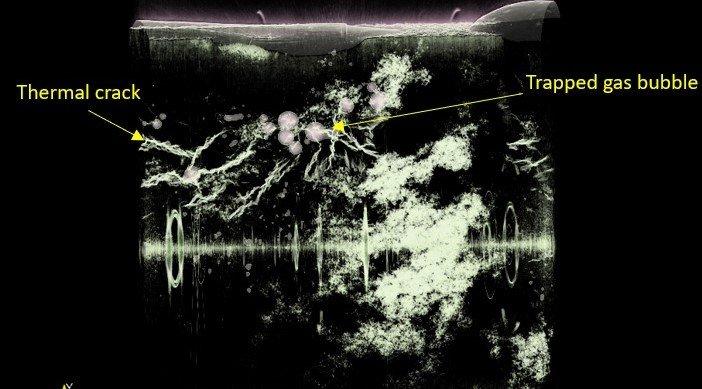
Within the 3D printing process of stainless steel, the printing of durable material can be collected by mapping connections between the crystal structure modifications and process parameters. Following the printing process come further x-rays to find anomalies in the structure, indicating the strength of the steel itself.
A manufacturing switch to this new printing process could save money while efficiently producing one of the strongest steels known.
Image Credit: Argonne National Laboratory