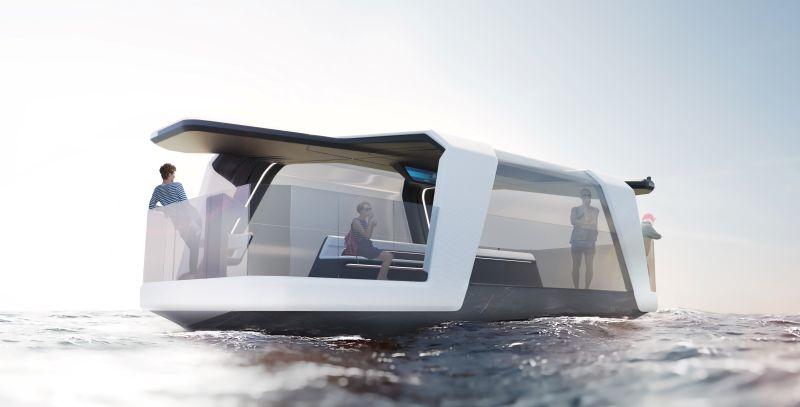
Holland Shipyards Group, Sequana Développement, and Roboat began production of an autonomous passenger ferry for the 2024 Summer Olympics in Paris.
French navigation authority Voies Navigables de France (VNF) selected the three companies to build the zero-carbon vessel. Roboat hosted a “keel printing” ceremony at its Amsterdam facility, where a 3D printer constructed the boat’s bottom-most longitudinal structural element.
The group called the ferry, which measures nine meters long and four meters wide, the largest 3D-printed boat in history. Its capabilities include electric propulsion, wireless charging, and automatic docking and mooring. Additionally, the conglomerate used recycled materials to 3D print the hull.
Roboat CEO Ynse Deinema praised the development and said autonomous ferries would create new connections over cities’ waterways. The vessel is expected to accommodate 35 people on trips along the river Seine between the Athlete’s Village and the island of L’Île-Saint-Denis.
Following construction and testing, the companies will ship the boat to France, where it will be deployed next summer. A deployment location has not been disclosed to the public.
The ferry aligns with the Olympic committee’s goal to reduce the games’ emissions and offset the carbon dioxide it generates. Autonomous ferries could also help Paris decrease traffic congestion and emissions.