The U.S. Army announced its development of small robots that can replicate a mantis shrimp’s punch. The ongoing research could reveal new applications for the spring-under-pressure principle, which could improve and simplify the design of civilian and military equipment.
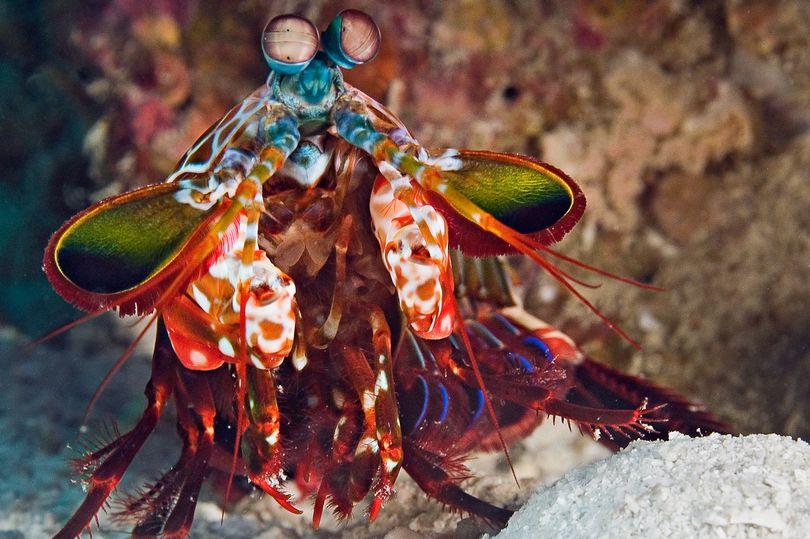
Mantis shrimp, a marine crustacean that averages four inches in length, boasts appendages that accelerate faster than a bullet from a gun. The animal’s punch is capable of breaking a snail’s shell and knocking off a crab’s arm.
Biologists have discovered other animals and plants that store springy energy and release it via a latching tool. In the case of the mantis shrimp, its sclerites are two small structures in the tendons of its muscles that serve as the latch. However, the mantis shrimp’s process differs from a conventional spring-loaded mechanism because of a delay that occurs after the unlatching of its sclerites.
In a paper supported by the U.S. Army, co-first author Nak-seung Hyun concluded that another mechanism holds the appendage in position once the sclerites release. The research team later discovered that the geometry of the appendage keeps it in place until it reaches an over-centering point. The paper’s first author, Emma Steinhardt, explained that the process improves the mechanical outcome of the system.
According to Dean Culver, program manager for the DEVCOM Army Research Laboratory, the research team exceeded accelerations created by limbs in other robotic devices tenfold.