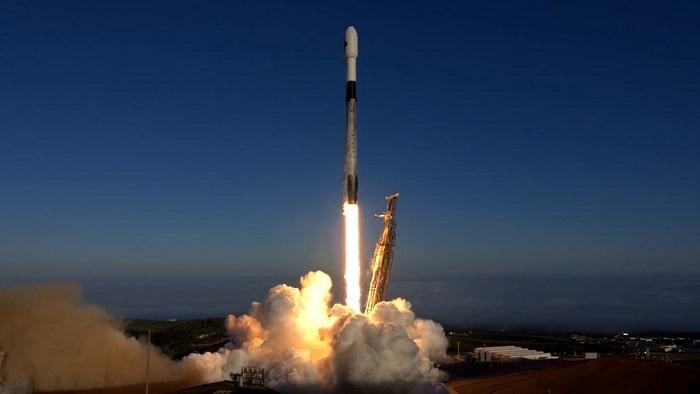
A SpaceX Falcon 9 with the USSF-62 WSF-M satellite. Image credit:SpaceX
On April 11, 2024, top American spacecraft companySpaceXannounced that itsuccessfully launcheda military weather satellite, the Weather System Follow-on—Microwave (WSF-M), into low Earth orbit (LEO) on the Falcon 9 rocket as part of the U.S. Space Force mission, USSF-62.
The $67 million Falcon 9 was launched at 7:25 a.m. local California time from the Space Launch Complex 4 East (SLC-4E) at the Vandenberg Space Force Base, California, returning to Earth at Landing Zone 4 just nine minutes later, safe and sound.
Weather System Follow-on—Microwave Satellite (WSF-M)
Developed and built byBAE systems, and instituted by the United States Department of Defense (DoD), theWSF-M, is a next-gen environmental Sun-synchronous LEO satellite system designed to collect and deliver weather data that will prove useful in many military missions.
The WSF-M incorporates two specialized devices that will,according toSSC Space Sensing’s WSF-M program manager, David Betz, help address critical gaps in DoD’s Space-Based Environmental Monitoring, including ocean-surface vector winds, tropical cyclone intensity, and LEO energetic-charged particles.
WSF-M Technology
The WSF-M features a passive microwave imaging radiometerinstrument, a specialized device that uses microwave signals emitted by Earth’s surface to create images and collect data about soil moisture, ocean salinity, ice thickness, and other environmental factors.
It also has a government-hosted furnished Energetic Charged Particle (ECP) sensor, ahigh-tech devicethat detects high-energy particles in space, something that the Air Force Space Commandwants to includeon all future space-weather monitoring satellites.
The USSF-62 Mission
As the 13th mission to launch from the Spaceport at theVandenbergSpace Force Base, the USSF-62 is also the second national security mission SpaceXhas undertakenin 2024. The mission’s aim is to provide important weather information for use in military operations.
The White House commissioned the WSF program after the National Polar-orbiting Operational Environmental Satellite System (NPOESS) was canceled, followed by delays to the development of the Defense Weather Satellite System’s weather satellite program which was based on NPOESS.
USSF-62’s WSF-M—Summary
SpaceX‘s successful launch of the WSF-M military weather satellite aboard the Falcon 9 rocket is a significant milestone in space exploration and national security efforts, and demonstrates the capability of private companies to support crucial military operations.
The senior material leader for Space Systems Command’s Launch Execution Delta, Air Force Col. Jim Horne, was confident about the satellite’s ability to improve military operations and defense against adversaries. The mission and launch highlight the importance of space-based weather monitoring, and the role of innovative technology in advancing national security and military capabilities.