Many native Australian animals have an astounding ability to survive bushfires. Fast-moving mammals such as kangaroos, wallabies, and emus can bound or run to safety, while wombats and other strong-clawed diggers will hurriedly burrow underground when they sense the approach of a firestorm.
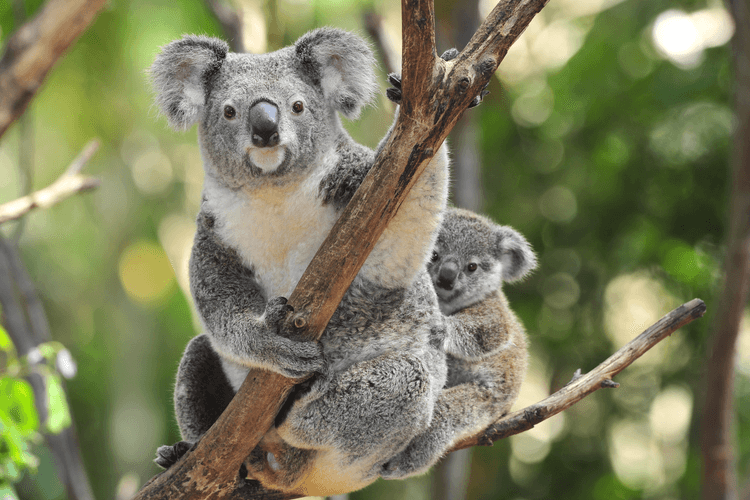
But for the slow-moving, tree-dwelling koalas, there was little hope of escape from one of Australia’s most horrific bushfires in living memory.
The devastating 2019 to 2020 bushfire season in Australia killed at least 33 people, destroyed over 2,000 homes, and burnt over 27 million acres of forests. The number of animals killed across Australia has been estimated at anywhere between 480 million and one billion, a figure that doesn’t include frogs, insects and other invertebrates. And even before the bushfires, Australia’s koala population was contending with deforestation and the effects of climate change, with some scientists declaring the species functionally extinct.
It’s a bleak picture, but environmental and animal conservation groups are stepping up to the challenge to help koalas recover with the help of technology.
1. Rescuing Injured Koalas
On Kangaroo Island, teams are conducting helicopter-based aerial surveys to locate koalas use thermal-imaging cameras that detect koala heat signatures. Ground-based teams then move in to rescue the koalas and take them to a clinic for treatment if necessary. Drones are sent into the treetops to hover close to koalas so their health can be assessed remotely by photograph or video.
2. Monitoring Food Availability
Koalas die of starvation in a burnt-out landscape, which is why a Melbourne environmental analytics firm has donated satellite-observation maps to rescuers on Kangaroo Island that show vegetation cover and identify burnt-out areas. Drones with infrared cameras are also being used to fly over burnt blue gum plantations and spot koalas that either need rescue or resettlement to areas with unburnt vegetation. Injured koalas are pulled down from burnt trees by rescuers using long poles or mechanized cranes.
3. Tracking Koala Movements
There is much to be learned about how koalas use the landscape after a fire. A team in New South Wales known as Science for Wildlife fitted radio tracking devices to two dozen rescued koalas before releasing them back into the wild. The devices will tell rescuers where else they may find other pockets of surviving koalas and give valuable data to help understand and mitigate the impact of climate change on koalas. Finally, radio-tracked koalas can be more easily located and moved if they are in the path of future bushfires.
4. Preparing for Future Bushfires
The scientific consensus in Australia is that although climate change does not cause bushfires, it contributes to the conditions that do so and will lead to more frequent and more intense bushfires every year. Even now, communities in Australia that were impacted by the 2019-2020 summer fires are bracing for the 2020-2021 fire season, with the added complication of the COVID-19 economic shutdown.
The knowledge that wildlife researchers and rescuers have gained in the earliest parts of this year will be invaluable for discovering new ways to help koalas and other mammals adapt to extreme conditions and help unique species survive successive waves of bushfires.