The glut of new technologies can cause paralysis by indecision. Luckily, the following advances are unambiguously beneficial across the board and great options to pursue in your industrial facility.
1. Big Data Powers Big (Machine) Learning
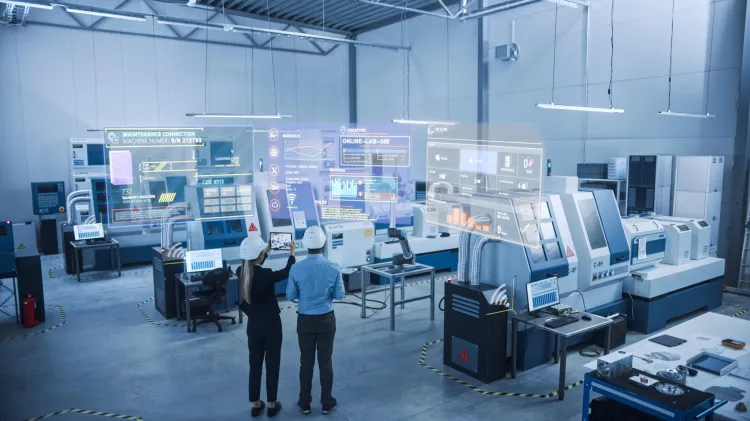
Big data is collected through numerous means, all of which are becoming more efficient due to … big data. Smart sensors record treasure troves of instantly and globally shared information thanks to the worldwide connectivity of IoT (Internet of Things) processes.
Overall, this data increases supply chain efficiency by uncovering production bottlenecks, revealing wasteful practices, finding faults, minimizing errors, and reducing unscheduled downtime by 25%, potentially saving many millions of dollars for its adopters.
2. Predictive Maintenance Preempts Breakages, Prevents Downtime
That unscheduled downtime is destructive. And the increased sophistication and prevalence of machines have expanded the potential for disruption. For example, an auto manufacturer may incur losses of $22,000 for every minute of inactivity and may suffer 1,000 hours of downtime per year.
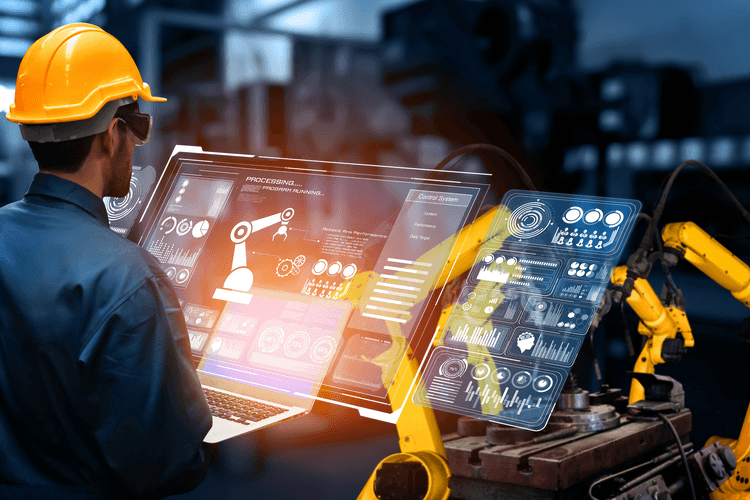
Yet a productive predictive maintenance (PdM) program can fix things preemptively by anticipating the inevitable. A robust PdM routine can reduce breakdowns by 70%, cut maintenance costs by 30%, and “help yield a tenfold increase in ROI.”
3. BIM Allows Virtual Modeling and Modification
BIM (building information modeling) models the grandest engineering and building projects. And its use is increasing, with more than 50% of surveyed architects, contractors, and civil and structural engineers all lauding its utility. Moreover, it’s projected that 70-80% (or more) of these experts will rely on BIM by 2024.
One of BIM’s greatest advantages is virtuality. It allows builders and designers to simulate their creations before setting a single brick or girder. Then, diverse analyses can suggest safer, more efficient designs and construction strategies. Dull, repetitive bookkeeping-type tasks can also be automated, freeing human minds to pursue creative aspects.
4. 3D Printing Quickly, Cheaply Makes Custom Parts On-site
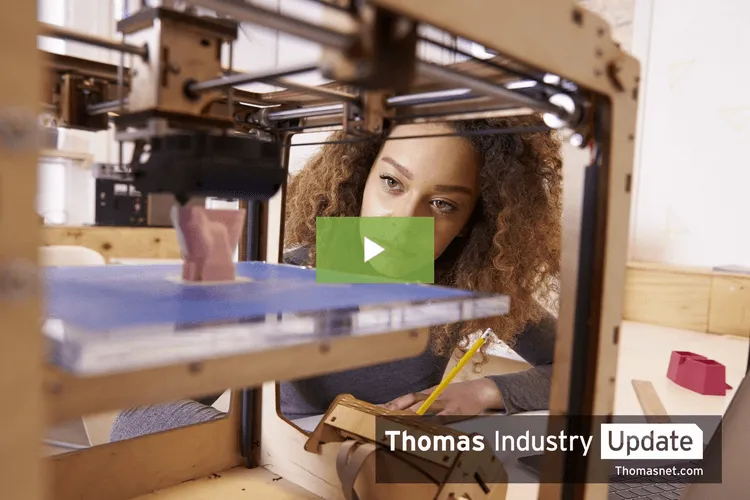
Additive manufacturing, such as 3D printing, is fast becoming a mainstay of many massive industries. It’s among the most accessible and straightforward production methods available, with next-gen versatility and the potential to cut costs, labor time, and error rates.
Automotive fabricators can print pieces for multi-part assemblies or even end-use items such as steering wheels. Aerospace organizations make strong yet lightweight components for aircraft. In space, NASA printed a wrench and other tools on the ISS to save on launch costs. On Earth, printed robot arms boast an indefatigable, economical work ethic.
In the medical field, “bioprinting” creates layers of cells that morph into living human tissues. And structural printing could cheaply create in-situ otherworld habitats on Mars or the Moon. No wonder the 3D printing domain has grown to $21 billion circa 2021, ballooning from $4.4 billion in 2013.
[Get instant pricing, lead time, and DFM feedback for your next 3D printing project here.]
5. Cleaner Tech and Transparency Reduce Environmental Impact
Circular manufacturing reduces the eco-impact of the materials market through more sustainable sources, with “circular” production parts meant to be reused or recycled. Additionally, AI systems and ubiquitous IoT capabilities constantly calculate better means of production, marketing, and transport.
Fuel use is also changing, with industries adopting biofuels made from unconventional resources like algae or waste. These strategies provide an ecological boon, cutting prodigious power requirements, as heavy industry annually uses “700 times more power than the most powerful nuclear weapon ever detonated.”
Technological Inertia Is Unstoppable
Industrial evolution is an irresistible tide, so don’t get left in the dust. Make your industrial facility future-compliant by reaping the rewards of smarter, faster, Earth-friendly tech advances.