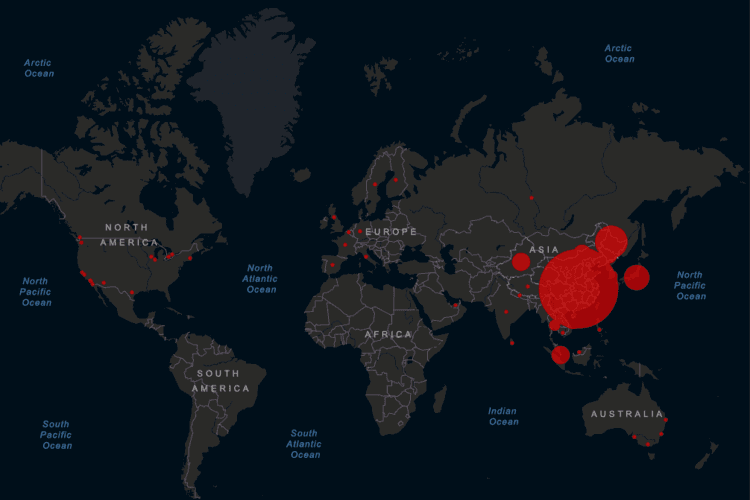
Artificial intelligence (AI) has proven helpful across nearly every industry: the tech has already proven helpful in the evolution of agriculture, construction, and even wildfire management, and is showing no signs of stopping. Most recently, reports are showing the impact of the technology in dealing with pandemics, specifically the emergence of coronavirus.
Since the virus’ announced outbreak on January 9 in Wuhan, China, the country has reported 59,984 people to be infected with a current death toll at 1,367. While these numbers may seem significant, the CDC urges the public to understand that the fatality rate for this strain, COVID-19, is low and investigations across the world are currently underway to prevent the virus’ spread and find a successful treatment plan.
What makes COVID-19 particularly unique is not just the strain itself; the virus has broken out during a technological revolution, resulting in new ways for the world to treat and monitor the virus.
Early Detection
Early detection of a new virus strain could be crucial to containing the virus, and numerous AI startups have developed technology to aid in the process. Although the World Health Organization (WHO) didn’t notify the public of what was first called a "flu-like outbreak” in China until January 9, a Canadian health monitoring platform claims to have sent a notice out to its customers as early as December 31. BlueDot Inc. also accurately predicted where the virus would spread to next.
So how did BlueDot do it?
According to a Wired article, the company uses global news reports, animal and plant disease networks, airline ticketing data, and official announcements to detect and predict epidemics. After the data is collected, it’s monitored and reviewed by human epidemiologists, who compile reports to send to government clients.
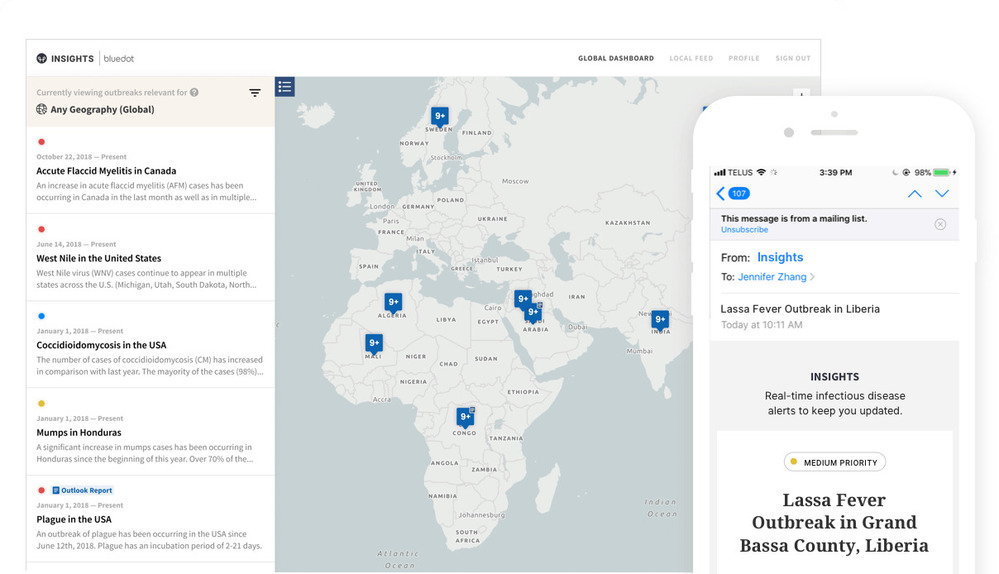
"We know that governments may not be relied upon to provide information in a timely fashion,” said Kamran Khan, BlueDot’s founder and CEO, to Wired. "We can pick up news of possible outbreaks, little murmurs or forums or blogs or indications of some kind of unusual events going on.”
The company claims they were able to predict COVID-19’s spread from airline ticketing data for travelers coming from Wuhan to Bangkok, Seoul, Taipei, and Tokyo.
Finding a Cure
Not only is AI being put to use in detecting and tracking the spread of COVID-19, but it’s also helping doctors develop a cure. Fortune recently reported on a startup called Insilico Medicine, which has used artificial intelligence to more efficiently identify molecules that could be the basis for the treatment of the virus.
According to the article, Insilico took just four days to generate possible molecule designs for treatments. It synthesized and tested the top 100 promising candidates before publishing library of options to its website for researchers. After narrowing their designs to six feasible options, the startup publicly released its findings to medical professionals so they could further research the validity and hopefully develop effective treatment options.
After the release, another group took the findings one step further; BenevolentAI has found an already-approved drug that could potentially limit the virus’ ability to infect people.Despite what seems like very promising findings, BenevolentAI made sure to caution that their suggestion shouldn’t be taken as medical advice for treatment or prevention just yet. The company wrote that it published the findings to "assist in the global response” to COVID-19, saving resources and drug researchers’ time.
"The use of AI to augment human capacity, to address a pressing public health concern using existing data without re-deploying a full team, should be a boon to researchers,” the group said.