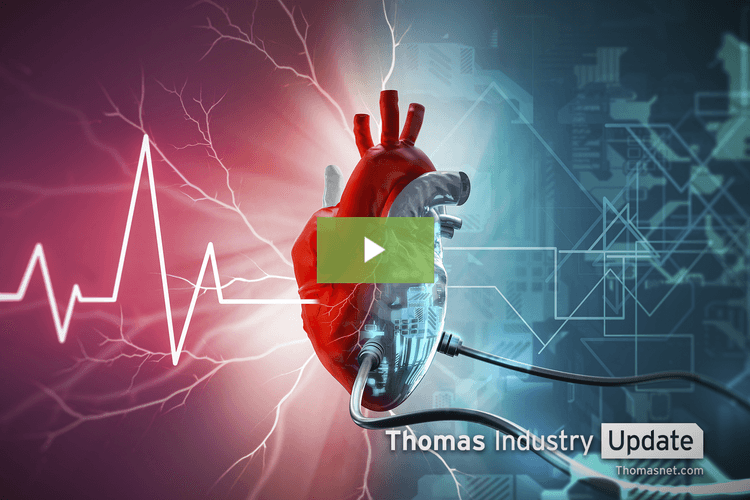
On August 20, 2021, a team of cardiac surgeons in Kentucky became the second in the U.S. to implant a new experimental heart.
The University of Louisville team implanted the artificial heart in a patient at the UofL Health – Jewish Hospital as part of an early feasibility study.
The Aeson total artificial heart was developed by CARMAT, a medical device company based in France. The heart consists of pumps and electronics, blood chambers, and conduits and serves as a bridge for transplant patients suffering from end-stage biventricular heart failure — which means heart disease is on both sides of the heart. The artificial heart could buy time for the more than 3,400 patients in the U.S. suffering from the condition and on a waiting list for a new heart. Until now, patients had few options.
A middle-aged man from Southern Indiana received the implant during a seven-and-a-half-hour surgery. The patient suffered from severe biventricular heart failure but is currently doing well in the cardiac surgery ICU. He wished to remain anonymous.
While previous devices only pumped blood in one chamber, the new device pumps blood in both heart chambers. Aeson has biosensors that detect blood pressure and can automatically adjust cardiac output based on the data. The device is implanted as a full heart replacement and powered by an external but portable power supply.
The first U.S. patient to receive the device was 39-year-old Matthew Moore from North Carolina. Moore was supposed to have heart bypass surgery, but his condition deteriorated rapidly, and the surgery was too risky. However, Moore was a case of being in the right place at the right time as Duke University was testing the device, and Moore was at Duke University Hospital when he coded for 45 minutes.
Aeson is pending U.S. Food and Drug Administration (FDA) approval. European regulators have approved it, and about 20 patients have received the implant overseas. The device underwent several years of patient tests, and not all of them were successful.
Still, the device could make an incredible impact on thousands of patients currently waiting in line for a new heart.