This article was sponsored by Winchester Interconnect, a Thomas Verified manufacturer of custom and standard cables, cable assemblies, hermetic seals, and connectors.
“We are a solutions-driven company,” says Olivia DeStefani, Director of Inside Sales and Customer Success at Winchester Interconnect.
For three-quarters of a century, Winchester Interconnect CM has been developing high-performing bulk cable, cable assemblies, and coil cord solutions for can’t-fail applications. Formerly called C&M Corporation, the global company has metamorphosed, growing its renowned team of experts in cable assemblies, cable, and coil cords to provide a broader range of products and services. No matter the connectivity challenge, Winchester Interconnect finds solutions that allow customers to thrive in their own ingenuity
“When prospects or customers approach us, it’s with a problem,” says DeStefani. “We like to get our engineers to talk to their engineers. We’ll collaborate with them to offer a solution.”
“We manufacture wire and cable, cable assemblies, and coil cords for application-specific solutions for harsh, ruggedized environments,” explains DeStefani. These rugged environments include shockproof solutions for offshore and land drilling equipment, fiber optics for aircraft radar systems, cable assemblies for weapons systems, and cable products for industrial robots.
For Alben Roland, Winchester Interconnect’s director of engineering, one success story for the company that impacted him was “definitely lighter cable for emergency use last spring for COVID.” Compliant to Class III and IEC 60601 as well as ISO 13485-certified, Winchester Interconnect is a leader in interconnect products for the medical technologies market — their connections save lives.
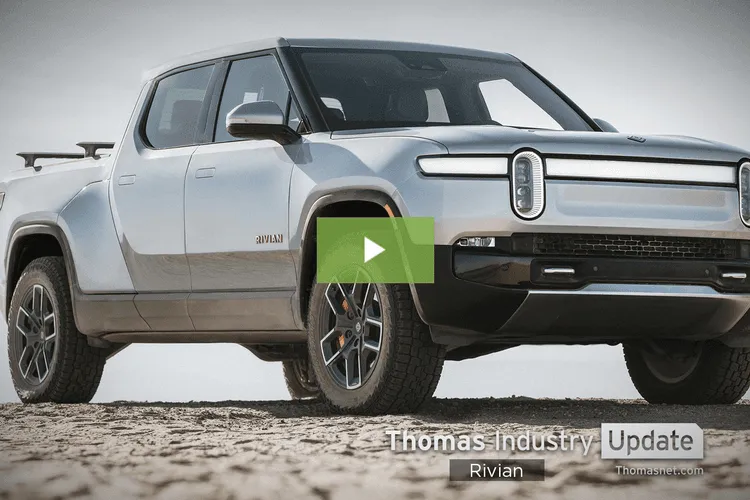
They also are working to improve the ease with which we live our lives with a new venture: “We’re just at the beginning stages of EV charging,” says John Laskowsky, the company’s vice president of cable manufacturing.
Read on to find out what one of the biggest challenges to the EV market is, the pressure and honor of working in a can’t-fail situation, and how Winchester Interconnect sensors are advancing Industry 4.0.
Get Connected to Winchester Interconnect
The company’s prototype engineering labs foster mechanical and electric computer modeling, rapid prototyping, and in-house verification testing. Among Winchester Interconnect’s key certifications are:
- ISO 9001 – Quality Management System
- ISO 13485 – Medical Device Quality Management System
- AS 9100 – Quality Management Systems for Aviation, Space, and Defense Organizations
- OHSAS 18001 – Occupational Health and Safety
- ATEX
- ETL
- IECEx.
Thomas Insights (TI): As a new player in the electric vehicle (EV) market, what concerns are you helping drivers overcome?
Olivia DeStefani (OD): Everything seems to be moving in the way of electric vehicles, and that’s something that we have solutions for.
John Laskowsky (JL): Only 3% of all vehicles today are EV, in America at least. That’s a big number to grow.
Until you have a big infrastructure of charging stations, people are very nervous about driving an electric car because they’re always thinking they’re going to run out of power and that they’re going to be stranded. Everybody is putting charging stations in everywhere. You don’t notice it if you don’t have an EV, but if you drive around, you see EV charging stations everywhere.
There is a 40% growth in EV charging stations. You see a lot of funding for it, and we offer multiple standard solutions for it. It keeps getting more and more demanding because people want to charge their cars very quickly, which requires some higher technology and safety that we spend time working on.
The interconnect we use is likely included on every tier-one automobile and electric vehicle in the world. We’re very well positioned.
TI: What’s it like working with the military, in applications such as military vehicles, electronic warfare, and even under-sea missions?
OD: Military vehicle components have to be really robust in order to ensure they’re not breaking down in the field. The military can’t afford to have soldiers out in the field and have a piece of equipment fail. We understand that we have to be in a can’t-fail situation.
When people are out in the field with the military, they’re not super delicate with the product. There is a lot of jamming or twisting. We’re really good about being able to say, "This is how the user is actually going to put this into place, and this is the solution that we can offer you that’s going to work for this application.”
They’ll tell us, "We need the cable assembly to do this task at a weird angle.” They have a cable or a cable assembly that’s breaking and needs to be really flexible and robust, and the customer hasn’t been able to find that in another solution. We’re able to work with them to develop a flexible solution that’s going to have a lot of longevity.
JL: We also work with rovers that go down and explore undersea trenches. It’s obviously a highly demanding environment. If you have a rover or a tethered rover exploring, you can have the tether fail and lose your rover.
TI: What’s something that isn’t widely known about your business that you’d like to highlight for the TIU readers?
JL: We map the world. When you see cars driving around mapping places around the globe, those interconnects for all the cameras and sensors came from Winchester Interconnect. All those street views are generated by our connection system with their cars.
TI: Can you share a specific success story where your team helped one of your customers?
OD: We worked with a large tech company out on the West Coast. It started out as a small program to solve a small issue. We went out there several times and had the customer come out to our facility here in Dayville, Connecticut, meeting with the team and seeing the capabilities we can offer. Through collaboration, it turned into a long-term project that integrated sensors and different cable assemblies that ultimately helped them come up with the perfect solution to their challenge.
I remember specifically one of the plugs on the end of their cable was meant to be installed in a specific way, but they needed a way to be able to install it blindly and without hurting the connector side. Initially, one of the engineers from the customer’s team thought that the newly developed interface was going to be great, but when they gave it to an installer he said, "I broke the thing off. I didn’t mean to, but I was trying to plug it in and kind of broke it off.”
Instead, we developed a new solution where their installers could do it a little more blindly without hurting the connector side. Plus, they were able to install it faster and better. That was a really cool solution we were able to come up with after we got some feedback from the people that were actually going to be doing the work.
TI: How is Industry 4.0 shaping your work?
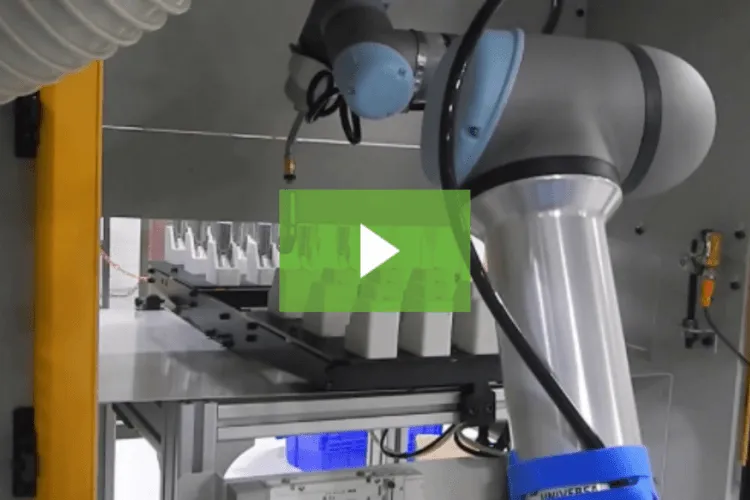
JL: Everything is going into automation and robotics. Everybody is starting to automate things in factories. It seems to only be growing and growing. If you see something from companies like Rockwell Automation, if you see Turck sensors, we’re the ones who do all the interconnects for them.