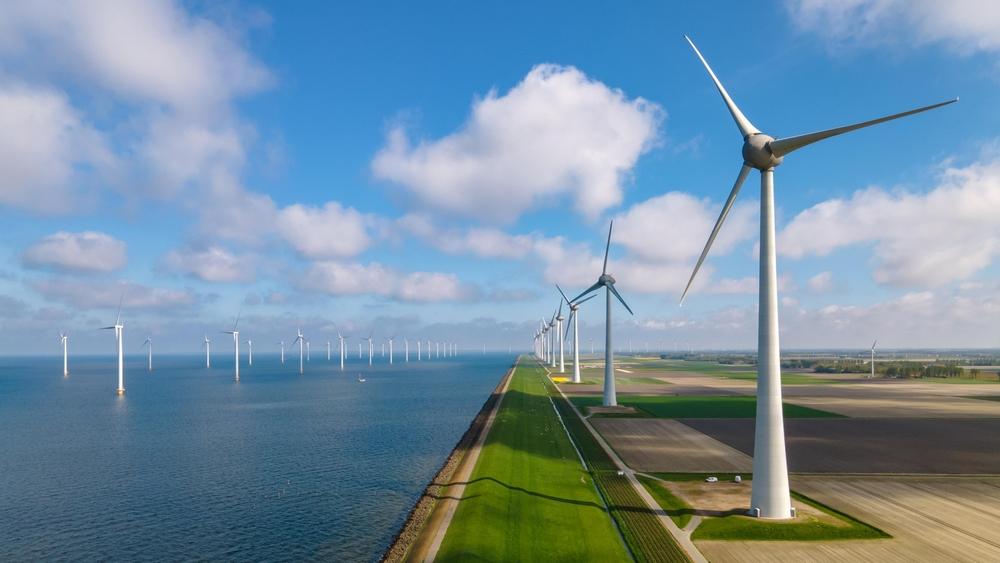
Is offshore wind power going to be the defining energy technology of 2024? Recent developments in floating wind turbine technology led by Norway’s Wind Catching Systems (WCS), Denmark’s Vestas, and UMaine’s Advanced Composites Center point in that direction.
How Does a Floating Wind Turbine Work?
A floating wind turbine utilizes a seabed-anchored and moored platform that allows it to harness wind energy in deep offshore waters where traditional fixed-bottom turbines cannot be deployed.
The biggest merit of this system is that it can support multiple turbines arranged in a grid, allowing them to capture wind from various directions—something WCS hopes to tap into with its lightweight structure, which is a far cry from today’s complex, large, single-turbine units.
Floating Wind Turbine Capabilities
Some offshore floating wind turbine systems, like Windcatcher’s, can generate up to 126 megawatts (MW) of power, which is up to five times the output of a 15-MW single-turbine setup.
UMaine’s Advanced Composites Center is also advancing its floating turbine prototypes that can be scaled up to 15-20 MW. For reference, just a decade ago, the maximum output of the average offshore wind turbine was around 4 MW.
Future Applications
Around 40% of the world’s population lives within 60 miles of the ocean, and when looking for the best way to clean up the global electricity supply, offshore wind farms could be the answer.
Both Vestas’ new 15 MW turbine on a Danish wind farm and the Windcatcher that towers over the Eiffel Tower and Statue of Liberty seem like promising solutions.
Back home, the U.S.’s proposed floating wind energy auctions for the Gulf of Maine will open new opportunities for large-scale floating wind projects.
Image Credit: Shutterstock.com / Unwicked