As driverless, autonomous vehicles come closer to becoming a reality, government agencies are reluctant to give them permission to take the streets – and for good reason. The technology, which is still cutting edge, will need to be rigorously tested before driverless cars can hit the highway.
From the autonomous vehicle race, a small subsection of driverless vehicles for deliveries has emerged, designed to drive on local streets in an effort to facilitate last-mile deliveries. Logistics companies Amazon and FedEx have already announced their own last-mile delivery bots, but have so far been limited to sidewalk travel.
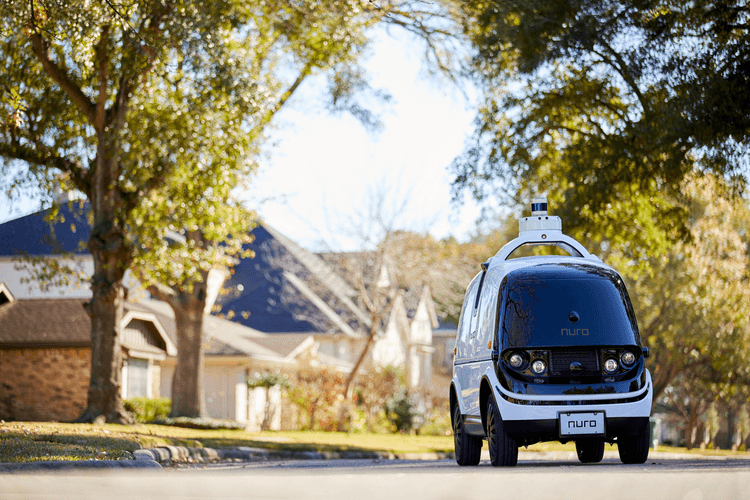
However, The National Highway Traffic Safety Administration (NHTSA) announced they would be giving an exemption to autonomous delivery vehicle company Nuro to begin public road testing on its low-speed, unoccupied electric delivery vehicle, the "R2.” It is the first company to receive such an exception.
A Big Step for Autonomous Delivery
Nuro already has a history of commanding autonomous delivery vehicles. In December 2018, the company released the "R1” and partnered with Kroger to make the first-ever unmanned deliveries for the general public in Scottsdale, Arizona. To expedite the exemption, Nuro voluntarily submitted a safety report to the U.S. Department of Transportation (USDOT) when it was in the process of approval for R1 testing in Scottsdale, and it seems like it paid off.
In the second round of street testing, the R2 will be taking the streets in Houston, Texas, deploying 5,000 R2 vehicles during the two year NHTSA exemption.
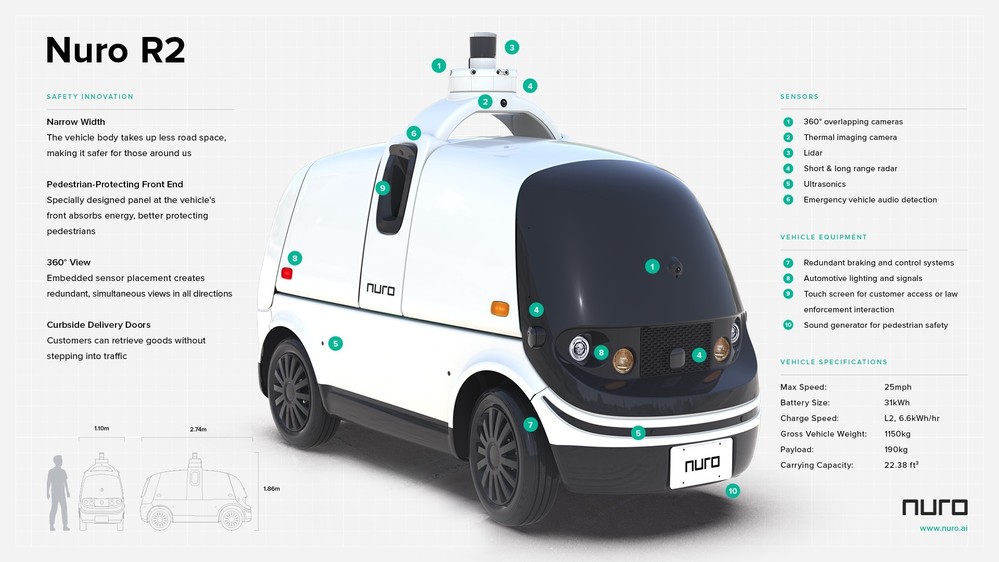
The exemption not only detailed permitting the vehicles to drive on public roads but also gave Nuro permission to be excluded from safety requirements for human-driven vehicles, like including windshield wipers and mirrors as part of the vehicle’s design. These features will be replaced by the R2’s various cameras and sensors. The NHTSA has emphasized that the vehicles will be closely monitored during the testing period.
“NHTSA is dedicated to facilitating the safe testing and deployment of advanced vehicle technologies, including innovative vehicle designs, which hold great promise for future safety improvements,” said NHTSA Acting Administrator James Owens in a press release. "As always, we will not hesitate to use defect authority to protect public safety as necessary.”
Nuro Co-founder Dave Ferguson wrote in a blog post that the exemption will actually make the vehicles safer for humans.
"It allows us to replace the mirrors relied on by human drivers with cameras and other sensors. We can round the edges of the vehicle body to take up less road space, and make it safer for those around us,” Ferguson explained.
"In addition, we can remove the windshield meant to let human drivers see out and keep passengers in — instead using a specially designed panel at the vehicle’s front that absorbs energy, better protecting pedestrians,” he continued. "And we won’t have to ever turn off the rearview cameras that help R2 see (part of a rule meant to avoid distracting human drivers), providing a constant 360-degree view with no blind spots.”
How Does the Nuro R2 Work?
The R2 will be a more refined version of the Nuro R1, updated with the small design changes Ferguson mentioned, and will also include zero-emission propulsion, a custom battery solution, and lower price point.
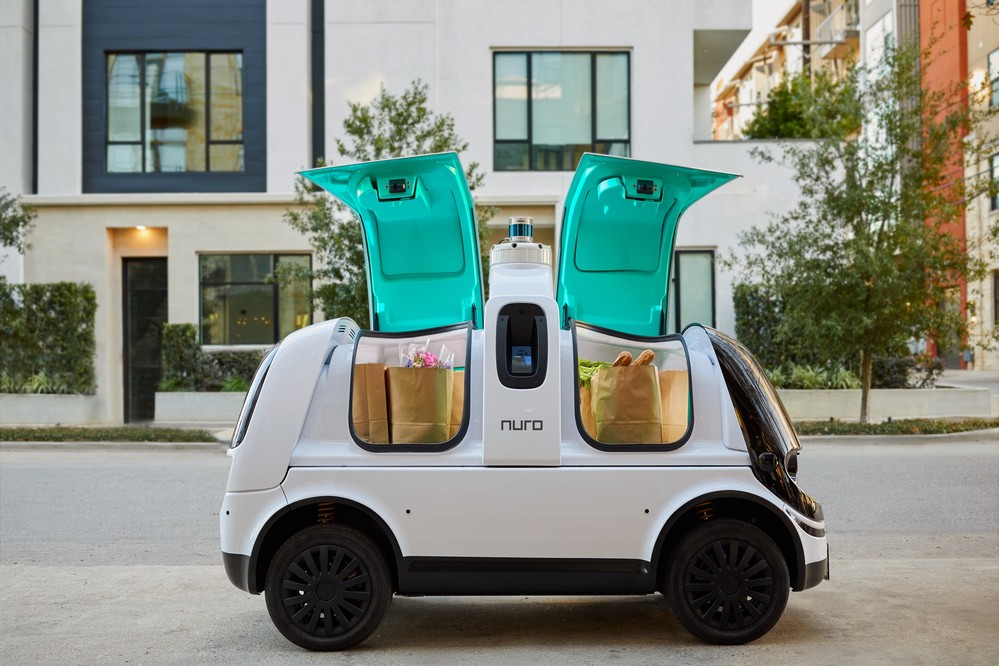
Customers will be able to order their items online and the R2 will deliver the goods to their house. Upon arrival, they’ll see a touch screen to enter a unique PIN number to open the vehicle’s double-winged doors containing their items. After they’re done collecting groceries, customers will tap an option on-screen to say so, and the car will say "goodbye” and drive away.
What Can You Get Delivered?
The company will be partnering with Walmart for grocery deliveries for the two-year Houston testing period but plans on expanding to other big brands in the future. In 2019, Nuro announced a partnership with Domino’s for pizza delivery and was in talks with Uber for Uber Eats deliveries. The company also partnered with Kroger for grocery delivery in its 2018 test in Arizona.
For now, the R2 will deliver a full assortment of groceries from Walmart including fresh produce and pantry products. The R1 was capable of fitting up to 20 grocery bags, and the R2’s exact capacity hasn’t been revealed yet, but Ferguson did claim the newer model is bigger.
In February 2019 Nuro secured a $940 million investment from SoftBank Vision Fund, in addition to over $1 billion from other investors. KPMG estimates that autonomous delivery vehicle miles will skyrocket, hitting 78 billion per year by 2040.
All images included in this article are courtesy of Nuro.








![IIoT Spending to Jump 40% by 2024 [Report]](https://machinerys.net/upload/cache/202507/iiot-spending-to-jump-40-by-2024-report.webp)