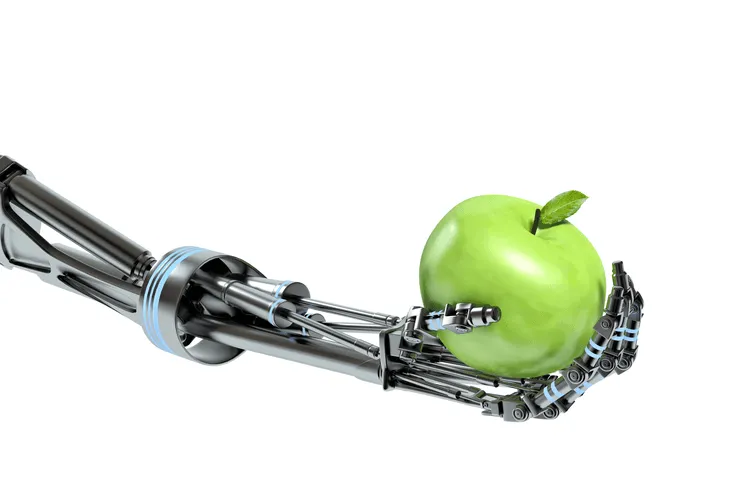
The lights may be out, but someone is home — or rather, something.
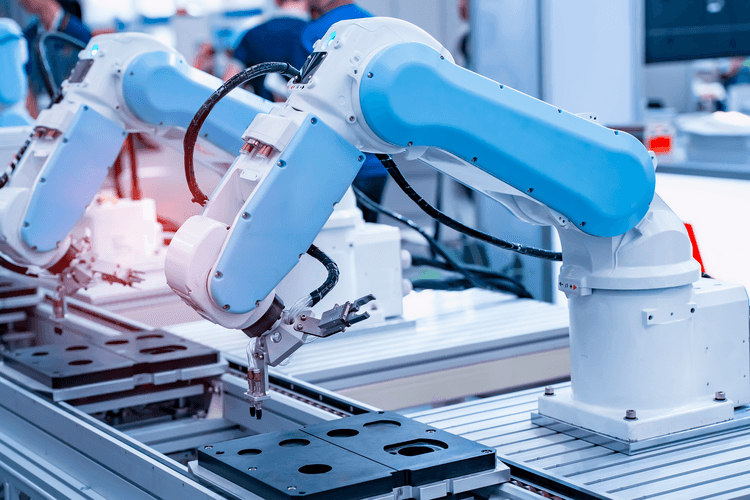
Despite the clatter and the whir of cavernous rooms vibrating with intense productivity, movements are entirely mechanical, and there is no need for illumination, ventilation, rest, or recuperation. On the lights-out factory floor, cold steel is king.
Lights-out factories have been in operation since the early 1980s. These are production lines where robot activity can continue nonstop without supervision or maintenance. But this dream is far from reality for much of the manufacturing sector.
When COVID-19 hit the U.S. the majority of the workforce started working from home — a trend that appears both popular and ongoing. In the manufacturing industry, however, just 41% of staff were able to telework, according to the U.S. Bureau of Labor Statistics. As such, as the virus spread through workforces, the sector faced significant supply chain disruption, contractions in output and earnings, and factory closures.
By April 2020, just 46% of manufacturing plants had enabled remote monitoring processes; however, despite the threat of the global pandemic receding, the imperative to move toward lights-out manufacturing is perhaps just as evident. As workers increasingly expect to be able to do shifts from home, factories must compete for talent with sectors without the same need for on-site employment. As well, there’s a predicted gap of 2.4 million unfilled jobs across the manufacturing sector by 2028. Many companies will want to find ways to reduce the need for on-site human labor.
The Benefits of Lights-out Manufacturing
Although robotic systems generally come at a large initial financial outlay, over time they reduce operational costs. And, with no need for breaks, sleep, or time off, these systems can hugely improve efficiency — both in terms of avoiding mistakes and being able to run 24 hours a day. Nearly a quarter of unplanned downtime across the sector can be attributed to human error, twice as much as in many other industries.
Automated manufacturing can also improve worker safety, and even reduce material wastage and an organization’s carbon footprint. Shipping company Siem Offshore, for instance, has implemented a predictive maintenance system to limit the need for traveling crews to carry out inspections and repairs. In 2022, Ford introduced Javier, an autonomous robot, to its Advanced Manufacturing Center in Redford, Michigan. Javier tends to the 3D printers without any human intervention.
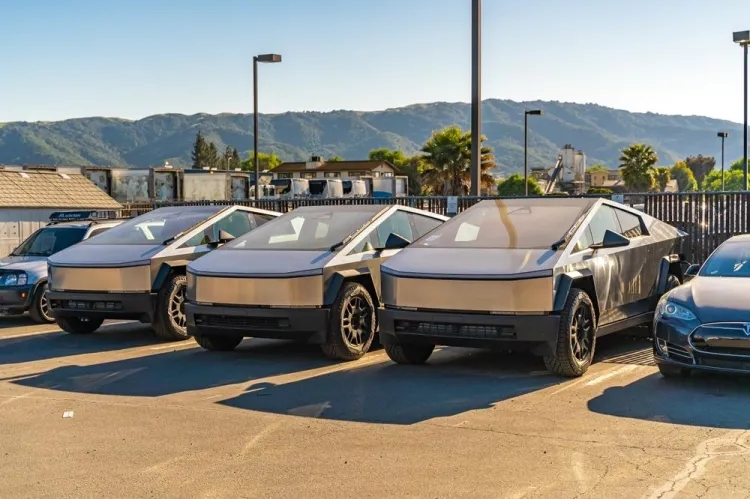
However, the creativity, flexibility, and cognitive capabilities of humans still have their place on the factory floor; failed attempts to implement lights-out facilities can attest to that. A Texas-based plant run by IBM in the 1980s was shut down because it couldn’t adapt to produce variations of the computer keyboards it was originally designed to manufacture. Rolling back on automation at Tesla’s factories in 2018, Elon Musk famously tweeted, "Humans are underrated.”
Lean Manufacturing Technology
Historically, the lights-out factory has been successful mainly in producing simple products in mass. But in recent years, the goals for automation have shifted. Lean manufacturing — a methodology that prizes productivity and minimizing waste — relies not only on machine technology improvements, including AI, machine learning, and processes like 3D printing but on advances in the field of robot collaboration with humans. The aim is often to augment human performance, not replace it.
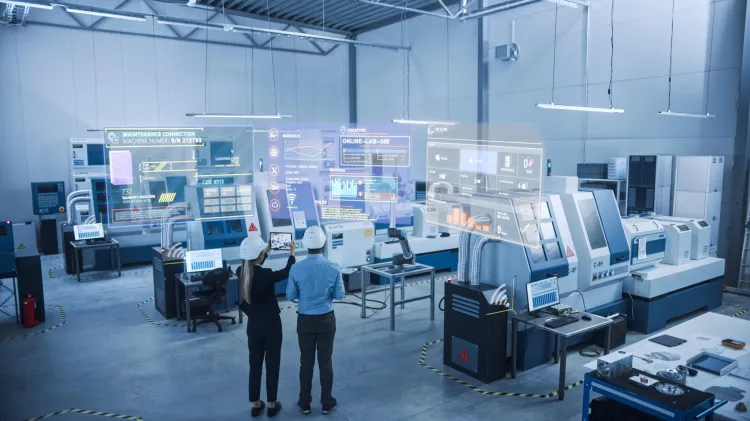
This includes virtual reality technologies, which can be particularly useful for designers of large spaces — allowing not only for remote "visits” but also increased and easier international collaboration. The collection and contextualization of real-time data allow for remote monitoring of the production line and can be more efficient in flagging equipment failures before they become a problem.
A concept that is swiftly becoming the bedrock for the modern manufacturing scene is the digital twin: a virtual replica of a product, building, or system, which constantly updates using real-time data. Digital twin technology relies on the Internet of Things (IoT), augmented reality (AR), and video capabilities. Sensors connected to the physical counterpart constantly feed information — on speed, temperatures, and humidity levels, for example — to its digital twin for the duration of its lifecycle. This allows human workers to analyze performance remotely.
Digital twins can also be used in the design and testing phase of production. They can exist before the real thing, enabling simulated testing and optimization of a product before manufacturing begins.
Barriers to Lights-out Manufacturing
There are still major barriers to this new era of lights-out manufacturing. Up-front costs are high; the manufacturing industry has not set uniform standards for automation; there’s a talent shortage in areas like data analytics; the technology around sensing, connectivity, and real-time data processing is still latent; and fears of the dystopian impact of such advances have led to cultural pushback and burdensome regulation.
But the lights-out vision lives on, and the industry is adapting. The digital twin market is predicted to be worth $143 billion by 2030 and has been rolled out all across the manufacturing sector, from vehicle production to construction to oil and gas. Manufacturers must be alert to the new and ever-emerging technologies that make automated — and still human-centric — production a reality.









![This Software Is Matching Labor Capacity with Production Demand [Q&A]](https://machinerys.net/upload/cache/202507/this-software-is-matching-labor-capacity-with-production-demand-q-amp-a.webp)