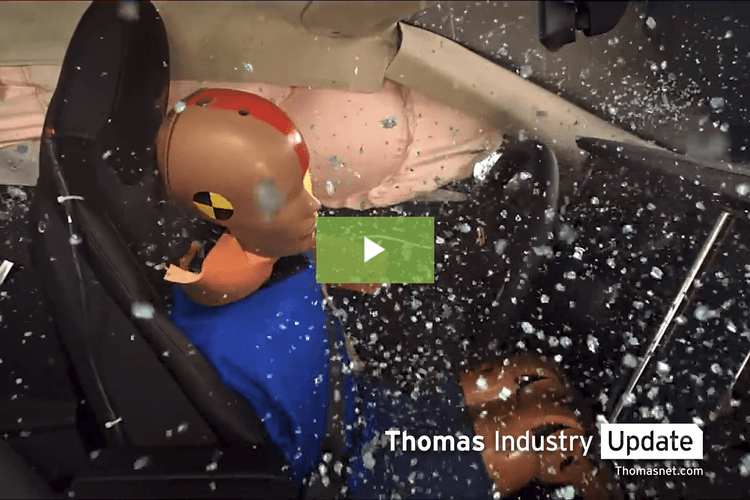
The Insurance Institute for Highway Safety – or, IIHS – says there’s a problem with its side crash tests, but it’s not what you think. The agency, who has been side testing since 2003, says the program has been so successful that “the current side ratings no longer help consumers distinguish among vehicles or point the way toward further improvements.”
Here’s some background. When the program was in its infancy 15 years ago, it was relatively groundbreaking because IIHS took the type of test the NTSB was conducting and took it a step further: rather than running tests that incorporated impacts that were car-height, they upped the height and modified the shape so it better mimicked the larger SUVs that were becoming more and more popular. IIHS also used smaller dummies, meaning the impact would hit near the dummy’s head, making it much harder for automakers to net a good rating.
According to a recent press release, IIHS says the testing change forced automakers to strengthen side structures and equip vehicles with side airbags “ahead of a federal regulation that made them essentially mandatory.” The agency says that today 99% of vehicles earn a “good” rating – up from about 20% in the beginning.
But it also left IIHS with the challenge of finding ways to improve, which is why the safety agency plans to modify its tests – and with good reason: despite nearly universal good ratings, side impacts still account for 23% of vehicle occupant fatalities.
IIHS determined that the severity of these crashes were determined, primarily, by two things: speed, and the weight of the vehicle. This is prompting the group to increase the weight and size of the impact in the tests to account for the fact that many SUVs have increased significantly in weight since the tests first began. 900 lbs will be added with this in mind, and the speed of the crash tests will increase from 31 to 37 miles per hour. Engineers will be modifying a moveable barrier to better mimic a real-world SUV or pickup, and the goal – says IIHS Senior Research Engineer Becky Mueller – is confidence that “the changes automakers make in hopes of achieving good ratings in the new side test will result in better protection for vehicle occupants in real-world crashes.”