A team of researchers at Southern Methodist University in Dallas, TX have discovered a way to lengthen the life of electric vehicle batteries without racking up high costs. This development could massively impact EV functionality and offer up power systems that last longer than before.
A Game-Changer for Lithium-Sulfur Batteries
It’s thanks to a new cathode that the university’s mechanical engineering team—helmed by Donghai Wang—have developed that will allow EV batteries to have a longer lifespan once they’re within a vehicle.
The specific technology, called a hybrid polymer network cathode, is meant to cut down on polysulfide dissolution, a problem that arises in batteries of this kind. When this happens, the capacity of the battery depletes and the battery’s quality worsens until it’s no longer usable.
What Makes Them Different
These batteries stand out from others because of their higher energy capacity and affordability—not to mention that the science of how they work is different, too.
Wang mentioned in the news release that these batteries include “multiple sulfur bonding tethers, atomic adsorption, and fast Li-ion/electron transport at the molecular level,” which help wipe out the chances of polysulfide molecules ruining the electrolyte within the battery and leading to its demise.
While many studies have been done to explore thisissue, this new breakthrough could finally offer a workable solution to keep batteries going for longer and make them more accessible when it comes to cost.
The Downsides of EV Batteries
There are severaltypes of EV batteries, and while many have their own set of pros, there are also a handful of disadvantages associated with each type. This has spurred the hunt for a better battery.
With lithium-ion batteries, there is the risk of degradation over time, overheating, and difficulty of disposal. For NiMH batteries, there is the worry of overheating and a high rate of self-discharging.Solid-statebatteries are another option that look promising, but they’re expensive to produce and not quite at the point where they can be used in EVs just yet. That’s what makes findings, such as the one from the team at SMU, so useful.
The Race to Find a Better Battery
From Factorial to Tesla to SMU, companies and research groups alike have been working hard to find batteries for EVs and other machines that will function better and perform longer than they ever have.
In finding these solutions, EVs have the chance to become more commonplace and a more attractive option for buyers who may have once turned away at the price or the idea of having to replace expensive batteries.
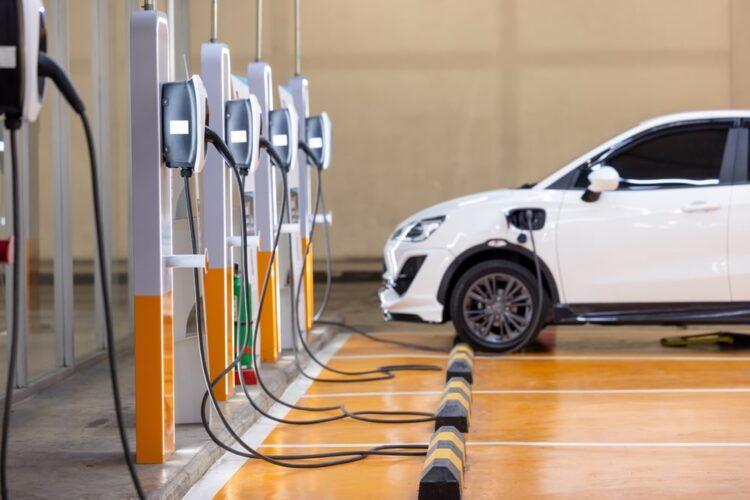
Image Credit: Shutterstock/Darunrat Wongsuvan