While humans typically seek the most efficient solution possible to problems, we often miss what’s right in front of us: 3.8 billion years of survival-centric R&D, balanced for sustainability. Biomimicry — creating solutions based on nature’s hard work — can be applied to everything from electronics to picking and logistics through modern manufacturing.
“You could look at nature as being like a catalog of products, and all of those have benefited from a 3.8 billion year research and development period,” said Michael Pawlyn, a British architect known for his work in biomimetic architecture and innovation. "And given that level of investment, it makes sense to use it.”
Nature’s R&D Can Be Applied To Modern Problems
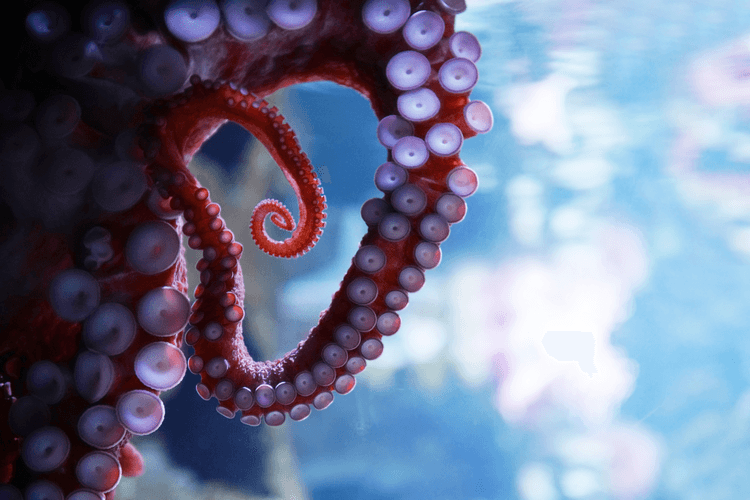
Modern problems, such as creating and storing electricity, picking up irregular objects without damaging them, and developing lightweight and effective computing parts can all be solved by looking at methods used by nature. Creatures like the octopus raise questions about previous picking machines — can we do better than a hydraulic clamp?
Some problems that can be sustainably solved through biomimicry include:
- Effective picking for irregular object shapes and sizes
- Developing light, effective, and sustainable body armor
- Optimizing weight and power drain for consumer electronics
- Creating mechanical structures with extreme strength and minor material usage
Nature has developed solutions to many of these problems, ranging from an elephant’s trunk to octopi arms to temperature-resistant organisms to hyper-stable structures like those found in the exoskeletons of insects and in seashells.
How Can Biomimetic Technology Change Logistics?
Logistics is ripe for biomimetic disruption — picking speeds often come at the cost of damaged goods, for example, picking produce, like tomatoes and peaches within the food supply chain. Humans can perform the task easily, but they often perform more slowly than robotic counterparts. If robots could suction fruit off of trees with even pressure, they could be harvested, undamaged, at a higher speed.
Beyond picking at the farm level, small parts in electronics and automotive manufacturing may emerge as a trend in late 2019. Lifting plastic containers, cans, and other consistent, yet irregularly-shaped, heavy, and bulky objects present a unique challenge within warehousing, often requiring multiple people to work together for picking and shipping operations.
Researchers are already investigating tentacle-shaped picking robots, utilizing compressed air actuation to compress materials with even, consistent pressure and suction-cup like formation derived from octopus arms.
What Technological Advances Have Been Driven by Biomimicry?
Technology grows faster and better every day, but how much advancement has been initiated and pioneered by nature?
Human neural processors are being modeled for AI-based computing operations, bridges and buildings are being built with earthquake resistance, and self-repairing features based on structures found in insects, reptiles, and even human cells.
Some researchers have developed ceramic foams for use in additive manufacturing, which allows for multiple densities and structures in one object. This is currently being applied to manufacturing the mid and insoles of shoes for a higher quality of life and healthier walking patterns.
Hospitals and other healthcare-related businesses that require cleanliness — such as electronic and other cleanroom environments — may benefit from research into the antimicrobial properties of sharkskin, which does not necessarily kill bacteria but prevents them from latching on and spreading.
These are just the tip of the iceberg.
How can Biomimicry Impact MilTech and Public Safety?
Armed forces and police worldwide are consistently looking for new ways to make it home safely. Advanced body armor, such as ceramic dragonskin plating, offers excellent protection against single impacts, but the human body still reels from the bullet’s impact. Some newer armor concepts have been modeled after the Mantis Shrimp’s Dactyl Club — a fist capable of creating so much force that it generates plasma yet remains largely undamaged.
Biomimicry gives humanity millions of new solutions to our problems if we are willing to look for them. Conceptualization is one of humanity’s best abilities — the ability to take one solution and adapt it to other issues.