
Oftentimes, we find ourselves complaining about technology’s ability to isolate us; it can frequently be used as a distraction or a way to communicate without face-to-face interaction. However, in the case of COVID-19 social distancing measures, technological isolation is paying off.
Thomas Insights spoke to Eric Dingfelder, president of HORIZON, a lab information management system (LIMS) provider, about how technology is enabling laboratories and hospitals alike to adapt their hardware to meet testing demands for the ongoing pandemic.
How Laboratory Technology is Propelling COVID-19 Testing
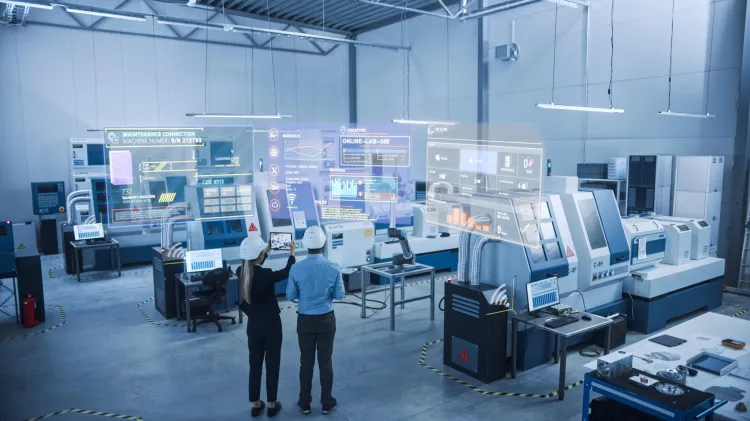
Although COVID-19 didn’t hit U.S. soil until January 21, most laboratories already had the instruments needed for testing patients – they’re actually the same technology used for HIV testing. However, without labs’ access to a LIMS system, they weren’t able to easily convert their instruments to COVID-19 testing.
"Labs might have been doing HIV testing a number of weeks ago as their primary test, but they’ve now [likely] commandeered one of those systems; Instead of doing HIV testing, they’ve developed a method to do COVID-19 testing,” Dingfelder explains. "While the instrument can do the testing, our system pretty much controls the samples throughout the laboratory, and they configure our system to handle the results.”
The Perfect Test for Labs
Dingfelder also explains that there is no one silver bullet for testing for COVID-19.
Each lab is doing things a little differently by working with the materials and systems they currently have available to achieve the most efficient, accurate results. However, all testing processes still need to be approved by the FDA before being used with patients.
"The interesting part about laboratories doing testing [is that] the way you test for COVID-19 is not the same in every lab,” Dingfelder says. "Each lab develops a method, and that method has to be approved before it can be used. So all these labs are actually submitting their research to be approved so that they can do all this COVID-19 testing.”
He also explains that the LIMS provider is guiding labs to run specific tests on specific instruments, not only to determine positive test results but also to assess definitive negative results. He equates HORIZON’s LIMS to labs’ version of Staples’ "easy button.”
"If you’ve read anything about the quick test the Pentagon is using, you know [that in just] five minutes the test can tell you if you’re positive,” he explains. "But in 13 minutes, it tells you if you’re actually negative for COVID-19, typically because it will take longer to actually rule out effectively that it’s not there. To do that, labs will [often] do the quick test to get a ‘Hey, these people are positive,’ and then go confirm it on another test.”
The Perfect Test for Patients
Although technology is often criticized for its ability to isolate us from others, this technology is actually being praised for the same exact reason.
Because LIMS enables patients to preregister for testing and access their results on an online portal, it minimizes human contact and makes testing safer.
"The idea [for testing], especially these days, is [to allow for] as little interaction as possible – which sounds kind of wrong because, as humans, we want to interact with each other, but now we want to minimize all of our interactions… it’s the safe and right thing to do,” Dingfelder says. "So for laboratories, doctors, and patients to be able to pre-register, walk-in, literally at arm’s length, give the swab, take the swabs, and send them off to the lab, it allows the doctor’s office to reduce their exposure.”
Along with reducing potential exposure, lab information management systems are returning test results much faster than older methods.
"When the lab receives the sample, they don’t have to spend time entering the demographic data. They literally can scan that sample in. It goes to the machines immediately,” Dingfelder explains. "Your test results can be achieved at a much higher rate so that when the results are ready, they are then transferred back to the doctor’s office; And depending on the doctor’s office, [that information can be sent] directly to their patients.”
Depending on Raw Materials for Test Production
While at a conference a few years ago, Dingfelder was told that 80% of doctors’ decisions come from lab results, not what they observe during a patient’s visit. He explains that the COVID-19 crisis is no different, and ultimately raw materials are making or breaking the rate at which tests can be manufactured.
"[COVID-19] is actually putting the laboratories and laboratory research and even the manufacturing process [behind] because [in order] for laboratories to work,” they need raw materials, he says.One raw material that’s particularly difficult to source right now is plastic, which is being used to package sample vials for in-home COVID-19 tests. Also used for food packaging, the material is in high demand.
"Both those industries — the laboratory industry and the food industry — seem to be running 100 miles an hour,” Dingfelder says. "Obviously testing needs to be done, but people who are now sheltering in place seem to be buying more [packaged food] than before because of fear of shortage.”
Despite this supply limitation, Dingfelder explains that the LIMS are prepared to handle these challenges. The system has its own integrated inventory management for labs and automatically reorders when it detects low supplies. The system even takes into account ongoing delays due to both increased demand and delayed shipments that are occurring as a result of COVID-19.
Laboratory Technology May Be Key to Scaling Testing Capabilities
Although technology has absolutely impacted the way laboratories are managed and run on a day-to-day basis, lab information management systems can ultimately take the credit for giving labs the ability to shape up and scale-up in the face of a rapidly-spreading pandemic.
"The labs and manufacturers who have the technology systems that are most up to date typically can scale up and change faster at a number of levels,” Dingfelder explains. "Because if you’re using one instrument for COVID-19 testing and now you want to commandeer” another instrument to increase your testing capacity, "literally all we need to do is send the instructions to that instrument. You don’t need to actually do much else.”