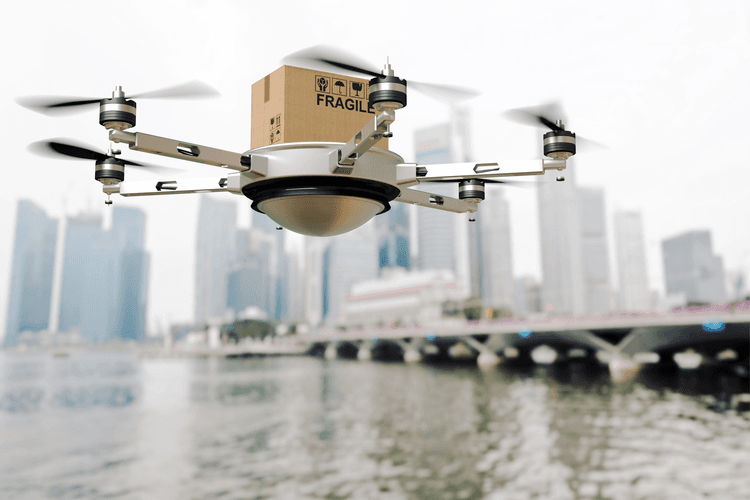
There will be seven million hobbyist and commercial drones in the sky by 2020, the FAA predicts. While the vast majority of these will be used for recreational purposes, a significant rise in the number of delivery drones is also expected.
In December 2016 Amazon Prime Air made its first 30-minute drone delivery in Cambridge, UK. UPS launched medical deliveries via drone to transport medical samples. Organizations including DHL, Google, Domino’s Pizza, and Mercedes are also exploring drone delivery options to improve delivery speed, reduce costs, and access remote areas.
But what is the environmental impact of drone deliveries compared to traditional truck deliveries?
Drone vs. Traditional Truck Delivery Impacts on the Environment
From an environmental perspective, the effectiveness of drone delivery depends on a number of factors including:
- Size and weight of the drone
- Size and weight of the package
- Distance traveled
- Batteries/fuel used and associated manufacturing processes
- Production of drone parts
- External factors that impact speed, such as wind conditions
- How electricity is generated in the delivery region
- Number of warehouses needed to house drones and support delivery demand
Heavy-duty trucks contribute to 25% of the U.S.’s transportation greenhouse gas emissions, so an increase in drone deliveries could reduce fuel and CO2 emissions. "About one-quarter of transportation emissions, the equivalent of 415 million metric tons of carbon dioxide,” Smithsonian explained, comes from medium- and heavy-duty trucks, the kinds of vehicles that deliver freight to warehouses, businesses and consumers’ homes.”
A study of drone deliveries in California ultimately found that delivering a small package over short distances by drone was more energy-efficient than truck deliveries (0.42 kg of greenhouse gas emissions per small package delivered by drone compared with 0.92kg via truck).
On the other hand, deliveries using larger drones are less energy efficient because of the increased kilowatt-hours required to fly them. For the delivery of larger packages it’s probable that electric-powered trucks will be a cleaner, and more energy-efficient, option. Implementing a high-functioning, speedy drone delivery service in many areas will require the building and running of multiple new warehouses, each using electricity, gas, and fuel.