When Tony Stark built a miniature arc reactor in an Afghan cave using only a box of scraps in the movie Iron Man, it gave viewers a somewhat misleading idea of the effort – and costs – involved in creating the holy grail of power generation: fusion energy.
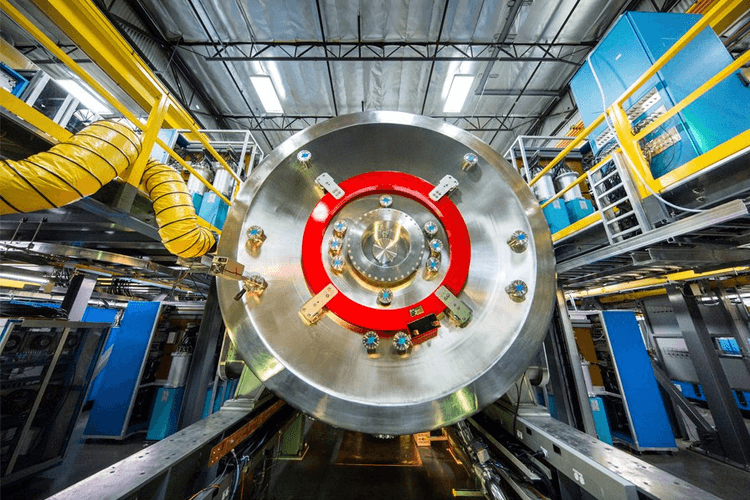
Fusion energy is created by smashing together two hydrogen atoms (commonly deuterium and tritium) with enormous force, causing the atoms to overcome their natural repulsion, fuse, and unleash a massive amount of energy. The challenge lies in containing the extremely high pressures and temperature required: as high as 270,000,000°Fahrenheit. Once achieved, fusion energy will be clean (emitting only helium as exhaust), safe (no meltdown scenarios), abundant, and a game-changer in humanity’s battle with climate breakdown.
How Far Are We From Fusion Energy?
For decades, fusion energy has been seen as extremely promising but not yet attainable; an aspirational technology that is forever “thirty years away.” Recently, however, the momentum for fusion technology has shifted from research institutions and programs such as ITER which focused on proving the science works by achieving “net gain:” producing more energy than it takes to operate.
The next step is commercialization, with around 22 private companies competing to be the first to build a viable fusion plant. Key players include General Fusion (backed by Jeff Bezos), Commonwealth Fusion Systems (backed by Bill Gates), and TAE Technologies (backed by Google’s parent company Alphabet).
A Forbes report predicts fusion power can be commercialized within the next five to 15 years if the leading start-ups can overcome chronic underfunding. Encouragingly, public funding is predicted to shift from research institutions to plant-building start-ups now that the science has been proven.
What’s Holding Us Back?
Business Insider reports that these three companies have raised nearly half a billion dollars in recent funding rounds, but that “creating a commercial device will require tens of billions of dollars.” Intimidated by it being so capital-intensive, private investors and venture capitalists have so far proven reluctant to invest in fusion start-ups, leaving companies such as General Fusion reliant on a combination of public money and the backing of high-profile billionaires including Bezos.
While there are still some technical challenges to overcome such as materials degradation, commentators agree that the key hurdle to near-term commercialization of fusion energy lies in raising enough capital.
However, it’s important to note the difference between fusion and fission; fission being the process in which a uranium isotope is used to start a chain reaction that’s difficult to stop, which was the cause of the Chernobyl and Fukushima accidents. Fusion is safe because if the heat source is removed, the reaction will stop. Fusion also produces only a small fraction of nuclear waste compared to fission.
Although the process is safer, that doesn’t make achieving commercial-scale nuclear fusion plants any more feasible just yet. Besides major costs to get the initiative going, international governments are reluctant to take the leap because of the impact it would have on the current energy industry.
For now, players in the fusion game are looking to real-life Tony Starks such as Gates and Bezos to bankroll the future of clean energy.








![Analyzing the Impact of an AM Campus Alongside an Airport [Report]](https://machinerys.net/upload/cache/202507/analyzing-the-impact-of-an-am-campus-alongside-an-airport-report.webp)