According to researchers from the Massachusetts Institute of Technology (MIT), a new discovery about how metals behave at extreme temperatures could lead to a range of new applications, including advanced manufacturing and aerospace engineering.
MIT’s "Counterintuitive” Results
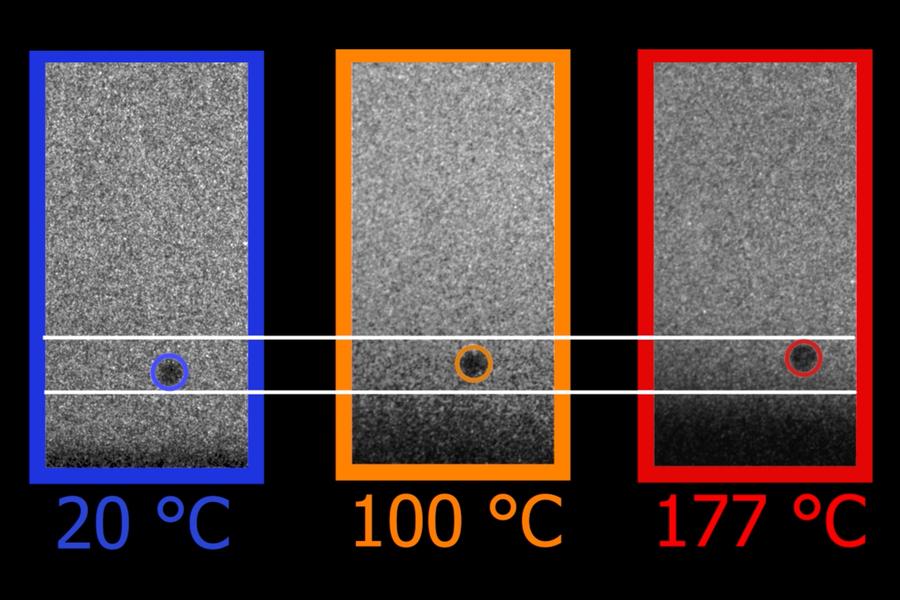
Humans have heated metals to form objects for thousands of years, but new findings show that at even higher temperatures than those needed to soften metal, it actually becomes harder.
The research, published in the journal Nature, found that when metal is struck by an object traveling at a very high velocity, the extreme stress results in a stronger metal surface. In one series of demonstrations, copper became as strong as steel.
Hitting Sheet Metal with Sapphire
To reach their conclusions, MIT researchers used laser beams to propel tiny pieces of sapphire into sheet metal at speeds of “a few hundred meters” per second.
High-speed cameras then allowed engineers to discern surface strength by observing the difference between the sapphire particles’ inbound and outgoing velocities.
Industrial Applications
Although the research took place in a laboratory setting, MIT engineers noted that similar conditions occur “routinely” in industrial applications, including high-speed machining and metal 3D printing, as well as in aerospace design — such as sand striking a helicopter blade or a meteorite hitting a spacecraft while in orbit.
Discovery Could Help Reduce Costs
Christopher Schuh, a visiting professor at MIT, told the university’s news service that metals previously considered unsuitable for those types of situations — including those that are cheaper or more easily processed — could be utilized in the future.
Image Credit: MIT