In May, the Trump administration announced plans to distribute $11 billion to states for coronavirus testing as part of the CARES Act stimulus package. It is hoped that this move will address the widespread shortage of tests, help slow the spread of the virus, and ultimately contribute to the reopening of the U.S. economy.
Over the past few months, medical facilities across the U.S. have struggled to ramp up their coronavirus testing due to shortages of different test components.
The U.S. Is Facing a Major Shortage of Swabs
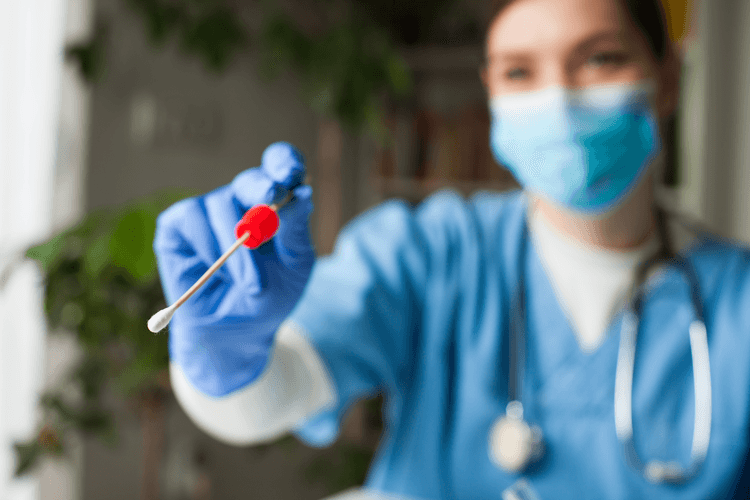
A swab is needed to conduct the most commonly used coronavirus test, and it is this particular component that has been in especially short supply. Last month, for example, Californian Gov. Gavin Newsom said a critical shortage of swabs was the number one factor preventing the state from reaching its test target of between 60,000 and 80,000 people per day.
Unlike an antibody test, the swab test can identify active infections to establish whether somebody has recovered from COVID-19. Health experts and governors warned of swab supply shortages back in February, but domestic production of swabs was not increased until late April. While a swab might sound like a fairly straightforward piece of equipment, coronavirus testing requires the use of nasopharyngeal swabs, which are made from polyester, nylon, or foam — not cotton. These swabs are categorized as medical devices and need to be both long and flexible in order to collect secretions from the upper throat and back of the nose.
Until recently, swabs could only be sourced from two major manufacturers: Puritan Medical Products in Maine and an Italian manufacturer of medical goods called Copan Diagnostics. Unsurprisingly, they were unable to cope with the monumental increase in demand when the coronavirus struck.
Could 3D Printing Meet the Demand for Swabs?
To fully relieve the testing bottleneck caused by a lack of swabs, the U.S. will need tens of millions of nasal swabs, a demand that could be met using 3D printing.
A consortium of academics, medical professionals, and businesses are working to deliver clinically tested and FDA registered 3D-printed nasopharyngealswabs quickly, cheaply, and at scale.
Origin, a San Francisco-based start-up,is one such business that has turned its hand to 3D printing swab testing kits. The 3D-printer manufacturer completed a successful clinical trial in mid-April and is now dedicating its production to printing up to 1,500 swabs in less than eight hours.
“Complex, detailed geometries can easily be produced on Origin One [a printer] and do not require any molds,” the company said in a statement. “The test swabs can be produced when needed, anywhere, with only a single material for the supply chain.”
Meanwhile, one dentist in Georgia has dedicated a 3D printer at the college where he teaches to producing the swabs. Georgia, where there have been more than 1,500 coronavirus deaths and more than 37,000 cases, has lagged behind most states in terms of coronavirus testing.
At first, Dr. Jeffrey James was able to print around 300 swabs per day but was soon requested by Georgia officials to ramp up production to 5000 tests per day. Volunteer dental residents, orthodontists, and oral surgeons are working to operate the seven printers at Augusta University’s Dental College now devoted to producing swabs.
"We had the hardware,” Dr. James said. "We had the know-how, and most importantly, we had the software to actually manipulate the file redesigning.” James and his team plan to share their process and file designs with others to further increase the number of nasal swabs Georgia can produce.
Ramping up Swab Production
At the end of April, it was announced that Puritan Medical Products had been awarded a $75.5 million contract by the Trump administration to scale-up its production of swabs to a minimum of 20 million per month.
The FDA is working alongside several organizations to approve more types of swabs, including 3D printed swabs. Plus, they recently approved a saliva test, which does not require the use of a swab.
As states begin to loosen lockdown restrictions in a bid to reboot the U.S. economy, effective and abundant testing is crucial to save lives and limit the spread of COVID-19.