
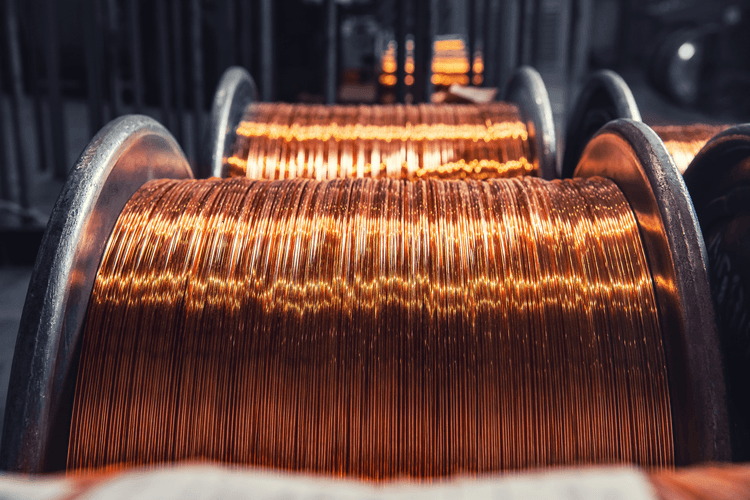
Image credit: Shutterstock/Parilov
A report from S&P Global forecasts that global demand for copper could double by 2035, from 25 million metric tons to 50 million metric tons. By 2030, supply from both existing and projected copper mining activities will meet just 80% of our needs. In relation to annual copper demand, Thomasnet.com®’s own sourcing data shows a 501% year-over-year increase in copper alloy sourcing, although the category includes brass, bronze, and engineering alloys.
Companies using Thomasnet.com to source copper alloys include general manufacturing for, inter alia, industrial machinery, aerospace and defense, and industrial component markets. Copper is important in electric motors, power transmission equipment, renewable energy tools and wind turbines, electronic devices, heat transfer systems, and many other fundamental applications. In addition, copper is used in modern conveniences such as robotics, automation, computational power, and fast energy transmission.
Then there’s the fact that, except for silver, copper is the very best electrical conductor with the best energy transition. Copper is such a good electrical conductor that it is sometimes referred to as the “metal of electrification.” Alternatives such as aluminum are often opted for; however, they are poor substitutes for copper as they cannot attain the same superior thermal and electrical transferability levels. But this is nothing new. So what’s changed in recent years?
Why Copper Demand is Growing

Suppliers recognize copper’s importance and are stocking up in anticipation of the rising demand and a potential copper deficit. The electric vehicle boom, coupled with advancements in artificial intelligence, automation, and renewable energy, is projected to drive a substantial increase in copper demand over the next decade, according toTrafigura. This surge in demand, estimated at around 10 million metric tons, will primarily stem from sectors like electric vehicles, electricity generation, and transmission, as well as automation and manufacturing.
China’s aggressive investments in electric vehicles, solar panels, and infrastructure, alongside a global manufacturing resurgence, have already spurred heightened demand for copper. Combined with supply disruptions, such as mine closures and declining stocks, this has propelled copper prices to two-year highs. Analysts anticipate significant shortages in the global copper market, with India’s burgeoning industrialization and urbanization expected to further bolster demand in the emerging world. Recent weeks have seenbroad gains in base metals.
Factors driving this surge include signs of improvement in global manufacturing activity and disruptions at major copper mines. However, geopolitical risks and uncertainty over monetary policy pose clear risks. Despite these challenges, the outlook for copper remains bullish in 2024, driven by a tighter market and short covering. Overall, the global market for base metals is experiencing dynamic shifts influenced by a range of factors, including economic trends and copper supply chain disruptions.
Let’s take a deeper look into the factors that are driving the steep rise in demand for copper, and what can be done to accommodate it, as well as how it’s being used today.
Copper has long been used in electric wiring for domestic and industrial purposes in electronics circuitry, power generation, transmission, and electrical equipment. It’s fairly cheap to produce, strong, very conductive, and thermal resistant—factors that make it the perfect choice for electrical wiring. In the two years following the COVID-19 outbreak, and with no opportunity to fritter their money on social experiences, like traveling and dining out, many Americans turned their attention to consumer electronics, which have a relatively high copper content. During this time, people spent 18% more on manufactured goods, which goes some way to explaining the increase annual copper demand has seen in relation to copper wiring.
Great emphasis has been placed on a greener and cleaner future by the Biden administration. For example, the recently implemented Inflation Reduction Act (IRA) seeks to cut the nation’s carbon emissions by approximately 40% by 2030. In the slightly longer term, plans are in place to achieve a 100% carbon-free electricity grid by 2035 and net-zero economy-wide greenhouse gas emissions by 2050. Achieving these goals necessitates a shift away from fossil fuels as primary energy sources, which spells good news for the planet and Americans paying ever-increasing energy bills.
But renewable energy systems, while sustainable and increasingly affordable, are also far more metal-intensive. Compared with the electricity generated via natural gas or coal, solar energy requires double the amount of copper per megawatt, while offshore wind requires five times the amount. Electricity networks must also be expanded to enable the switch from fossil fuels to renewable energy, a transition that could double the amount of copper used in grid lines by 2040. With copper in short supply, the U.S. could struggle to meet its climate goals.
The Biden administration’s infrastructure bill allocates significant funding to expanding the electric vehicle (EV) market. For example, there are plans to install 500,000 EV charging stations by 2030 and switch 10,000 buses to electric. Interest in EVs was already growing, thanks to their increased affordability and better battery life. In 2021 alone, sales leaped by 160%. There are now more than one million EVs on U.S. roads, a number that is expected to reach 18 million by 2030. According to the Copper Development Association, conventional cars require 18-49 pounds of copper. Electric cars typically use 183 pounds of copper, and battery electric buses use 814 pounds. As with renewable energy sources, an insufficient supply of copper could ultimately hold up the rise of EVs.
One of the factors driving this steep rise in demand is copper’s applications in the healthcare industry. Copper forms an essential part of various medical devices. This is partly thanks to its high level of conductivity, but also because of its antibacterial properties. Copper coatings on medical devices serve as antibacterial surfaces, offering practitioners and patients an extra layer of protection against bacterial infections. Copper is also used in medical settings to transmit signals to diagnostic tools and small implants. Let’s look at the copper demand in the medical industry a little more closely.
Copper Supply in the Medical Industry
One of the reasons copper is big in the medical industry is that it forms an essential part of various medical devices, thanks to it being non-flammable, highly conductive, and antibacterial. Its RFI/EMI shielding capabilities also prove useful in a medical environment. More on these factors below.

In 2008, the U.S. Environmental Protection Agency (EPA) recognized copper as the first antimicrobial metal. Copper surfaces have been proven to reduce bacteria on high-touch surfaces in a medical environment. The EPA asserts that copper kills 99.9% of surface bacteria within a couple of hours, and, following longer incubation periods, it is unusual for any microorganisms to be recovered. When microbes, which are typically transferred via coughing, touching, sneezing, or vomiting, are transferred to a copper surface, the metal releases copper ions that prevent cell respiration, create holes in the cell membrane and destroy the DNA and RNA inside.
Research shows that using copper in medical wards and intensive care units can reduce the number of live bacteria by 90% and drastically reduce infection rates. This is very beneficial in a medical setting. Hospitals and medical centers are full of vulnerable patients, and so in preventing the spread of bacteria, it’s possible to save lives. Today, copper is used for coating everything from bed frames, door handles, and call buttons, to linen, scrubs, hospital gowns, and tongs. High cost is perhaps the biggest barrier to increasing the use of copper in medical environments.
Of all metals, copper has the highest electrical conductivity after silver. Equipment reliability is especially important in a hospital, and copper has proven itself to be a highly reliable material when used in electrical wiring. Copper is a malleable metal, which means it can be pulled and twisted and still not break. That’s one of the reasons it makes a great choice for copper wiring. As such, copper wiring is used frequently in medical equipment to send electrical currents from one point of a device to another, or to transmit signals to diagnostics tools and implants. If these electrical signals are not safely and reliably transmitted, hospital equipment is at risk of malfunction or breakdown, which could result in the injury or death of a patient.
Copper has a relatively high melting point of 1,984 degrees Fahrenheit. Plastic, by comparison, will start to soften at 300 degrees and begin to emit smoke whenever it is exposed to flames. This is another reason why copper tubing and coatings are excellent choices for medical devices, serving to reduce smoke and fire risks. In recent years, copper has proven to be a critical component of respiratory care systems, dispensing compressed medical air, like oxygen and nitrous oxide, to critically ill patients. It is also used to operate medical vacuum systems, which are designed to remove gasses and fluids during surgical procedures. In addition, copper is much more resilient to heat damage. A plastic tube will expand and contract significantly when exposed to intense heat, which means equipment would likely need to be replaced following a fire.
Electromagnetic Interference (EMI)/Radio Frequency Interference (RFI) shielding reduces instances of electronic device or equipment malfunction by (a) preventing unwanted external electromagnetic waves from interfering with the device or equipment, and (b) preventing any generated internal electromagnetic waves from interfering with surrounding devices or equipment. Pre-tin plated steel and copper alloy 770 (a copper, nickel, and zinc alloy) are most commonly used for RFI / EMI shielding because they are affordable and fairly resilient. Copper, however, is perhaps the best choice thanks to its ability to effectively attenuate magnetic and electrical waves. In a medical setting, this proves useful for MRI facilities.
Demand for Global Copper Mine Production and Rising Copper Prices
Copper production has been growing steadily over the past decade. From 2010 to 2021, annual global production increased from 16 million metric tons to 21 million metric tons. Today, there are around 250 copper mines in operation in about 40 countries. Currently, Chile is the world’s largest copper producer, the global leader in copper mining, hosting the world’s largest copper mine, accounting for 23% of the global copper mine production.
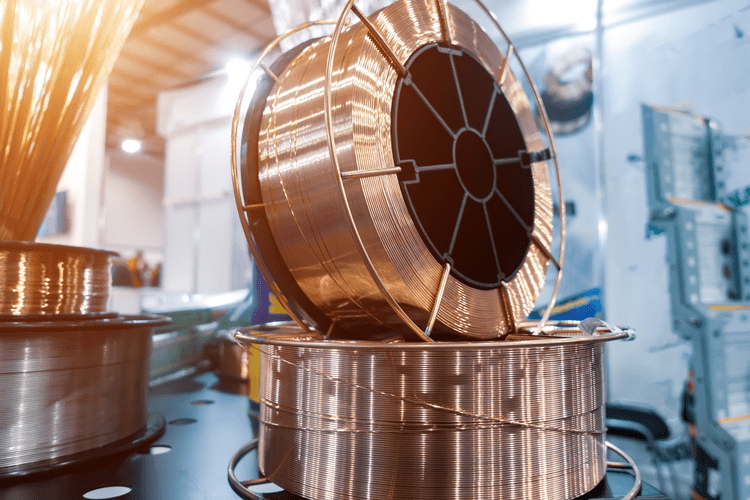
Pure copper metal is extracted via a multi-step process. It involves mining and then concentrating the ores before smelting and refining to produce a pure copper cathode. Although global copper supply is expected to rise by 4.3% this year, the current rate of production growth will likely not keep up with demand in the years to come. Overall, copper mining supply has grown less than 2% each year since 2013.
To meet demand, it will be necessary for mining companies to establish new production plants, leverage alternate materials, and raise prices to incentivize more mines to come online. New, large-scale production plants are also cropping up. Last year, Denkai America announced the details of a $430 million project to establish a new North American headquarters and production facility. The Augusta, Georgia, site is slated to produce electrodeposited copper foil, mainly for the automotive industry.
Statistics show that price hikes are already happening. In June 2022, copper prices plummeted and went into a bear market, but have since been steadily increasing. For example, from March to mid-April 2023, there has already been a 6.7% increase.
Metal Waste
Alarge amountof valuable metals are unfortunately going to waste. There is significant potential for recycling these to support the energy transition and combat climate change. With the growing demand for metals like copper, aluminum, and rare-earth minerals in renewable energy technologies, there’s a pressing need to harness these resources from discarded electronics.
The United Nations’ latest report on e-waste reveals the vast amounts of valuable metals ending up in landfills, including those crucial for low-carbon technologies. While aluminum and copper see some recycling, other metals like neodymium are largely neglected due to technical and logistical challenges.
Better recycling policies and technologies are essential to unlocking the full potential of e-waste as a sustainable metal source, with initiatives like the European Council’s new regulation aiming to increase metal recovery from recycled sources. Ultimately, maximizing metal recycling from electronic waste presents a critical opportunity to enhance resource security, reduce environmental impact, and advance the transition to clean energy.
Rise in Annual Copper Demand—Summary
In conclusion, the surge in global copper demand is propelled by a multitude of factors, including the steady rise in annual copper demand driven by the expanding global economy and the rapid adoption of green technologies. Despite efforts to increase annual copper production, global copper output and mine production are struggling to keep pace, leading to a widening copper supply gap.
Existing operations are facing challenges in meeting the soaring demand, necessitating the development of new copper mines to bridge the deficit. The need for refined copper production is more pressing than ever to meet the growing copper consumption demand across various industries. As the world continues its transition towards cleaner energy sources and infrastructure, the importance of copper as a fundamental component cannot be overstated. Therefore, proactive measures must be taken to address the supply-demand imbalance and ensure a sustainable future for the copper industry.
Related: