Image Credit: MIT
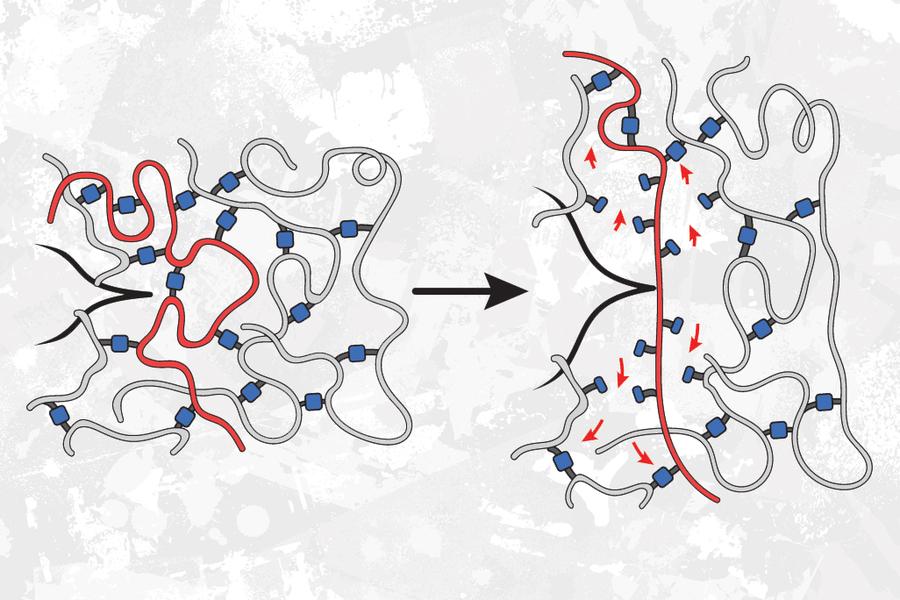
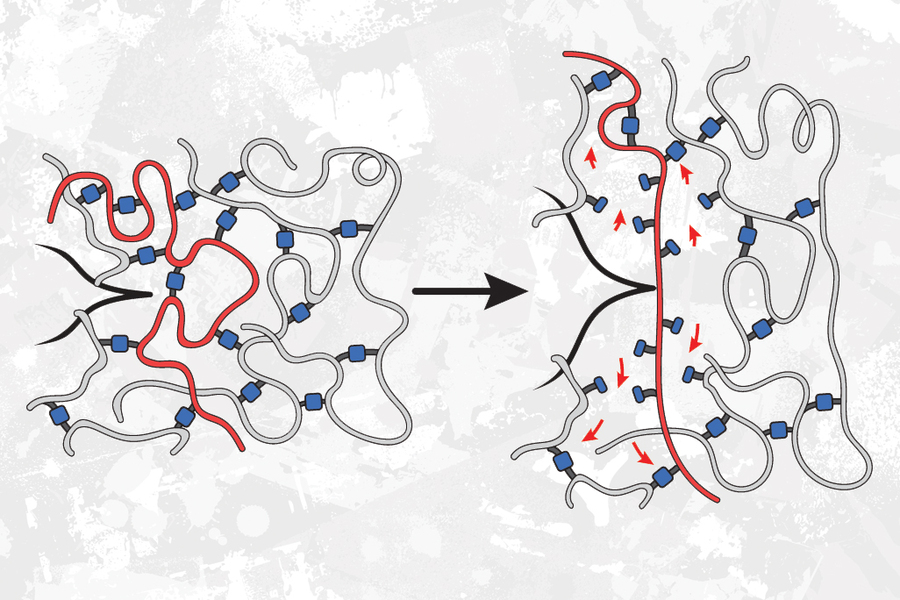
Chemists from Duke University and the Massachusetts Institute of Technology (MIT) discovered that introducing weaker bonds could increase the strength of polymers.
According to an MIT press release, the chemists conducted a study in which they used a weaker type of crosslinker to join polymer building blocks. As a result, the materials’ resistance to tearing increased tenfold. The polymers with weaker linkers were harder to tear even when the crosslinkers comprised approximately 2% of the material’s composition.
The polymers used in the chemists’ study are typically found in automobile parts and 3D printing. However, the researchers said they would attempt to expand their approach to other materials, including rubber tires.
Jeremiah Johnson, an MIT chemistry professor and a senior author of the study, said a rubber tire with similarly increased tear resistance could dramatically impact the tire’s lifespan and reduce microplastic waste that breaks off. Johnson added that two materials with the same structure and properties at the network level but a significant difference in tearing are rare.
Stephen Craig, Duke chemistry professor and a senior author of the study, said the toughness enhancement does not appear to change other physical properties of the polymers significantly.