![The Journey to Hydro Flask — How the Company Became a Household Name [Podcast]](/upload/20250615/ozixa5umcsf.jpeg)
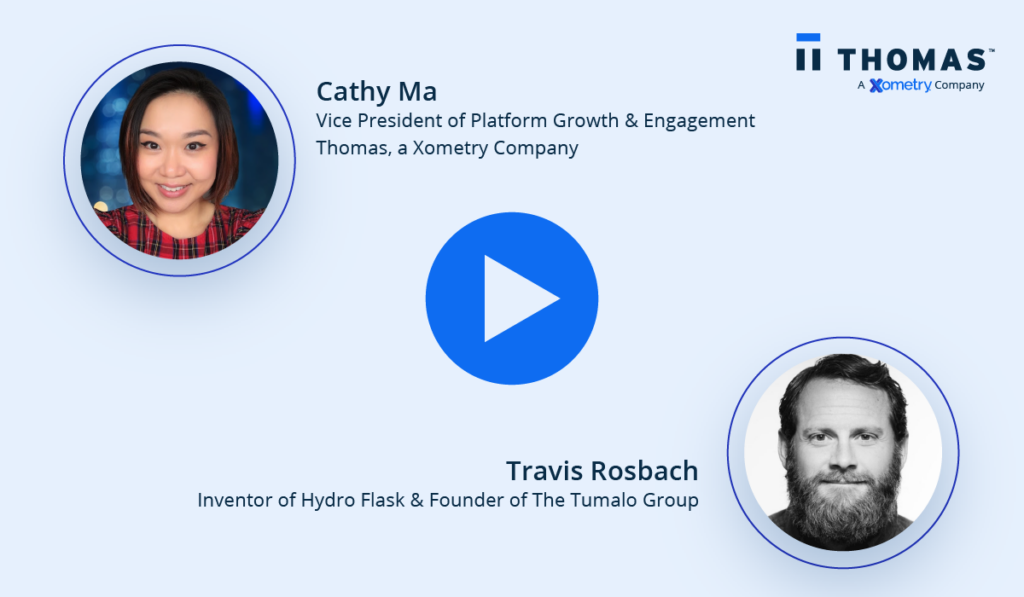
In a local sporting goods store in Hawaii, Travis Rosbach stared at the empty shelves. He had come to buy a reusable plastic bottle, but recent recalls due to potential chemical hazards and health concerns pulled Nalgene’s bottles from the shelves. They were the premier reusable water bottle manufacturer at the time. Rosbach asked the store employees what manufacturer would fill the empty spot.
“They said, ‘Nobody. There’s nobody else doing water bottles,’” recounted Rosbach, the founder of Hydro Flask and the Tumalo Group. “And it just hit me in the back of the head. I said, ‘I will, I will do that.’ I had this flash of down the road standing on a stage talking about this highly successful water bottle company.”
In 2009, Rosbach’s vision became a reality when he debuted Hydro Flask, an award-winning insulated products company best known for its stainless steel water bottles. Since then, Rosbach has gone on to found the Tumalo Group, an enterprise helping inventors and entrepreneurs realize their big ideas.
In the latest episode of the Thomas Industry Podcast, Rosbach explained how he turned an $11,000 investment into a $200 million household name and how the Tumalo Group is helping to reinforce our domestic manufacturing capability.
Hydro Flask: From Concept to Finished Product
“We had a client who talked about the Canton Fair,” Rosbach said. The client described China’s large trade fair as a “mystical, magical place, where all of these factories came together under one roof for months at a time.”
When Rosbach got the idea for a double-wall vacuum-insulated water bottle, he asked his client if he could come with him to the Canton Fair to find a manufacturer willing to make the stainless steel bottle. His client told him there was no way any water bottle manufacturer was going to produce his bottles.
“I sold my surfboards, I sold my mopeds, I sold my girlfriend’s moped, and I got as much money as I could gather,” Rosbach said. “I managed to find a factory that said, ‘We will do a double-wall vacuum-insulated water bottle for you.’”
But it turned out they couldn’t do it.
He eventually found a few factories in Honolulu, Hawaii, willing to bet on the Hydro Flask. “Then a week turned into months and months. I was back and forth, literally going to the screw manufacturer to get the screws to take across town to the metal fabricator.”
“About eight months later, we had a couple of prototypes,” he said. “Everybody we handed the bottles to didn’t want to give it back. People loved them, they started to get hydrated and feel good about themselves.”
Before he knew it, they were selling 40,000 to 80,000 bottles a month. Since then, his passion for entrepreneurship has translated to another venture. With the Tumalo Group, he helps entrepreneurs realize their ideas by connecting them with trusted U.S. manufacturers.
Bringing Ideas to Life with the Tumalo Group
According to a survey conducted by Xometry, Forbes, and John Zogby Strategies, 82% of CEOs have already implemented — or are actively pursuing — reshoring strategies.
The Tumalo Group was born out of a need to reinforce the U.S. supply chain and its domestic manufacturing capability. “Bringing manufacturing back home has to be one of our primary objectives,” Rosbach said. “It’s imperative that we build back up our manufacturing.”
According to the Tumalo Group’s website, “Tumalo Group brings together a network of talented individuals and entrepreneurs with common values. We want to share our collective expertise and make it easier for like-minded companies to develop and manufacture innovative products, find market traction, and grow their brand with partners they can trust.”
Rosbach explained that, historically, the U.S. outsourced a majority of its manufacturing needs overseas. However, due to overseas supply chain disruptions over the last few years, he said it has become more apparent that the U.S. “needs to stand on its own two feet.”
That’s when he decided it was time to build his own Rolodex of trusted American manufacturers. “Thomasnet has helped a tremendous amount in opening up opportunities for us to find manufacturers [for Tumalo],” he said.
One of the most exciting projects the Tumalo Group is currently working on is three versions of a play mat. The three products have multiple schemes that require different printing methods. Rosbach explained that finding a factory that can do three unique substrates has been challenging, so they are looking at three manufacturing locations.
“Bringing all of these products together in the same location, same packaging, same branding, same Pantones, and the same substrates, that’s a big ask,” he said. “But I love the challenge.”
Listen to the Full Episode of the Thomas Industry Podcast
When asked about the best piece of advice he’s ever heard, Rosbach said it’s to never give up and to ask for what you need. “The more you have in your arsenal, the better you’re going to be. And then just ask for everything you don’t have,” he said.
In the full episode of the Thomas Industry Podcast, you can learn more about Hydro Flask’s journey, what the Tumalo Group is currently working on, and Rosbach’s passion for entrepreneurship. Stream the episode for free on the platforms below.
- SoundCloud
- Stitcher
- Apple Podcasts
- Spotify