Polyetherimide (PEI) is a versatile thermoplastic used in many different industries. First introduced by General Electric (GE) in 1982 under the name Ultem, today the material is more commonly referred to as PEI. PEI is chosen for its cost-effectiveness and unique properties that make it useful in a range of applications.
Properties of Polyetherimide
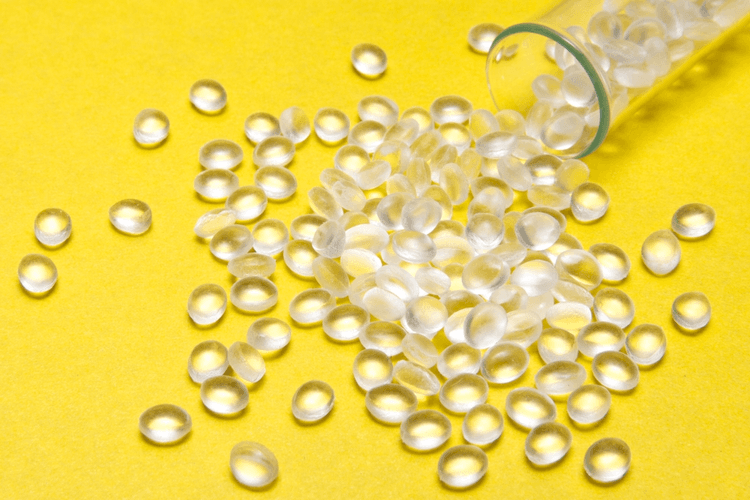
Polyetherimide is an amorphous polymer that ranges from amber to transparent in color. This is important to note,as the thermoplastic offers limited colorability. PEI is frequently used as a substitute for metal in various applications due to its favorable strength-to-weight ratio.
Key properties of PEI include:
-
High strength
-
High heat resistance, performing reliably up to 340 °F
-
Minimal smoke output
-
Good dimensional stability
-
Acceptable for food contact
-
Conductive for electricity
-
Flame resistance (94-V-0 flammability rating)
-
Good chemical resistance
-
Resistance to hot water and steam
-
Good resistance to UV light
-
High weatherability
-
Good hydrolytic stability
-
Creep resistance
Polyetherimide is notch-sensitive, and requires high processing temperatures. Polyetherimide sheets, in particular, offer great mechanical properties that make them easily machinable, and are fabricated with superior rigidity and strength. PEI is superior in many ways to common commodity plastics, including nylon and Delrin®. PEI also holds up well in applications involving repeated and short-term steam exposure.
Polyetherimide Applications
Polyetherimide finds frequent use across numerous industries. Common PEI applications include:
Medical and Health Care
PEI is used to fabricate reusable medical devices, including stopcocks, instrument trays, sterilization trays, pipettes, and dental devices. The material is chosen for its ability to withstand various sterilization techniques; superior chemical resistance to most detergents, disinfectants, and lipids; its transparent grade; and its enhanced strength and durability.
Electrical and Electronics
Electronics and electrical applications make use of PEI for the material's good electrical properties, high rigidity and strength when exposed to high temperatures, long-term heat resistance, broad chemical resistance, superior dimensional stability, low smoke generation, and flame resistance. Connectors, enclosures, and reflectors are all common polyetherimide applications in these industries.
Automotive
PEI is used in automotive lighting applications such as headlight and fog light reflectors, lightbulb sockets, and bezels, and is chosen for its superior heat resistance.
Aerospace
Polyetherimide applications in the aerospace industry include steering wheels, air and fuel valves, interior cladding components, commercial airline food tray containers, and semi-structural components. PEI’s inherent flame resistance makes the material a good fit for this sector.
Pharmaceutical
Polyetherimide is often used in chemical lab equipment and pharmaceutical process equipment manifolds, containers, and accessories due to its heat, solvent, and flame resistance.
Metal Replacement
Because of its long-term creep resistance, polyetherimide is used to replace metal in some structural applications. And PEI’s lighter weight compared to metal allows forsignificant reductions in part weight.
Bearings
Polyetherimide bearings offer high performance with superior wear resistance and load-bearing abilities, lighter weight, chemical resistance, and machinability. PEI bearings require less maintenance and offer a longer service life than traditional metal bearings.
Household Goods
PEI is used in a variety of household goods due to the material's high performance and flexibility in design. Polyetherimide household items are reusable and can be recycled. Common examples include microwavable bowls, cooking utensils, ovenware, food trays, and steam insert pans.
Working WithPolyetherimide
Polyetherimide is the material of choice in a wide range of applications and industries. In many situations, this thermoplastic serves as a superior alternative to other commodity plastics and metals.
Resources:
- Abtec Inc. | Home
- Ultem / PEI (polyetherimide)
- POLYETHERIMIDE (PEI) | POLYMER ACADEMY.com
Image Credit:StanislauV/Shutterstock.com