
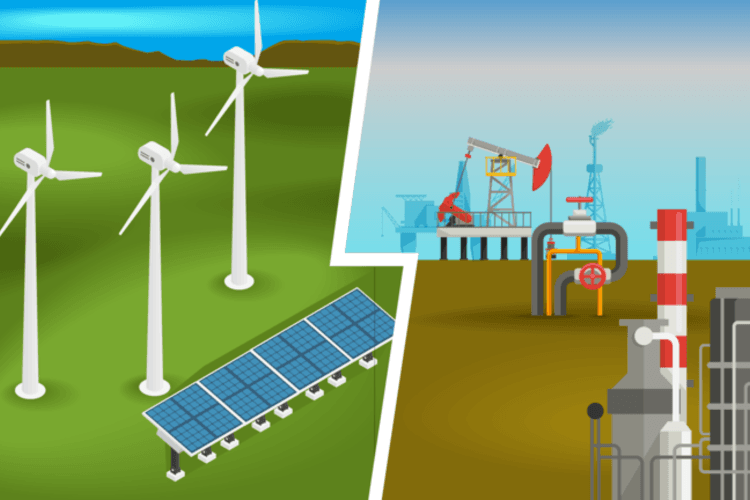
What Are Non-renewable Energy Sources?
Non-renewable energy sources include coal, oil, and natural gas.
Coal is a solid, carbon-heavy material found beneath the earth’s surface using mining techniques and is the most carbon-heavy fossil fuel in use today.
Oil, or petroleum, is a liquid fossil fuel made of hydrocarbons and obtained via drilling or strip-mining techniques. Oil supplies approximately 37% of energy in the U.S.
Finally, natural gas is made largely of methane and can be gathered through drilling and fracking. It is expected to become a much more common source of energy in the U.S. by 2050.
Why Are Fossil Fuels and “Dirty” Energy Problematic?
These common energy sources are considered non-renewable — once they’re gone, they’re gone — and dirty because of their polluting effects. Pollution from energy-related emissions of carbon dioxide accounted for 78% of global warming emissions in the U.S. in 2014.
Air and water pollution can have far-reaching impacts on the earth and its inhabitants, including asthma and cancer risks.Other issues with non-renewable energy sources include land degradation, ocean acidification, and rising sea levels.
Why is Renewable Energy Beneficial?
Renewable energy, by its very nature, is consistently replenished — it doesn’t run out. Because renewable energy sources stem from common natural phenomena like sun rays or a running river, most locations have some form of clean energy available to them in large quantities.
Renewable energy only accounted for 1% of total energy-related global warming emissions in the U.S. Unlike most fossil fuels, clean energy does not require any form of burning, eliminating the costs associated with emissions.
Clean energy sources are less intrusive as they utilize what is readily present; this means less environmental destruction, resulting in less run-off, land degradation, pollution, and impacts on animal habitats.
Renewable Energy Sources
There are various types of renewable energy sources, but renewable energy is continuing to evolve and new sources are on the horizon.
Wind
Wind is harnessed via turbines, which generate electricity as they spin. With extremely limited pollution output, this form of energy collection is often seen in the form of “wind farms,” or large swathes of land that house numerous turbines working in unison. That said, wind energy is more or less effective depending on the weather. It accounted for about 6% of the energy generated in the U.S. as of 2017.
Solar
Solar power is energy absorbed from the sun’s rays, usually captured through solar panels. Solar panels can be installed in almost any location, including on rooftops, over parking lots, across fields, and even in Disney World.
This source is among the most common renewable energy options for individuals because homeowners can easily harness the sun’s energy by installing solar panels on their roofs. As a result, solar power is a highly competitive market and engineers like Elon Musk, amongst others, have created various solar options including solar-paneled roof tiles.
However, a major downside to this power source is the impact of weather on power, since rain and clouds lower the amount of energy available for absorption.
Hydroelectric
Hydroelectric power comes from moving water. In many ways, most hydroelectric systems function similarly to wind-powered turbines, except they utilize fast-moving water to spin turbines instead of wind. Hydroelectric power does not cause pollution but can impact animal habitats by altering water levels and flow. It is also a common option for homeowners living near rivers and streams.
Another way of harnessing water power is by utilizing tidal and wave energy from the ocean, although this technology is much newer and still relatively limited.
Geothermal
As the name describes, geothermal energy utilizes heat from within Earth. Some companies drill deep holes into the earth, allowing hot water to rise to the surface and power turbines.
Certain countries, like Iceland, utilize smaller-scale versions of this model to pump heat into homes with little or no pollution risk. Iceland’s high renewable energy usage (including geothermal and hydroelectric power) has attracted power-hungry technology projects such as bitcoin mining, allowing businesses to lower their impact on the environment and save substantially on ower costs.
Hawaii is also capable of harvesting geothermal heat from volcanoes and lava.
Biomass
Biomass energy comes from the organic matter of recently living sources of life, as opposed to fossil fuels from long-deceased biologies. Ethanol and biodiesel are two common fuels that result from biomass sources.
One example of biofuel is algae; it can be grown quickly easily and quickly, but the carbon neutrality of energy within this category is up for debate since burning is usually part of the energy process.
What are the Downsides of Renewable Energy?
Renewable energy is not without its issues. Corrosion of capture devices such as turbines due to constant exposure to natural elements such as high heat, wind, and salt can create costly upkeep issues with equipment. Weather impacts can similarly impact the output of renewable energy, lowering consistency for end-users.
Some older power grids cannot sustain renewable energy, lowering opportunities for investors to sell power back onto the grid.
Similarly, some forms of renewable energy require a substantial upfront investment of time and money, an issue usually offset by government tax breaks to reward the installation of renewable energy equipment.
There is also controversy surrounding the environmental costs of creating and installing solar panels, which require more energy and fossil fuels to create than the panel will generate in its lifetime.However, as technology continues to expand, new materials, manufacturing methods, and energy-saving technology such as IoT sensors (e.g. smart thermostats) emerge. As of now, renewable energy is seeing double-digit growth and nuclear power is also still growing.