Image credit: Shutterstock/Engineer studio
As various sectors evolve to keep up with Industry 4.0, the construction industry and related sectors are implementing robots to create safer working conditions and improve manual tasks. These collaborative robots can help human workers with many construction tasks. They work alongside humans to perform tasks in the reconstruction industry faster and more efficiently.
Giving Robots Dangerous Tasks
Some construction companies are assigning these robots the more dangerous tasks to keep their workers safe and allow them to concentrate on other important mechanical and electrical engineering aspects of the construction process. Cutting-edge technology like artificial intelligence (AI) and automation is powering the sector’s advancement.
For example, SitePrint, a small, autonomous robot, has taken over the task of painting blueprints on construction site floors to save workers time.
These Robots Aren’t New
These robots have been around for many years but soared to new heights after the COVID-19 pandemic. In 2022, the construction robotics market globally was valued at over $162 million, and it is expected to see a whopping 360% growth by 2032 to reach $774.6 million.
Why Use Robots in Construction?
The perks of using robots and AI in construction are fewer mistakes on the construction site, more worker protection, buildings of greater quality and precision, and savings both in time and costs. The main ways that robots and AI are already being used in the construction industry are in welding, demolition, and prefab and modular construction.
Slowly but surely, this new tech is creeping into other areas, too. But let’s take a deeper look at how robotics is benefiting construction.
Robots Assisting in the Construction Industry
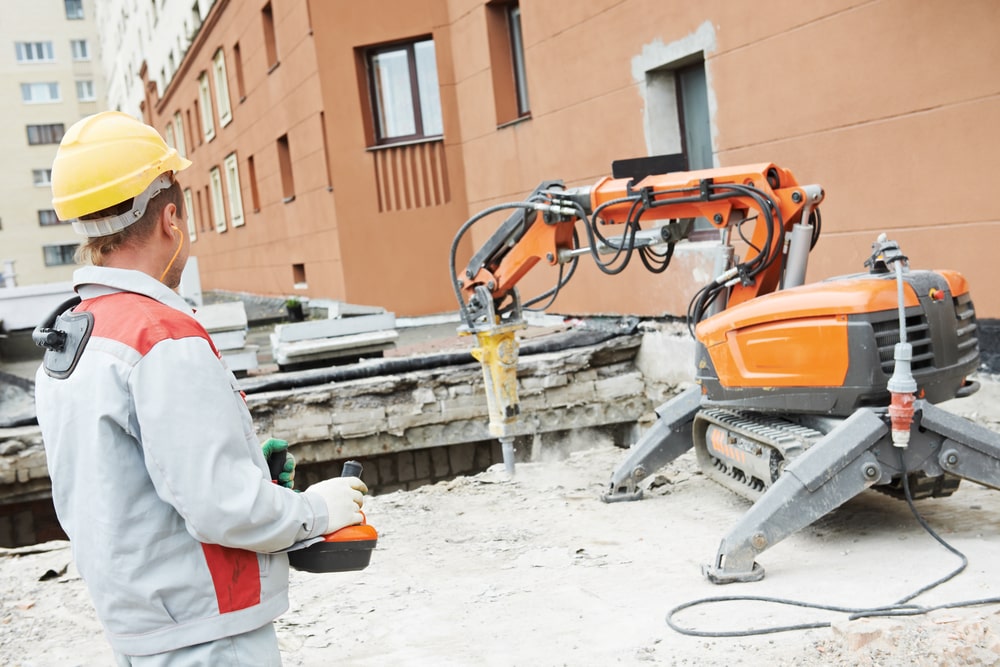
Image credit: Shutterstock/Dmitry Kalinovsky
From demolition robots to bots that can weld, here are five ways robots efficiently work alongside construction workers.
1. Construction Site Transport of Supplies/Materials
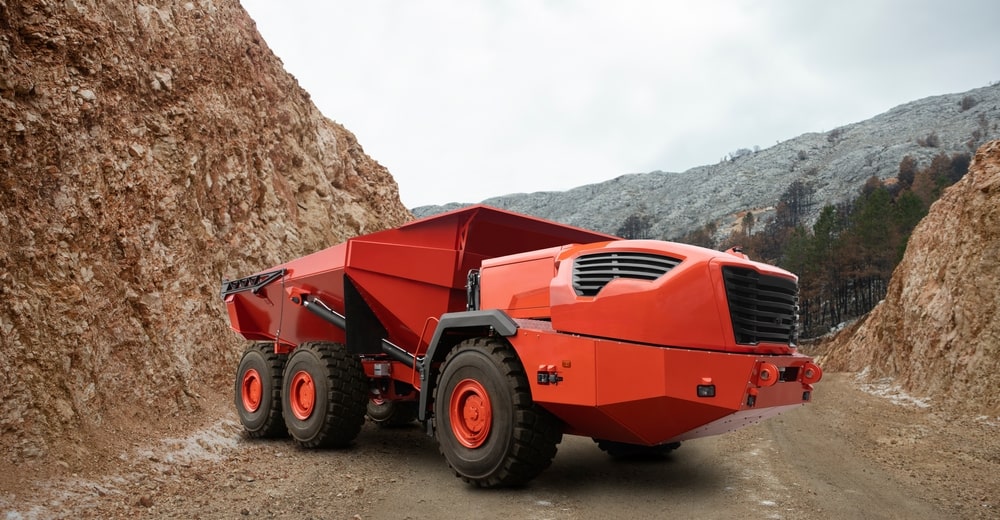
Image credit: Shutterstock/ Scharfsinn
AI and robots are being used to transport supplies and materials on construction sites in several ways. Instead of a driver cabin, autonomous vehicles, like trucks and loaders, are self-sufficient and capable of transporting materials and supplies themselves.
These self-driving construction vehicles referred to as automated guided vehicles (AGSv), work with a vision system that tracks people and obstacles, supported by a digital logistics-driven operating sensor.
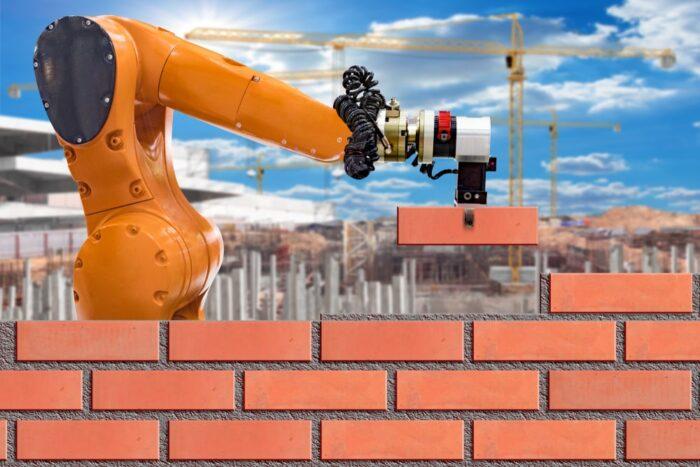
But that’s not all. Drones are being used to deliver smaller tools, equipment, and materials to more difficult-to-access areas. Robotic arms and cranes can lift and place heavy items or more hazardous materials and can be programmed to perform repetitive tasks, like bricklaying or concrete pouring, including taking the materials to the relevant location themselves.
These robots can also follow markers or wires on the floor to get to where they need to go. This removes humans from any potential safety hazards and frees them up to manage more complicated tasks. It also helps address the general problem of labor shortages within the construction sector.
2. Construction Robots Can Manage Welding
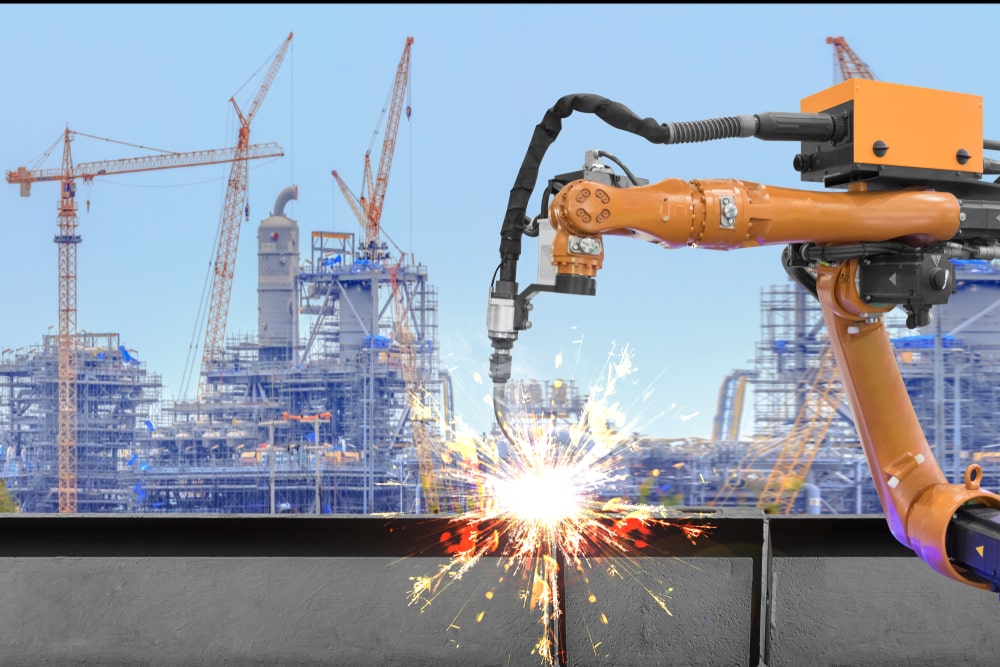
Image credit: Shutterstock/Engineer studio
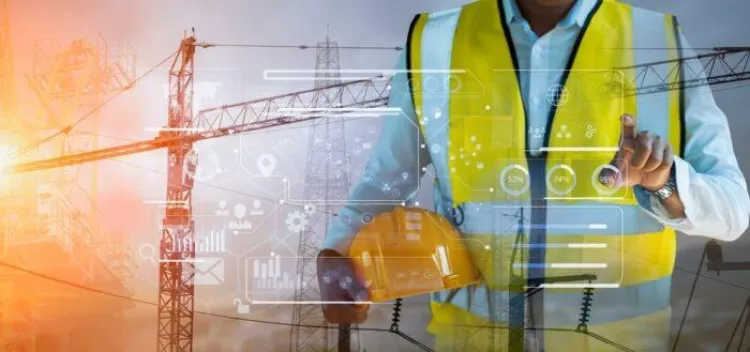
Robotic welding is being implemented across various sectors, including automotive and construction. Robotic welding arms hold welding torches and can quickly and accurately weld, and unlike humans, they can work continuously without breaks.
Automated welding systems are programmable and useful for more repetitive tasks, and they can also be adaptive and work with different materials and tools in various environments.
There are robots that are used for things like welding inspection and quality assurance, as well as predictive maintenance. Others are cobots and simply assist human welders, taking on the more dangerous tasks or helping with things like holding materials in place.
Mobile robots can also be deployed to different locations for on-site fabrication. Automating the welding process means construction projects are finished more quickly without sacrificing quality. A less manual process improves output, including a cleaner surface finish and dimensional accuracy.
3. Construction Robotics Remotely Operate at Safe Distance
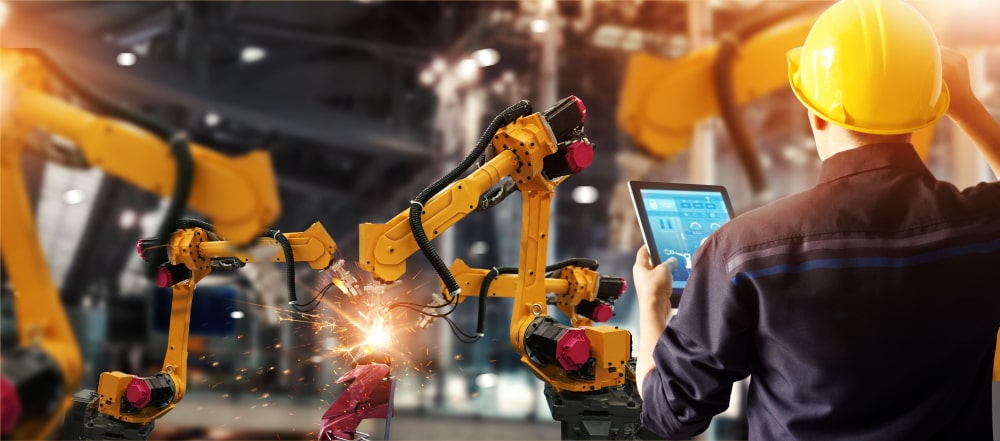
Image credit: Shutterstock/Pop Tika
Remote controls allow constructors to work from a safe distance. Protecting the operator and others on the job site, remote-controlled excavators and bulldozers enable workers to leave the vehicle and work from a fixed position with an optimal view.
Other types are operated by humans and use high-definition cameras, sensors, and real-time data transmission to carry out tasks like welding, drilling, and material handling without humans having to physically be on site. This is especially useful in dangerous locations and environments.
Demolition robots can be remote-controlled to carry out often dangerous demolition and deconstruction work. They’re equipped with hydraulic breakers, crushers, and shears to quickly break down structures and remove debris.
In addition, Scaled Robotics designed a site-patrolling robot to digitize construction sites and spot mistakes. As the robot moves through the site, workers can monitor the progress of their construction project from a safe distance and spot potential problem areas.
4. Lift Heavy Objects on Construction Sites
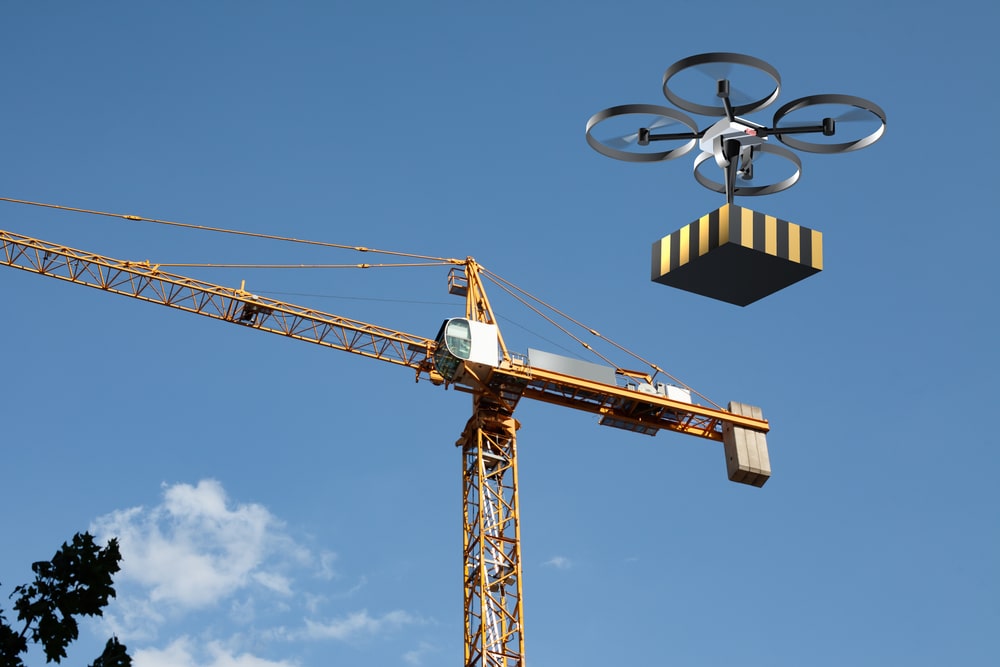
Image credit: Shutterstock/aerogondo2
Using a lifting robot can relieve workers of physically demanding tasks, allow them to concentrate on the more nuanced aspects of the job, and keep them safe, reducing the risk of injury and falls or back-related injuries from heavy lifting.
For example, Australian-based construction technology firm FBR created Hadrian X, a bricklaying robot that works without human intervention.
Hadrian X can lay heavy bricks every 45 seconds, addressing labor shortages and improving efficiency. IronBOT, a robot currently in the works by Advanced Construction Robotics, will be able to carry and place 5,000-pound bundles of rebar.
Another new form of robotics being used in building construction is the exoskeleton. Donning a mechanical suit, also known as an exoskeleton, can significantly increase the average worker’s stamina, agility, and mobility. In the workplace, it enables users to move and carry loads that are typically too heavy.
5. Robots and Construction Site Security
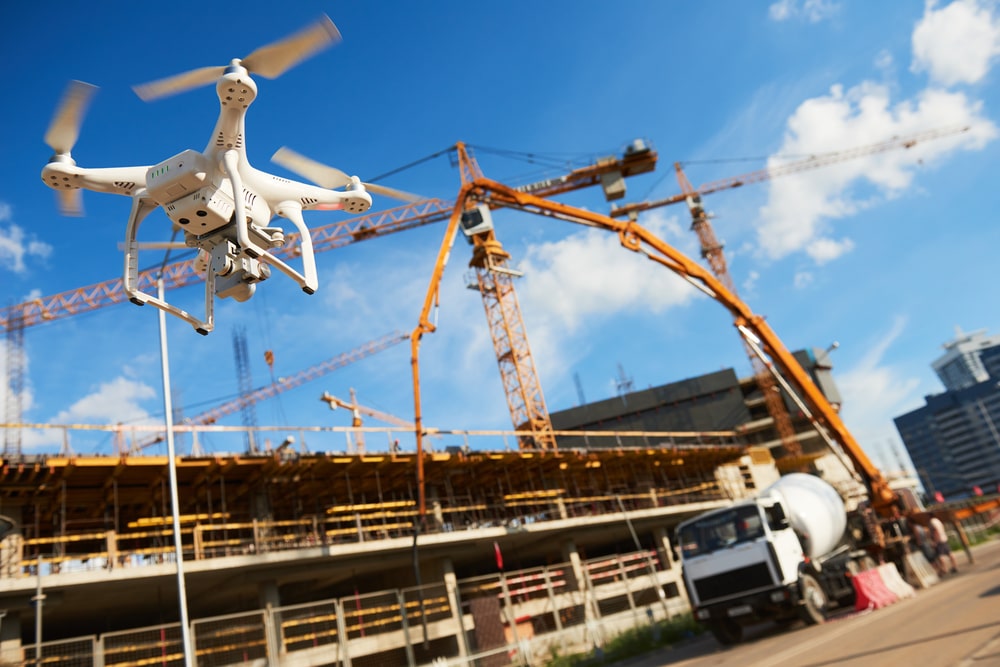
Image credit: Shutterstock/Dmitry Kalinovsky
Many construction businesses are investing in security to improve safety and prevent theft. Robotic drones programmed using AI technology are helping monitor construction sites.
These drones can capture high-resolution images and aerial footage before live streaming it to monitors and mobile phones. This constant surveillance helps prevent and deal with potential security threats, such as unauthorized access, theft, or vandalism.
These can be more effective than manual security because they can oversee a greater area. In turn, workers can rest easy knowing their construction projects are protected.
Other Robotic, AI Innovations in Construction
Let’s have a look at a few more examples of robots working in construction.
Hilti’s JaiBot
The JaiBot by Hilti is a semi-autonomous drilling robot designed for ceiling installations in MEP (mechanical, electrical, and plumbing) and interior finishing applications. It operates wirelessly for up to eight hours per charge and features a built-in dust removal and marking system.
Using data from Building Information Modelling (BIM), the Jaibot accurately marks and drills holes according to digital plans, reducing workers’ need for strenuous and repetitive overhead drilling tasks. It also helps automate the construction workflow, using digital plans to carry out projects precisely.
Workers can upload the BIM data to the Hilti Cloud, import job files via a field tablet, and set up the site with a total station. The robot then drills holes as specified by the digital plan, resulting in fewer errors and a more efficient process.
CU-Brick
The CU-Brick is an advanced cable-driven robot designed to automate the bricklaying process in construction. This system allows for precise handling and placement of bricks via a network of cables for movement and positioning. Unlike traditional robotic arms, the cable-driven design of the CU-Brick provides greater flexibility and a larger working area.
One of its main benefits is its ability to work continuously without fatigue. It can lay bricks much faster than human workers and thereby speed up the construction process. This automation not only increases efficiency but also ensures greater safety for human workers and lowers costs.
3D Printed Cement
Construction material company CEMEX and COBOD, a leading 3D printing tech company, partnered in 2021 to introduce a 3D printing solution for cement products and structures.
This new technology uses conventional ready-mix concrete in the building process alongside advanced 3D printing methods. It’s more cost-effective than manual, uses materials from existing supply chains, and saves labor costs.
Construction Robots Now and in the Future

Image credit: Shutterstock/PopTika
Robotics in construction has already made impressive progress, which means that it can only improve in the future. We can expect increased automation and more fully autonomous systems on construction sites carrying out tasks like earthmoving, excavation, bricklaying, and concrete pouring.
Incorporating integrated AI and machine learning will allow these robots to learn from the environment, adapt to the challenges, and easily learn and take on new tasks. More cobots will work alongside human workers, and augmented reality integration can give workers real-time data and visual guidance.
Drones will surely become more advanced, providing better images and monitoring over greater areas. In addition, they can also avoid accidents by checking for things like whether workers are wearing all the necessary protective gear, performing any unsafe tasks, or seeing if any safety barriers are missing. They then report the findings in real-time to the appropriate managers.
Smart construction sites are being developed using the Internet of Things (IoT). IoT-enabled robots can communicate with all the other smart devices on the site, creating an efficient and coordinated ecosystem for better management and safety.
Off-site robotics are also being used for things like prefab modular construction and large-scale 3D printing. The process is more cost-effective, reduces waste, and is much quicker, too.
As the use of AI technology in the construction industry increases and continues to develop, robots will become the norm in many construction operations for smarter, quicker, more cost-effective, and sustainable construction projects.
Other AI in Construction Articles
- The AI-powered Robots Addressing Current, Future Industry Challenges
- Autonomous Robot Paints Blueprints on Construction Site Floors to Save Crews Time
- Construction Robots Will Have to Colonize Mars Before Humans
- This Spider-like Robot Inspects Sewage Pipes