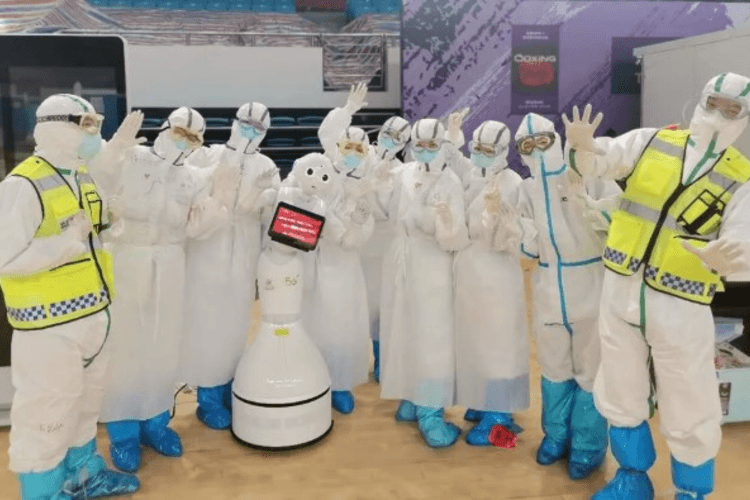
COVID-19 has infected more than 350,000 people worldwide and doesn’t show signs of stopping anytime soon. Due to the disease’s quick-acting contamination, at least 20 medical workers in China caught the virus while looking after patients. To combat the spread and protect medical staff, self-sanitizing robots were introduced.
Qianxi Robotic Catering introduced hygienic catering robots capable of producing 36 meals every 15 minutes to feed patients. Another food delivery bot named “Little Peanut” was used to feed passengers from a flight to Hangzhou from Singapore; they were contained after several passengers were suspected of being infected. Multiple “Little Peanut” bots were recruited to reduce human contact and prevent the spread of disease.
Similarly, the Guangdong Provincial People’s Hospital in southern China utilized robots for clean-up and medicine delivery. The AI-powered bots, named Ping Ping and An An, which translates to "peace,” disinfect themselves automatically and helped treat patients without risking infection.
“Caregivers provide care within the isolation unit, but technology is allowing us to reduce the number of up-close interactions,” Dr. Amy Compton-Phillips of the Providence Regional Medical Center told Forbes.