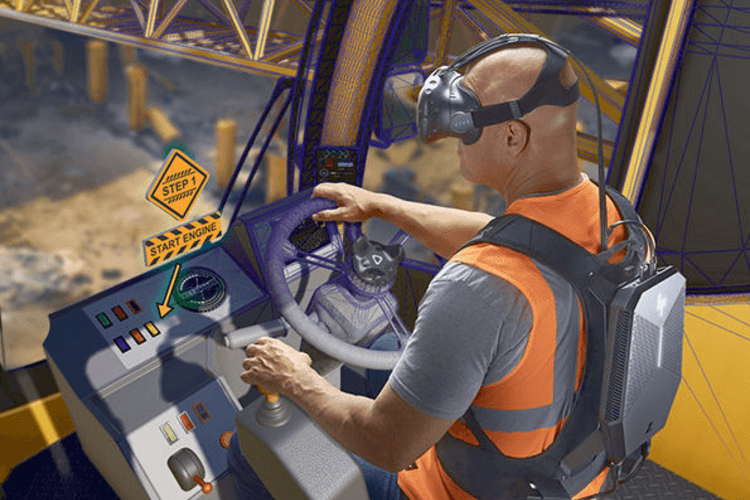
HP recently unveiled its latest Virtual Reality tool in the form of its HP Z VR Backpack for both creating and consuming VR content. Dubbed the first wearable VR PC on the market with the NVIDIA Quadro P5200 GPU and 16 GB of video memory, it allows users to transition between a desktop for content design, and a wearable PC to validate creations.
The lightweight, ergonomic backpack also features swappable batteries, high-end processing power, and a high-fidelity graphic solution for uninterrupted use. The unit will be available in September at a projected price of $3,299.
Applications could include:
- Creation of virtual prototypes, which can be analyzed and allow for greater input received, helping to reduce product development timelines.
- Training programs that provide for a safer, yet fully immersive experience with large or complex equipment.
- Developing maintenance procedures without shutting down equipment or production lines.
- Remote training on complex equipment in advance of receiving it on site, or sharing maintenance and operational approaches learned at other locations.
Additional features include:
- The Windows 10 Pro operating system.
- A weight of 10.25 lbs.
- The ability to transition between a wearable VR PC and a desktop with a connected docking station.
- Compatibility with most VR headsets.
- Compliance with MIL-STD 810G durability standards.
- 330 watts of power.
- Profile dimensions of 13” wide by 9” deep by 2.4” high.
Insights
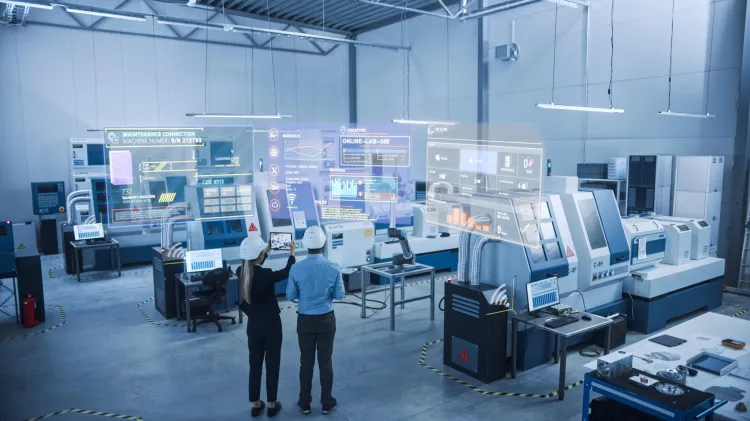
One day virtual reality tools could become as commonplace on the plant floor as forklifts and multimeters. The ability to train maintenance and operations personnel without actually exposing the individual or equipment to the strains of training could be an immense savings in terms of time and money.
Additionally, working through software-rendered, virtual prototypes could allow for obtaining quicker, company-wide input on new product designs. The ability to move more swiftly in addressing concerns or resolving conflicts helps justify the initial costs and paradigm shifts. Implementing this type of technology also goes a long way towards attracting younger and more tech-savvy workers to the industrial workspace.