Faster decisions, more efficient operations, and consistent performance: machine learning sounds like an ideal employee, doesn’t it?
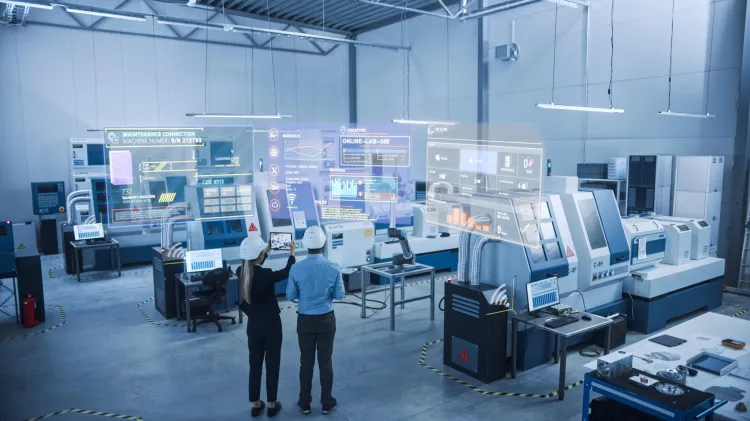
While the Internet of Things becomes increasingly nimble, facilities management stands to win big: incorporating equipment and tools with smart tech brings higher quality, superior organization, and better performance — all with easier operation.
What is Machine Learning?
Machine learning is a particular AI subset that deals in data. It’s not all that new — computer scientists have been developing machine learning tech since 1959, primarily to focus on system performance improvements in computers. The system relies on algorithms and analysis; it doesn’t require a pre-programmed answer to reach the best available solution.
Two key branches of machine learning are hitting the facilities industry in a big way:
- Supervised machine learning, which uses labeled responses to help solve problems. Supervised machine learning can develop an algorithm to help predict when replacement parts should be budgeted and installed based on operating costs and patterns.
- Unsupervised machine learning, which evaluates raw datasets to find patterns: think traffic, usage, or demand. This type of data usage generally relies on sensors, cameras, and metrics like energy consumption to optimize facility operations.
How is Machine Learning Relevant to Facilities Management?
Pattern recognition is a key part of machine learning: delving deep into data sets to identify recurring patterns and adapting to suit them. Facilities managers can’t just dig into those numbers on their own — in most operations, the information sets are just too vast. However, the patterns they display are real, and extremely relevant in the case of say, optimizing energy usage.
Predicting Problems
When a facility manager tracks operations with machine learning, the disruptions in normal patterns are just as relevant as the consistencies. For example, if a process suddenly fails to meet its routine performance levels, it’s possible to isolate and replace a failing part — before it becomes a problem.
Smart technology can be programmed to set alerts when the facility displays inconsistencies, all through self-monitoring data collection.
Tracking Usage
By establishing operational patterns, it’s easy for facilities managers to develop proactive system scheduling: parts ordering, cleaning, routine shutdowns, and equipment replacement can all be arranged at the most cost-effective and efficient times.
Optimizing Energy Efficiency
A recent study from IIC Testbed investigated deep learning through an IoT platform for asset optimization throughout a regular office building — a Toshiba facility in Kawasaki, Japan. The vast system of sensors tracked 35,000 measured data points per minute and drew insights on everything from prioritized elevator scheduling to kitchen odors, automated temperature adjustments, and lighting controls.
While this project proves an elaborate example, smart tech systems can outpace static programs in balancing building load. For example, most usage — even in HVAC and lighting alone — goes beyond the binary weekday/weekend or workday/holiday schedule. Weather events, holidays, and even major sporting events routinely alter attendance levels, and a smart system can mine historical performance data and respond accordingly.
Savvy Storage
In addition to predicting patterns for real-time applications, machine learning tech can also help to sort, prepare, and store data — suddenly, all this information can be significantly more useful to a manager.
For example, the tech can automatically group and sort data according to time of year, a particular machine performance, or even a type of maintenance. These analyzed, categorized data sets prepare the foundation for smart, organized action.