
The history of solar energy began more than 4.5 billion years ago when the Sun coalesced from a gargantuan disc of gas and dust known as a solar nebula. Today, it releases more than enough energy every hour to sustain our entire civilization for a year.
In the most recent millennium, humanity has increased efforts to collect solar energy, with major advancements realized in the past decade. There are myriad processes, benefits and drawbacks, environmental considerations, and far-reaching future implications.
Solar Energy Defined
What is solar energy? The Latin name for the Sun is Sol. Solar energy, or electromagnetic radiation (EMR), is produced through fusion in the 27 million ℉ core of the Sun.
Needless to say, solar mechanics are somewhat complicated, but they generally hinge on fusing 4 hydrogen nuclei into 1 helium atom. That helium atom emerges 0.7% lighter than its 4 parents, with its seemingly lost mass released as energy according to Einstein’s famous equation E = mc2.
How Does Solar Energy Work?
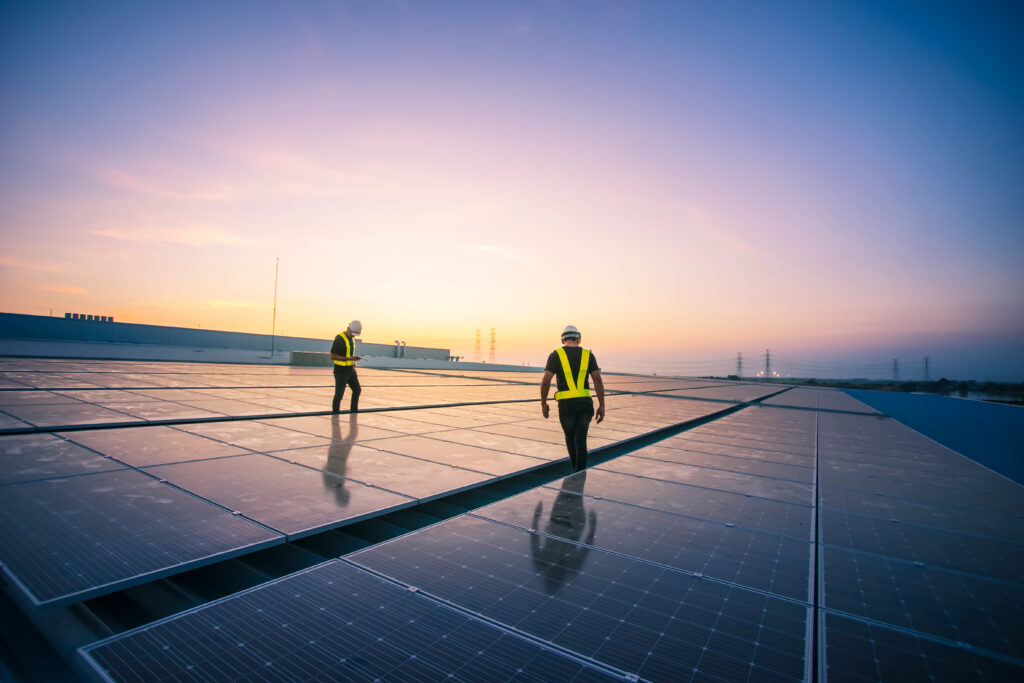
There are two main types of solar installations, the most recognizable being the solar panels that adorn modern households. Also known as photovoltaic (PV) systems, these solar power systems utilize photovoltaic cells that convert solar energy into electricity through the photovoltaic effect: the Sun’s photons energize the electrons in the cells, then the electrons begin flowing as electric current.
On a utility scale, large solar plants utilize concentrating solar-thermal power (CSP) modalities. CSP solar technologies use arrays of mirrors to collect and concentrate sunlight onto fluid-filled receivers. The sun heats the liquid within the receivers, and the thermal energy spins a turbine or powers an engine that generates electricity and yields usable energy.
Generating electricity via concentrated solar power plants requires extensive facilities, typically in one of two arrangements: power tower layouts with mirrors pointed toward a receiving tower or rows of mirrors that focus solar radiation on tube receivers above them. These large CSP set-ups generate power for industrial use or utility-scale projects, including mineral processing, chemical production, water desalination, and food production.
Global Solar Energy Market
The net generation of U.S. energy from solar sources, measured in gigawatt hours, has risen dramatically between 2000 and 2021, with much of the growth starting in the early 2010s. For example, 2000 saw a production of less than 500 gigawatt hours, and one thousand gigawatt hours was not surpassed until 2010. Rapid growth followed, and 2021 saw a production of 114,678 net gigawatt hours, or "114.7 terawatt hours of solar thermal and photovoltaic (PV) power.”
Solar Energy by State

Based on an Energy Information Administration (EIA) data report from January 2023, California again led the way in solar power generation, producing 28.7% of the U.S. total of 12,157 thousand megawatt-hours. Next was Texas with 13.7%, Florida with 9.2%, then Arizona with 5.7%. Possibly more surprising, North Carolina came in fifth with 5.4%.
In terms of the percentage of total electricity from solar, California placed first with 20.6%, followed by Hawaii at 18.2%, Nevada at 17.5%, and Massachusetts 16.7%. Coming in fifth, Vermont had a significantly lower percentage at 10.6%.
And while COVID afflicted the solar industry like every other sector, installation rates are increasing, especially in states that ranked much lower pre-pandemic, such as Indiana, Michigan, Oregon, and Iowa. Texas took the top title in the first quarter of 2021, with 1,525 megawatts (MW) of added capacity, equal to 16% of its current cumulative capacity and 45% of its capacity added across all of 2020.
Solar Energy Manufacturing
Solar power can generate electricity to efficiently run numerous manufacturing operations and vital services, including solar heating, lighting, transit, ventilation, and even small-scale technologies like solar cookers. On a more municipal scale, solar energy helps drive the ubiquitous, behind-the-scenes procedures that support society, including water desalination, chemical and mineral production, and food processing.
Accordingly, many of the world’s biggest companies are adopting solar power, with corporations accounting for "14% of all installed solar capacity” in America. Meta, the company formerly called Facebook, leads the pack, installing more than 3,588 MW of solar power. Thi sis more than three times the amount of the runner up, Amazon.
Amazon has installed 1,115 MW of solar power. It has pledged carbon neutrality by 2040 and net zero emissions by 2030. It bought a fleet of 100,000 electric delivery vans and is working to achieve 80% of its energy needs via renewable sources.
Apple has installed 987 MW of solar power. It has also pledged to become carbon neutral by 2030 and is beginning to fuel its global production with renewable electrical energy.
Walmart has installed 689 MW of solar power. It generates the most solar energy of any company not in the technology sector and also surpassed all others in wind procurement in 2019, on its hopeful path to be powered by fully renewable energy by 2035.
And many other entities, including Microsoft, Target, Kaiser Permanente, and Anheuser-Busch are significantly increasing their reliance on solar as a renewable resource.
Solar Panel Parts and Materials
Silicon Solar Cells
Solar PV cells are the workhorses of many solar energy technologies. Cells are made of various semiconductor materials that conduct electricity well, but not as exceptionally well as metals would. When sunlight strikes these cells, the Sun’s radiant energy is transferred to the negatively charged electrons within the material, causing the electrons to flow as an electrical current.
Silicon is a favored material because silicon atoms form an ordered lattice structure, facilitating the conversion of light into electricity. Silicon is also the second-most abundant earthly element after oxygen. In addition to low costs and a long lifespan, it’s no wonder 95% of solar modules are silicon-based.
Metal Frame
Serving as sort of a skeleton, the grid-like lines on solar energy systems contribute a functional purpose. Once solar radiation provides a boost, the flowing electrons, or electrical current, are extracted through the solar cell’s more conducive metal frame.
Glass Sheet
Glass is essential to solar cells because it’s transparent to light, allowing photons to pass through to the heart of the cell. Glass can also serve as a mirror, with a reflecting coating that can concentrate incoming sunlight. Glass, especially of the tempered kind, is also durable and recyclable.
Wires
Photovoltaic wires can be thought of as the connective tissues of PV panels. They usually feature copper or aluminum conductors, good flexibility, and strong resistance to common stressors such as moisture and heat. Accordingly, the National Electrical Code prohibits using many types of cables in solar devices.
Solar Energy Subsidies
Subsidies may be necessary to spur what could be a revolutionary shift in solar power production, storage, and usage. One major mover may be the investment tax credit (ITC) that "reduces the federal income tax liability for a percentage of the cost of a solar system that is installed during the tax year.” Another may be the production tax credit (PTC), which reduces federal income tax liability, on a per-kilowatt-hour basis, during the first decade of a system’s operation.
The most recent of these initiatives covers solar energy systems that entered service in 2022 or began construction before 2033. These systems can receive a 30% ITC or a 2.75 ¢/kWh PTC if they meet certain requirements. Equal benefits abound for residential solar users, with a 30% tax credit for installations between 2022 and 2032.
Many other locality dependent resources are available to provide access to state incentives and local rebates for individuals and organizations looking to adopt solar energy systems.
Benefits of Solar Energy

Reduced Carbon Emissions
Solar is the most abundant energy resource, and it can reduce emissions. Based on a report by the Columbia Climate School, solar farms can cut carbon: an acre of solar panels could save between "267,526 to 303,513 pounds, or 121 to 138 metric tons” of carbon dioxide per year, reducing around "144 to 166 times more carbon dioxide” per year compared to an acre of forest land.
Additionally, filling that acre with a solar power system can be 40 times more efficient than using that acre to grow corn for ethanol. Finally, solar is a highly renewable resource compatible with pasture, grasslands, food production, and other farming operations.
For rooftop solar energy systems with a 30-year lifespan, the CO2-equivalent emissions of generating 1 kWh of electricity add up to 41 grams, about the mass of a medium-sized chicken egg. Overall, these emissions are 12 times lower than natural gas and 20 times lower than coal, according to Solar.com.
Lower Electricity Bills
Harnessing the Sun’s rays by employing solar energy generation can save money and reduce electricity bills. The U.S. average bill is around $125 per month, and if these costs can be covered via solar, a household can save $1,500 per year. Many aspects apply, but net savings over the life of a PV energy system can total between $25,500 to $33,000, according to Forbes.
Increased Home Value
It can prove fruitful to install solar panels. Upgrading one’s home with solar energy technologies could lead to a significant increase in home value. Multiple factors, including electric rates and system size, ultimately affect the added value. A study from the Lawrence Berkeley National Laboratory found that home value may increase by an average of $15,000.
A separate report by Zillow found that 67% of prospective home-buyers consider energy efficiency a critical factor when choosing a home. Accordingly, buyers may spend an additional 4.1% on a solar-powered home.
Low Maintenance Costs
A solar energy system boasts favorable maintenance costs, as it provides renewable power over a long lifecycle of several decades. Modern solar energy systems also feature smart tech that helps to preempt repairs and efficiency issues.
It’s recommended that solar users invest in annual maintenance, which can cost $400-$740, with a national average of $570, or $13 to $25 per panel. However, costs may exceed these figures if repairs are necessary.
Energy Independence
At the domestic level, solar energy generation and storage can help many become more independent. Solar electricity could be used to cook food, provide space heating or hot water, run heat pumps, or fuel numerous other suburban or urban processes. However, unless one installs an off-grid solar panel system, it may not be practical to completely sever ties with one’s utility company.
It’s also vital to store solar energy. Without storage capabilities, the excess energy generated is of the "use or lose it” persuasion. When a PV system produces more than is needed, that excess electricity must be stored or sent elsewhere along the electric grid — though the homeowner may receive money or credits in return.
Overall, solar’s effects can quickly multiply in various ways — every electric vehicle that replaces its gas-fueled counterpart can save 6 barrels of oil per year, and relying on heat pumps can help to reduce the reliance on natural gas. In turn, this helps to improve national energy independence.
Drawbacks of Solar Energy
High Initial Cost
As with other technologies and utilities, solar costs are not uniform. They vary from state to state based on numerous considerations, including an area’s average electricity bill. That said, 10.53 cents per kilowatt-hour (kWh) is the national average.
However, solar generally has a high initial cost based on wattage, with $3 to $5 per watt. Overall, a basic 5 kilowatt (kW) solar-panel system can range between $15,000 and $20,000, though the rebates could reduce these costs.
Weather-Dependent
PV panels work best when receiving direct sunlight. They also function in cloudy conditions, though only at around 10-25% efficiency because cloud cover scatters the Sun’s electrons.
Solar electricity generation is also affected by temperature, though possibly in a counterintuitive fashion: colder temperatures increase panel efficiency because a greater difference in voltage is attained when the electrons are in a less excited (colder) state. Panels may begin losing efficiency around 77 ℉, though losses in efficiency may be balanced by increased sunlight hours during spring and summer. Rain may scatter light but also clean panels of dust.
Use of Space
Renewable sources like solar require additional land use, as "solar and wind power needs around 40-50 times more space than coal and 90-100 times more space than gas.”
Yet solar boasts vertical viability: there are "8.12 billion square meters of buildable rooftops in the United States,” meaning that nearly 39% of America’s electric power needs could be met with rooftop solar installations.
Powering all of America would require a solar farm of 17,500 square miles, forming a square that’s 132 miles on each side, in an optimal sun-receiving region such as Las Vegas — though this does not account for additional land devoted to infrastructure, such as roads and service areas.
Association with Pollution
Solar panels are a clean energy source while in operation, but they must be safely recycled or disposed of at the end of their 25-30-year lifecycle. Depending on their make and type, some solar panels produce hazardous waste fluids or toxic metals like cadmium or lead.
This may be a lot of potential pollution, as the U.S. is projected to have "one million total tons of solar panel waste” by 2030. For perspective, the U.S. municipal solid waste generation was 292.4 million tons in 2018. And by 2050, the U.S. is projected to have 10 million total tons of end-of-life panels. Solar panel manufacture also requires material and energy use, but these environmental costs are generally offset within a few years.
Complexity
Solar success also depends on integration — not only bringing new technologies together and instituting them into homes and businesses, but assimilating solar capabilities into existing infrastructure and other conventional or renewable energy sources.
Plus, it may not be the hardware but the "soft costs [that] represent the largest share of total costs.” Solar companies must pay such soft costs to their suppliers, to acquire new customers, and, of course, to cover their bottom line. Other soft costs comprise "bureaucratic” charges, such as permits and financing.
How Solar Energy Affects the Environment
Solar energy offers a renewable source of power to reduce global greenhouse gas emissions and help divert climate change. It also benefits humans and the rest of nature by improving air, water, and soil quality while protecting wildlife and ecosystems.
Additionally, increased solar deployment could help the "United States achieve a carbon-free electricity grid by 2035.” However, responsible management is necessary, as solar facilities may clash with water and air resources and other land use, including animal grazing, military, and mineral production.
Production and disposal of solar systems must also be factored in to minimize pollution and hazardous chemical utilization as much as possible.
Solar Energy vs. Other Renewable Energy Sources
Below are specific considerations detailing solar’s impact in comparison to other renewables, and how these sources plug into the electrical grid.
Solar Energy vs. Wind Energy
Solar and wind are the fastest-growing energy sources. The latter is technically a result of the former: As solar radiation warms the Earth, hot air rises and cool air falls, creating atmospheric gradients and wind, a kinetic (motion-based) form of energy. Wind turbines then harvest this aeolian potential using a generator that turns the blades’ spin into mechanical energy to produce electricity.
Yet wind does have its drawbacks. Even though wind energy is viable at night, it’s hampered by unpredictability. Strong winds and other weather events may damage the turbines, which may also pose an environmental concern by endangering flying wildlife such as birds and bats. Turbines can also be noisy and are not ideal for urban areas, so their remote locations must be supported by additional, extensive infrastructure and power grid connections.
On the plus side, turbines produce more energy than solar panels and are less polluting. Wind farms can produce vast amounts of energy.
Solar Energy vs. Geothermal Energy
Geothermal energy utilizes heat from the Earth and is highly renewable, as subterranean reservoirs are constantly replenished. Though still largely untapped, geothermal energy can power the future with a much lower carbon footprint than fossil fuels. Compared to wind and solar, geothermal does not fluctuate as much and is more reliable and predictable.
Geothermal generation also has its downsides, primarily that it is location-specific. It is not always possible to build power stations on or near the site of geothermal energy sources. And while greenhouse gas emissions are lower than with conventional fuels, geothermal diggings release potent gasses, such as methane, from the Earth.
Regarding domestic use, average costs to install geothermal range between $18,000 to $30,000 but may balloon to $45,000 depending on multiple variables. Additionally, geothermal costs will remain high compared to wind or solar due to a "significant amount both of equipment and investment,” including heavy drilling and land preparation considerations.
Overall, a geothermal plant installation costs have soared from "$2,620 per kilowatt (kW) in 2010 to $4,468 per kW in 2020,” making it "the second most expensive type of renewable by installation cost, following solar power at $4,581 per kW in 2020.”
Solar Energy vs. Biomass Energy
Biomass energy comes from once-living things, including plants like corn and soy, wood, and waste, which undergo combustion to generate heat energy or electricity. As such, biomass is indirect solar energy: the organic materials undergoing combustion derived their energy by turning sunlight into sugar through photosynthesis. Alternatively, biomass can be concentrated into liquid biofuels like ethanol and biodiesel.
But biomass has certain limitations. For one, transportation of biomass fuels is economically inefficient beyond 160 miles. And biofuels are as much as 50% water, making them less energy-dense than fossil fuels. Overall yield also depends on plant efficiency, and burning biomass is a polluting process that releases numerous gasses that must be captured.
Biomass energy production also necessitates land. An acre of corn yields 400 gallons of ethanol, a liquid biofuel, though this acre cannot be used for food crops and is strained by a lack of planting variation and pesticide use. Other biomass products, like biochar, sequester carbon and improve soil quality. And though biomass can potentially produce "40 million tons of hydrogen per year,” or enough to power 150 million vehicles, its ultimate viability and practicality are still undecided.
In terms of modernity, the intentional burning of organic material for energy is an immemorial process, dating back to the first campfires made by human ancestors eons ago.
Future of Solar Energy
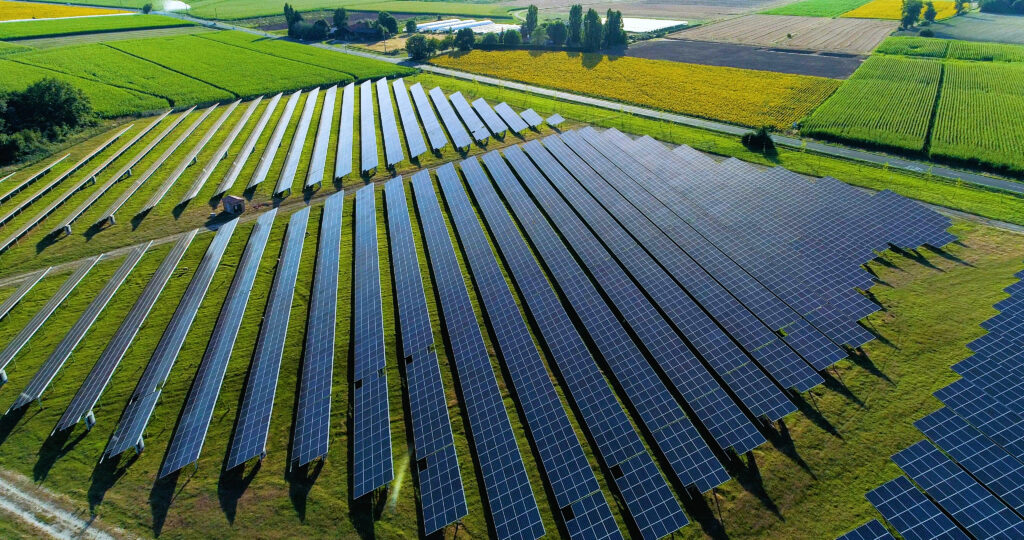
As technological barriers are hurdled and costs decline, "solar energy could provide 45% of the electricity in the United States by 2050,” according to projections from the National Renewable Energy Laboratory (NREL) of the U.S. Department of Energy.
Solar’s interaction with an ever-evolving energy environment is shaped by emerging cleaner fuels, sustainability, and increased electrification of vehicles, buildings, and other civic components. But deployment of solar panel systems and energy storage must continue to improve, as only "3% of solar-viable rooftops” are used currently.
Integration is just as indispensable as the orchestration necessary to coordinate various energy uses throughout industries, buildings, neighborhoods, communities, and the electrical grid at large. Equity must also improve so that all can enjoy the benefits of Sun-derived electricity generation.
If incentives are increased for low-to-medium-income households, solar adoption could rise tenfold. Systems must also be synergized, as converting direct-current electricity to alternating-current electricity could cause losses of up to around 26%.
In outer realms, space-based solar installations will bypass clouds and atmosphere to soak up the Sun’s full fury. Floating mirrors could direct concentrated sunlight onto energy-soaking satellites, which wirelessly beam their bounty to Earth via microwave or laser beam.
Farther out, solar-sail-powered spacecraft could combine the Ages of Sail and Space by leveraging the Sun’s energy as a propulsion system, providing another innovative tool for exploring the cosmos.
Limitless Possibilities Ahead
Solar energy technologies are set for a better-than-bright future as generation, storage, and integration continually improve. In the coming decades and centuries, solar’s brilliant potential can be as transformative as it is long-lasting — theoretically, it’s about 6 billion years until the Sun exhausts the hydrogen fuel in its core, shrinks, grows hotter, then puffs up and out. Finally, our expanding star will engulf Mercury, Venus, and possibly Earth. Hopefully, humanity’s far-off descendants may be harvesting the solar radiation of an alien sun by then.
Get More Renewable Energy Insights
- Types of Renewable Energy
- What Is Biomass Energy?
- What Is Geothermal Energy?
- What Is Wind Energy?










![How the Brooklyn Navy Yard Evolved into a Hub for Manufacturers [A Byte Out of the Big Apple]](https://machinerys.net/upload/cache/202507/how-the-brooklyn-navy-yard-evolved-into-a-hub-for-manufacturers-a-byte-out-of-the-big-apple.webp)