This article was sponsored by Thermo Fisher Scientific, a Thomas Verified manufacturer of analyzers and monitoring systems for elemental and radiation detection.
“Over the years I’ve been asked about 10,000 times, ‘When will you be able to do carbon with your X-ray analyzer?’” Jim Pasmore, consultant at Thermo Fisher Scientific, says, speaking about a new handheld device that allows users to test metals for carbon utilizing an easy-to-use interface. For years, he said, “the answer was never,” as the physics of XRF cannot be altered to detect carbon in a handheld device.
Carbon is a key element in steel and is often added at small levels to increase weldability, ductility, and corrosion resistance. With over 3,500 different types of steel, carbon detection fulfills an important industry need of differentiating between various types of metal to ensure the correct type is used for a job or project. “We’ve been producing handheld X-ray Fluorescence (XRF) analyzers over the years, and they’re great for elemental analysis, but they’re limited in the number of elements that they can detect,” Pasmore explains.
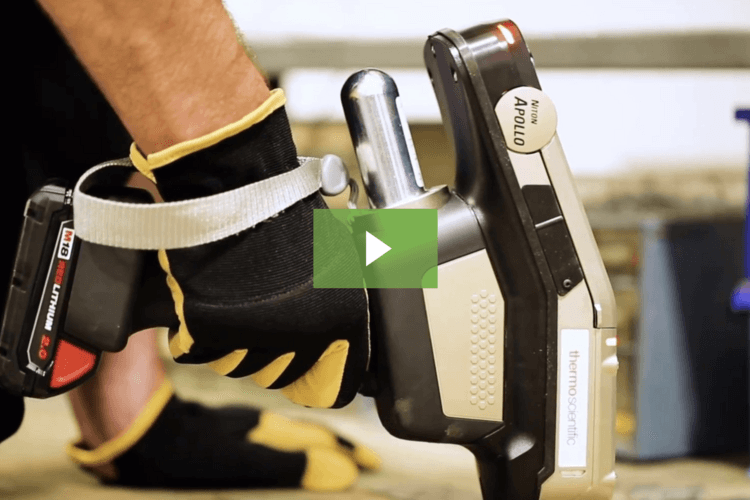
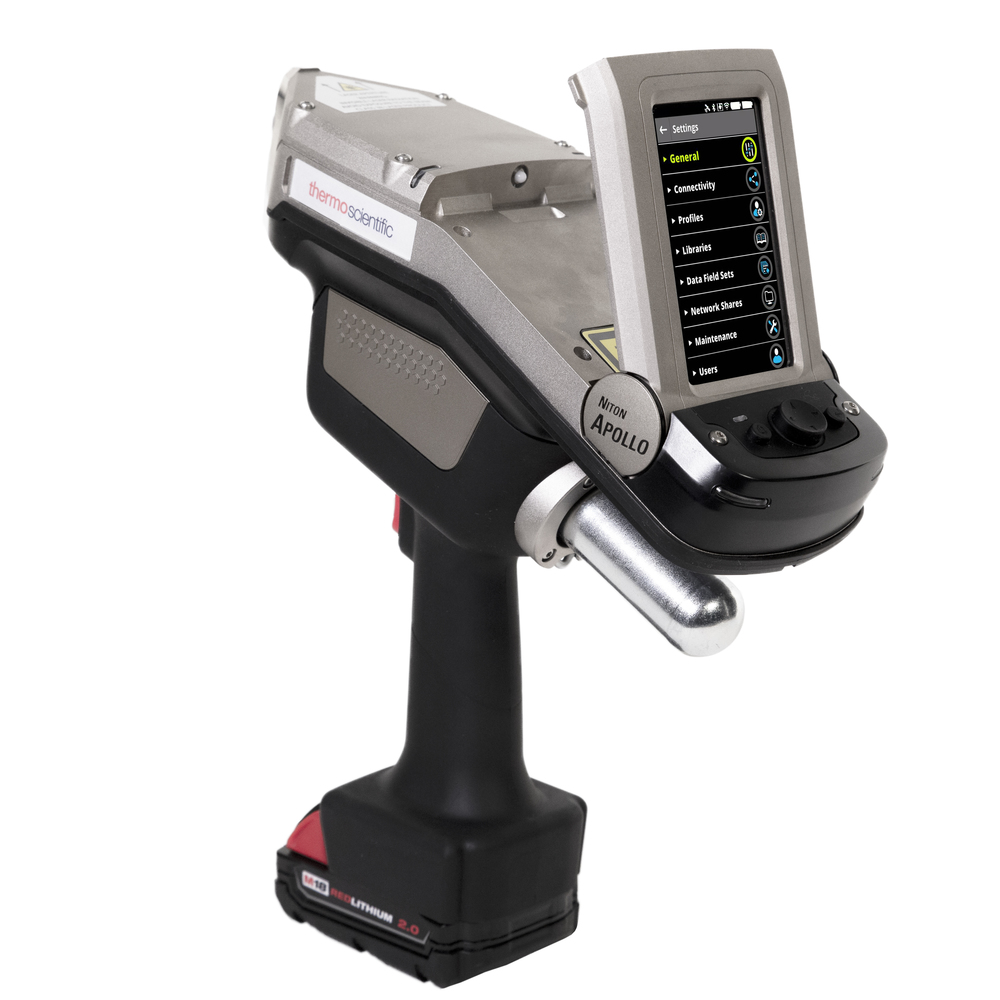
Now, more than 40 years into his career, Pasmore has at last seen the development of the Thermo Scientific™ Niton™ Apollo™ handheld LIBS analyzer which utilizes Laser Induced Breakdown Spectroscopy (LIBS) to test for carbon along with other alloying elements using a type of atomic emission spectroscopy that forms a highly energetic laser pulse to atomize samples.
“Thermo Fisher Scientific has the largest number of XRF handheld analyzers installed of any supplier in the world,” says Pasmore. The Niton Apollo handheld LIBS analyzer is a game-changer for the industry, however, because the handheld device allows for laboratory-grade analysis of carbon concentration in metal out in the field.
Thermo Fisher has continued to integrate its devices, expanding applications and capabilities into a single handheld device and eliminating the need to maneuver cumbersome equipment without sacrificing quality or efficiency. Its analyzers’ detection capabilities have advanced from a 30-second test time to mere seconds, massively increasing customer throughput.
Pasmore says the company’s in-house capabilities and development process set it apart from competitors. “Thermo Fisher has integrated system development with production so that it can create virtually everything in-house or through partnerships with well-known and capable suppliers,” he says. “Products go through every possible test to ensure reliability, and nothing is slapped together to get it on the market quickly for income.”
Customers come to Thermo Fisher for the brand’s innovative solutions. The Waltham, Massachusetts-based manufacturer’s goal is to advance science and technology to help make the world a cleaner, healthier, and safer place. Over the years, it has excelled genomic testing by introducing a fully integrated sequencing platform with automated specimen-to-report workflow that delivers results in a single day, created a sample-to-answer genetic analyzer for law enforcement that allows DNA samples to be processed, enrolled, and searched in only 90 minutes, and is on track to achieve net-zero carbon emissions by 2050.
“Thermo Fisher is one of the largest and most stable in the business with $30 billion in annual sales and 80,000 employees with in-depth experience,” says Pasmore.
Thomas Insights (TI): How have your handheld analyzers helped customers over the years?
Jim Pasmore (JP): There is a company that produces very large assemblies of a specific alloy. They rent these assemblies out in the oil patch, which is a large portion of their income. Over the years they’ve built up an inventory of ~50,000 of these alloy assemblies, and each one of them is worth several thousand dollars. But sometimes the material test report (MTR) is missing when the rentals are returned, which means they can’t send them out again. This throws their stock into limbo because without the MTR these assemblies are essentially scrap metal.
When we developed the LIBS analyzer, which can analyze carbon and all other elements, it allowed the company to begin testing their entire stock, create a new analysis certificate, and put each tested assembly back into the rental inventory. Within just a month of owning one of our analyzers, the company bought a second one and now uses both analyzers 24 hours a day.
TI: What makes Thermo Fisher Scientific’s new analyzers, such as the Niton XL5 Plus, different from older models?
JP: I’m finding that some customers who bought analyzers from me 20 years ago are still using them — the analyzers are still functional and provide excellent data. The Niton XL2 980 is 20 years old, and I can measure with it almost as accurately as some of the newer units, although not nearly as fast.
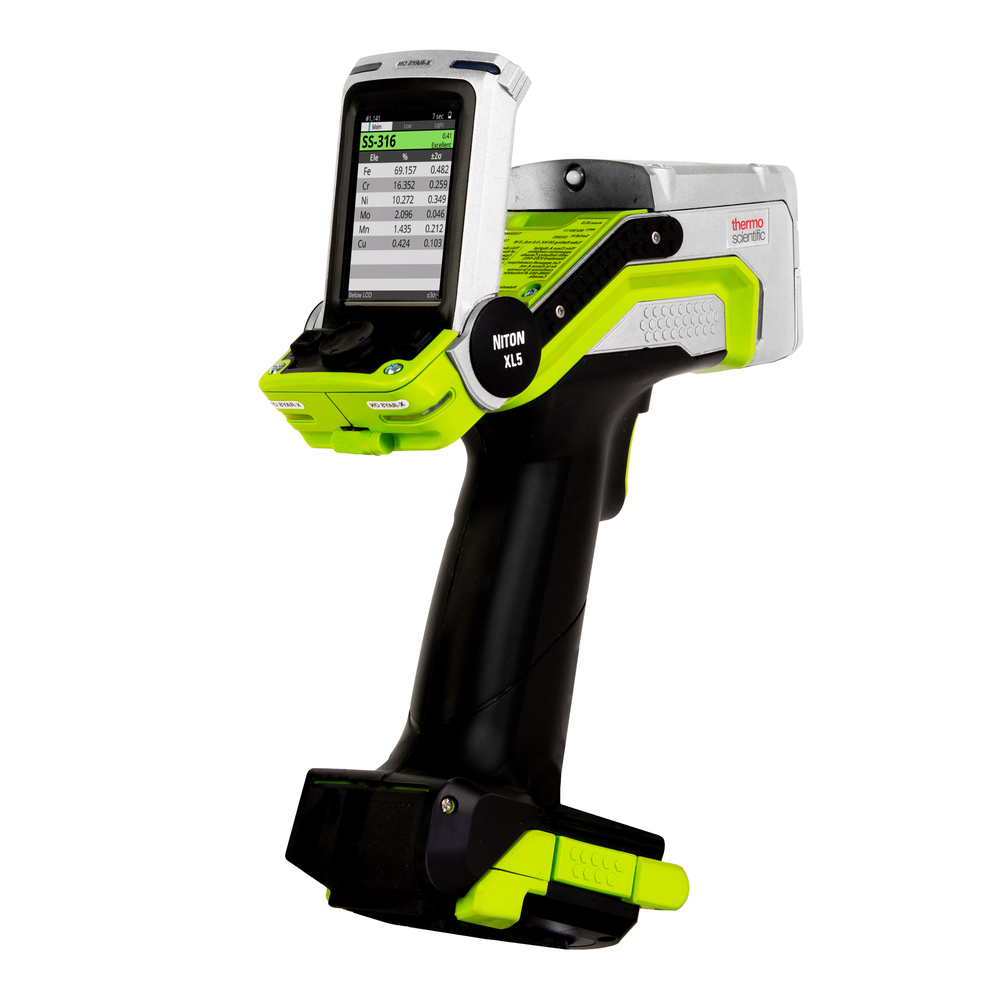
Compare that to our newest device, the Niton XL5 Plus, which is much smaller, lighter, faster, and more rugged. Everything about it is amazing and blindingly fast. You can analyze most alloys in one second and get an identification. You pull the trigger, and you can’t let it go fast enough before you’ve got an answer.
It used to take us 30 seconds to get results using the older versions. When you’re in a scrapyard and you have to sort 20,000 pounds of alloys in a day and you’re waiting only one second per piece compared to 30 seconds per piece, you’re 30 times more productive and ultimately make more money. Some of these metal scrapyards make a million dollars a year on each one of these new analyzers they buy for between $35,000 and $40,000.
We’re coming really close to what I could only imagine when I started in this business 40 years ago in terms of reducing the size and increasing the performance of the analyzers. From very large backpacks that weighed 20–30 pounds — and some that were 100–200 pounds that had to be taken around in carts — to fitting within the palm of your hand today with near lab quality results. Not only are they lightweight, they’re higher performance, they’re better value, and they improve the throughput dramatically.
We’ve literally transformed the way people work in the world.
TI: What’s your secret to ensuring reliable consistency across all the analyzers you and your team produce?
JP: One of the things that has helped us secure repeat sales from the same customers over the years is the fact that our calibrations are absolutely consistent across every analyzer we sell.
The secret to our consistency is a very sophisticated robotic device that we designed — we jokingly call it the “Death Star” internally. It’s a huge device with rotating tables that hold many different analyzers and all the different standards needed to calibrate them. It goes through a programmed routine that automatically measures each certified standard and gives every analyzer the exact same calibration. It actually goes through up to 100 calibration samples.
This is especially helpful for companies with multiple scrapyard locations, such as ELG. They’ve purchased about a hundred of our analyzers because they can compare the results all over the world and know that the results will be consistent no matter the model or age of the analyzer. Compare that to buying analyzers from a competitor, where the first one might read a certain way and have a certain accuracy, while the next one might be reading a slightly different way. ELG knows they’re getting the exact same calibration every time when they buy a handheld Niton XRF or LIBS analyzer from us. And, of course, it saves a massive amount of man-hours.
TI: How does Thermo Fisher Scientific advance science and technology?
JP: The most important trends are those combining technologies to further expand applications and capabilities. The Thermo Scientific portfolio of products covers a wide range of technologies, and are always looking at ways to combine technologies to create synergies for customers that transform the way they work.
One example of this synergy is the Thermo Scientific™ Gemini™ Handheld Analyzer, which is a combination of FTIR and Raman. The Gemini analyzer allows you to do two different types of molecular samples that could previously only be achieved by carrying two handheld analyzers. One of them is good for polar compounds. One is good for non-polar compounds. By putting them together, you essentially cover most compounds.
We are constantly talking with customers about their applications and challenges and will continue to bring enhancements and new products to the market to meet growing needs.