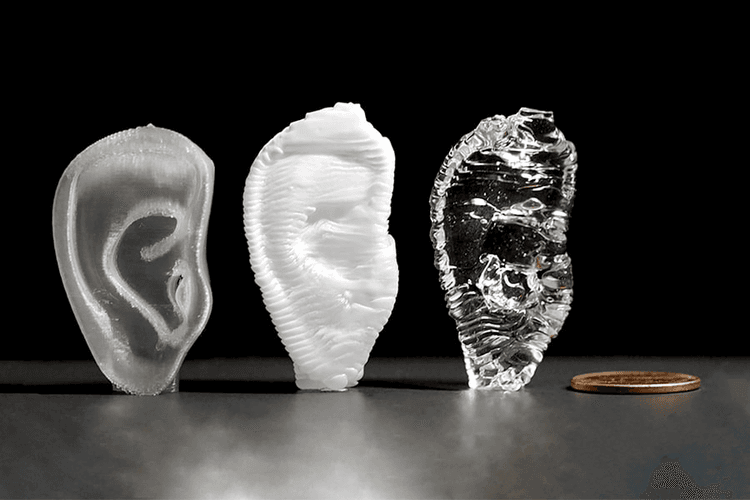
Researchers from Carnegie Mellon University's College of Engineering recently developed a new approach for soft material 3D printing. Their Expert-Guided Optimization (EGO) method combines user judgment with an optimization algorithm that searches combinations of parameters relevant to 3D printing to help ensure quality soft material product print-outs.
In their paper, Expert-guided optimization for 3D printing of soft and liquid materials, which was recently published in PLOS One, the researchers demonstrate the EGO method using liquid polydimethylsiloxane (PDMS) elastomer resin. This material is often used in wearable sensors and medical devices. The researchers used a printing method called freeform reversible embedding (FRE), in which soft materials are deposited within a gel support bath.
The optimization algorithm accounts for the variety of factors impacting the final product, including the speed of the 3D printer, the consistency of the gel bath and the concentrations of each material in the print, as well as several other important elements. This is unique compared to previous algorithms that could only focus on a few variables considered most important to the print.
These new algorithms will play key roles in not only improving the quality of the finished product, but in determining the applications of new materials that might entail more print parameters. According to the team, the EGO model allows for combining an expert's scientific judgment with the algorithms, which translates to reductions in the time and energy required to find combinations that yield optimal 3D prints for both new and experimental materials.
Image Credit: Carnegie Mellon University/https://www.cmu.edu/news/stories/archives/2018/june/experts-automation-optimize-3d-printing.html