Many heavy industries depend on some form of heat energy. In most cases, this energy can be provided by a heating mechanism known as a process heater.
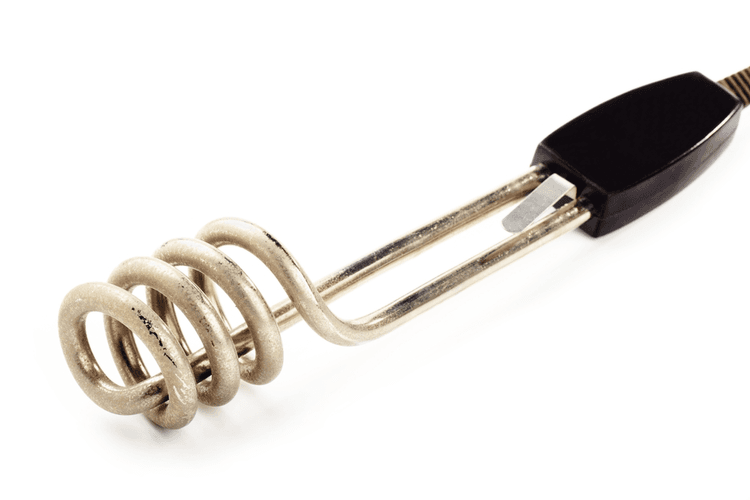
An electric process heater is an electrically powered piece of equipment that is used to heat fluids in chemical process streams. The main component of the heater is an electrical resistor, a heating element that is placed in direct contact with the process fluids. Based on the principle of Joule heating, the resistor converts electrical energy into heat energy as electricity is applied to it.
All electric process heaters rely on the same operating mechanism. Heating begins as fluid enters one end of a tank, where it directly interacts with the energized heating element. Heat energy is then transferred from the element to the fluid either via convection or direct heat transfer. The heated fluid then leaves the other end of the tank at a fixed, predetermined temperature.
Electric Process Heaters in Industrial Applications
There are various types of electric process heaters on the market today, each of which offers a distinct set of advantages. Most available models fall under two basic categories: immersion heaters or circulation heaters.
Immersion Heaters
Immersion heaters are submerged in a tank containing the process fluid, which is heated via natural convection. As the hotter fluid rises, it creates a flow that eventually homogenizes the fluid in the tank. Immersion heaters are ideal in environments with mostly static fluids such as large petrochemical tanks or water heater tanks that require a relatively fast and uniform heating time.
Circulation Heaters
Also known as in-line heaters, circulation heaters feature a heating element that is inserted into a pressure vessel containing the process fluid. During heating, the heat generated by the heating element is transferred directly to the target fluid in a process referred to as radiant (or direct) heat transfer.
In contrast to the static approach of immersion heaters, in circulation heaters, fluid flows into one end of the vessel and leaves the other end at a higher temperature at the same flow rate. These types of heaters are ideal for process fluids that require immediate heating while maintaining a steady rate of flow. Circulation heaters are well-known for their efficient heating times and simple installation.
Electric heaters can be found in numerous industries such as automotive manufacturing, petrochemicals, power generation, textiles, food and beverage, and water and waste management. They are typically used in these fields to transfer heat to a medium such as crude oil, fuel oil, potable water, steam, ammonia, nitrogen, and asphalt.
For example, electric heaters are a valuable asset in any application involving industrial asphalt. Because asphalt solidifies and does not flow at normal atmospheric temperatures, it needs to be consistently heated and properly stored to remain a viable and workable material. To that end, petrochemical companies rely on immersion and circulation heaters to reduce the viscosity of the bitumen so that it can be stored and transported.
Other common applications for industrial electric heaters include heating water to prevent freezing, heating diesel to prevent the buildup of waxy paraffin, circulating heated air in industrial ovens, and heating fuel gas to prevent condensation.
Electric process heaters are widely used in modern industry because of their precise control, relatively small footprint, heating efficiency, lack of harmful emissions, and minimal maintenance. Their versatility and flexible heating capabilities make them ideal for use in almost any application that requires heating.
Resources:
Image Credit:aperturesound/Shutterstock.com