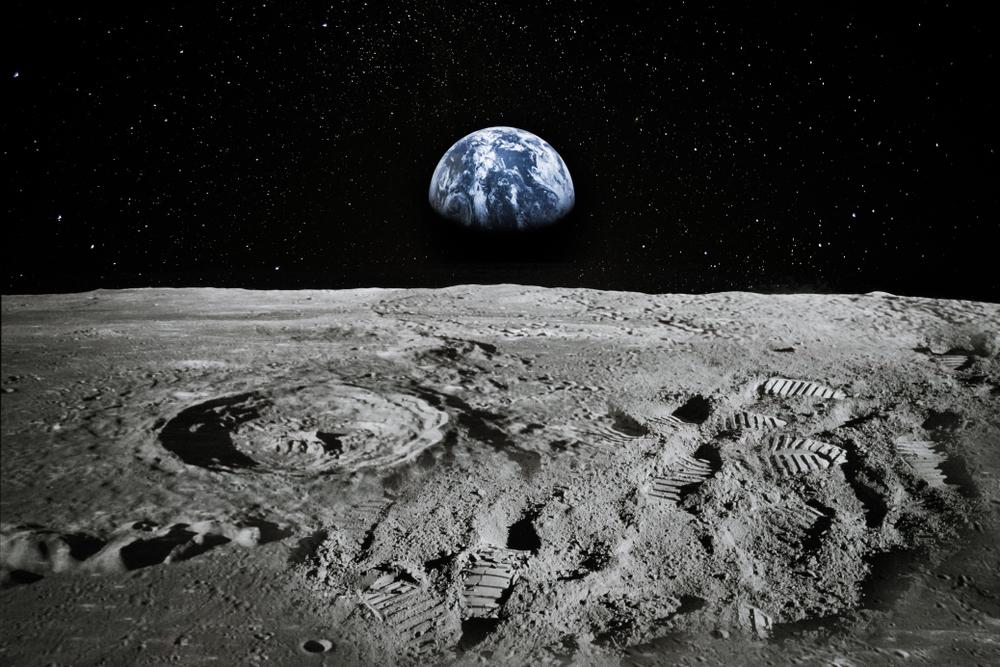
Privately funded startup Interlune announced that it raised $18 million in seed funding to develop and implement technology capable of extracting natural resources, including Helium-3, from the Moon.
The Seattle-based startup will also use the funds to finish the design of its inaugural robotic lander mission to verify resource concentrations at its chosen site for initial lunar operations.
Helium-3 Isn’t on Earth
According to Astrophysics Data System, Helium-3 is rare on Earth but abundant on the Moon. The light, stable isotope is created by fusion in the sun and can travel to the Moon via solar winds.
Earth’s magnetosphere, however, prevents natural accumulation of Helium-3, and any presence of the isotope on the planet is from tritium decay from nuclear weapons and reactors.
The Plan to Bring Helium-3 to Earth
Interlune plans to transport lunar Helium-3 back to Earth for government and commercial uses, including quantum computing, national security, fusion energy, and medical imaging.
Interlune added that it aims to eventually support an in-space economy by harvesting rare earth elements, industrial metals, and water. The startup claims its patent-pending technology uses the industry’s smallest and most energy-efficient machinery.
Financial Support for Interlune
Venture capital firm Seven Seven Six led the latest funding round with $15 million. Other investors included Gaingels, Aurelia Foundry Fund, Shasta Ventures, Liquid 2, and alumni from the University of Michigan.
The startup received a Small Business Innovation Research Phase I award from the National Science Foundation in October 2023 to develop technology for sizing and sorting lunar regolith.
Image Credit: Elena11 / Shutterstock.com