
This article was sponsored by Mid-Mountain Materials, Inc., a U.S. manufacturer of high-performance thermal protection materials for industrial, robotic, automotive, aerospace, emissions control, and specialty applications.
“The level of complexity of the inquiries we receive on a weekly basis is just stunning,” says Megan Hartford, sales manager at Mid-Mountain Materials, Inc., referring to how prospects come to Mid-Mountain expecting a high caliber of design and engineering expertise.
Based in Washington, Mid-Mountain designs and manufactures standard and custom thermal protection materials for a variety of heavy industries. Due to the vast range of industries they serve, there is no single common question prospects ask. However, Hartford says, “What is common is the request for some pretty challenging requirements. And it’s really rewarding to come up with some incredible solutions for them.”
All of these solutions tie into Mid-Mountain’s larger mission of environmental sustainability — both in their own manufacturing processes and their customers’ environmental footprint.
“Environmental responsibility is the main mission of our company,” says Amulya Das, director of business development at Mid-Mountain. “We also have an in-house safety team and work with third-party organizations to evaluate all new materials and ensure they’re safe for our employees and customers to use.”
Thomas Insights talked with Hartford and Das to learn more about their company’s vision, new product development process, and customers.
Get to Know Mid-Mountain Materials, Inc.
- Founded in 1976, Mid-Mountain is a family-owned manufacturing company that employs about 50 people.
- The company has a corporate office in Seattle, Washington, and a manufacturing facility in Arlington, Washington.
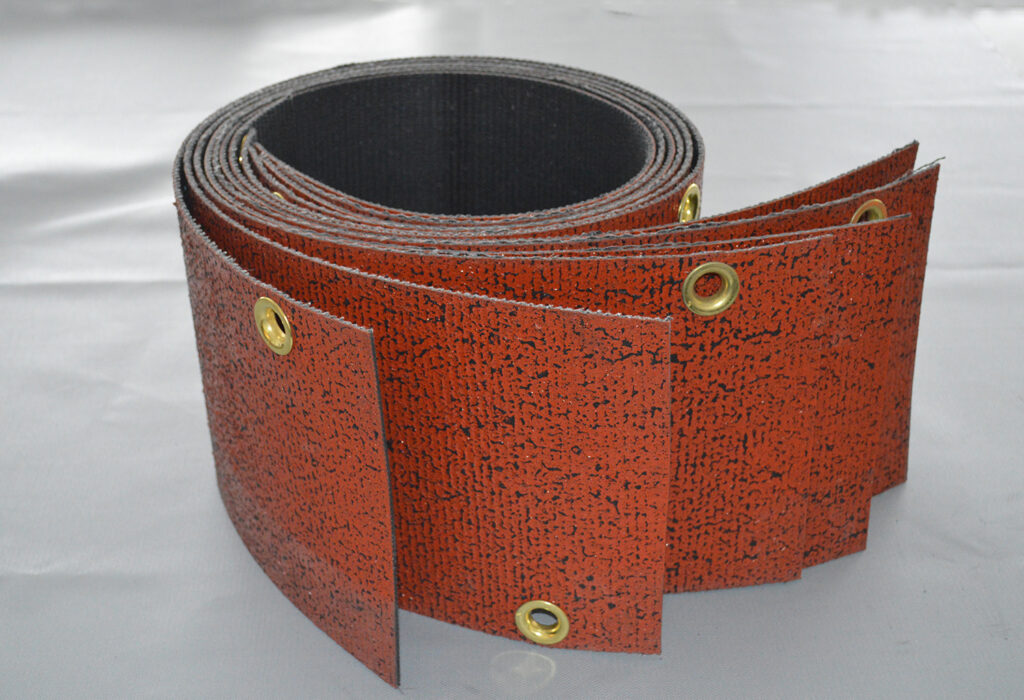
- Mid-Mountain’s main product offerings include high-temperature-resistant, non-combustible, flame-resistant, emission control, and abrasion-resistant textiles.
Thomas Insights (TI): Tell us about your company. How does being vertically integrated set you apart from your competitors?
Megan Hartford (MH): Mid-Mountain specializes in the design and manufacture of unique materials for various industries, such as automotive, aerospace, primary aluminum, and oil and gas. These heavy industries often have unique existing infrastructures that need very specialized products to make them run more efficiently, reduce emissions, and reduce energy consumption. We develop products for them that have specific weight, thickness, testing, and manufacturing requirements. Every product goes through our in-house testing process and can be certified at an independent lab by the customer.
Our company is vertically integrated, which allows our suite of standard products to have a second life. Our coated fabrics, textiles, and thermal insulation blankets go to our fabrication department, where different pieces are cut and sewn together in unique ways to solve specific problems for our customers. Our constant search for new materials, combined with the advanced materials we’ve developed thus far, is our competitive advantage.
Amulya Das (AD): In addition to being vertically integrated, we also follow lean manufacturing principles to manufacture with high efficiency. We are ISO 9001:2015 certified and implement Six Sigma techniques to continuously improve our processes. Through our research and development department, we create and source high-quality advanced materials from all around the world to produce new innovative products for our customers.
TI: Mid-Mountain creates a lot of new patented products. Walk us through your R&D and new product development process.
AD: We work closely with customers to ensure products are to spec, in terms of color and material certifications for smoke or flame resistance, strength, and physical testing. We make our own textiles, apply coatings, and fabricate components (seals, blankets, curtains, etc.) with them. Each part is made up of a specific yarn, woven style, and polymer coating, all fabricated to the customer’s design. We produce and send the prototype to the customer for fitting, testing, and approval. Then we start manufacturing.
Every step of the process happens under one roof in-house. This allows us to produce consistently high-quality products. With each new product we develop, we gain new business as well as new knowledge to inform the next project.
MH: We make sure to gather all there is to know about how the product will be used. This will dictate how the product is assembled, such as substrate type (coated or uncoated fabric), the stitch and yarn type best suited for the application, and any closures or accessories that are required, whether it’s a hook and loop velcro, a snap, or grommets.
TI: What is Mid-Mountain doing to address environmental sustainability concerns?
MH: One major trend in our industry and the industries we work with is environmental sustainability, in both doing business and manufacturing. At the beginning of this year, many companies began rolling out corporate initiatives highlighting environmental responsibility in the sourcing, packaging, and disposing of materials.
At Mid-Mountain, environmental responsibility has always been a key cornerstone of our business — it’s why the company exists. The company was born from a desire to create an alternative to asbestos back in 1976, and we’re happy to continue on that journey. We aim to decrease the carbon footprint of our own manufacturing as well as reduce emissions for our customers.
About three years ago, we eliminated all Teflon® and PFAS products from our offerings because of the environmental impact of producing them. This has given us the opportunity to develop a new urethane-based product that rivals the chemical and abrasion properties of Teflon®. It doesn’t quite match the temperature rating, but that’s something we’re continuing to work on in-house.
AD: We don’t use any solvents or any hazardous materials. We continuously consult the safety data sheets (SDS) of the materials we buy and use in our facility so that our employees and customers are safe. We also have an in-house safety team and work with third-party organizations to evaluate all new materials and ensure they’re safe for our employees and customers to use. We also work to make sure materials can be recycled with minimal effects on the environment.
TI: What are the most common questions or requests you get from prospects during the sales process?
MH: When customers reach out to us, it’s generally because they have a complex problem that requires a custom solution. The main questions are: 1) Can you do this?, 2) what materials would you suggest?, and 3) can you meet the specifications of my industry? Since we are vertically integrated and have tight control over every stage of the manufacturing process, it’s nice to be able to say we can customize a solution that addresses their specific problem. That control also allows us to provide a higher quality product with a shorter turnaround time, given the raw materials are in-house.
TI: Can you share a specific case study that illustrates the challenging, innovative projects your company has been a part of?
MH: We had an aerospace customer that needed an engine firewall for a unique aircraft they were developing. Nothing had ever been created for the type of design and configuration they needed, so we worked very closely with them to create a completely new product. It was a true collaboration — they visited our facility and we visited theirs in an effort to develop a product that was to the thickness, weight, functionality, and other specifications of the project. The process involved a lot of sampling and feedback, and in the end, we delivered the final product to the customer’s satisfaction.
We have a long history of success stories working very closely with customers in this way.
AD: We work with customers in a wide variety of fields, including Mars exploration researchers, major aerospace manufacturers, machine manufacturers, primary aluminum smelters, and the largest railway grinding companies in the world. We provide them with heat-resistant fabrics and insulation blankets with specific requirements for engines and railways, which generate high levels of power and heat. Our blankets protect these machines from long-term wear, fires, and more, and they are used around the globe.
Learn more about Mid-Mountain Materials’ fabric, textile, and refractory products.