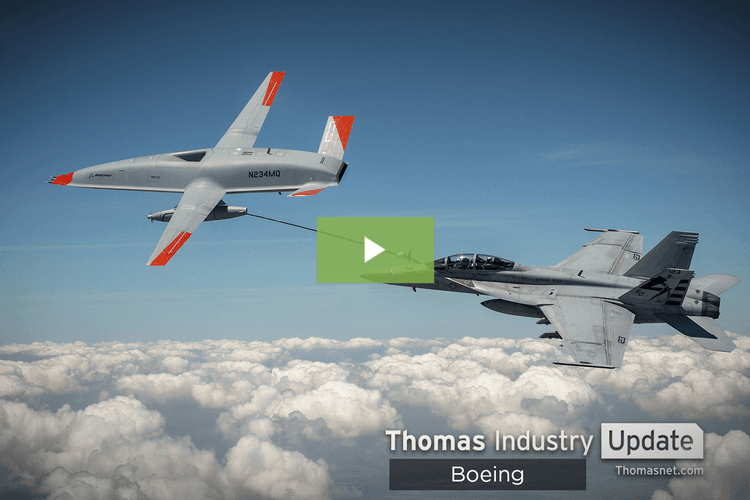
On June 4, 2020, the U.S. Navy and Boeing made history. During an air-to-air refueling test flight out of MidAmerica Airport in Mascoutah, Illinois, the unmanned MQ-25 T1 test craft successfully refueled another aircraft.
During the demonstration, the Boeing-owned aircraft extended a hose and drogue (or basket that resembles a shuttlecock) from its aerial refueling store (ARS) and refueled a F/A-18 Super Hornet. Aerial refueling is the MQ-25 Stingray drone’s primary mission.
The MQ-25 was piloted from the ground. At first, the F/A-18 test pilot flew in close formation behind the test craft to ensure both remained stable before refueling. To make the maneuver work, the F/A-18’s refueling probe needed to be within 20 feet of the MQ-25.
Once everything looked good, the drone’s drogue extended, and the F/A-18 pilot moved in to perform a dry connect with the aircraft. After the dry connect was a success, the F/A-18 once again connected with the drone and received 300 pounds of fuel while flying at operationally relevant speeds 10,000 feet above land.
According to DefenseNews, the craft performed a smaller refueling of just 25 pounds of fuel at 16,000 feet.
The test flight lasted about four and a half hours. It was a long time coming after 25 T1 flights that tested aerodynamics across the flight envelope, as well as several simulations using digital models. After a few more test flights, the MQ-25 will be shipped to Norfolk, Virginia, for deck handling trials aboard a U.S. Navy carrier later this year.
If everything goes as planned, Boeing will deliver seven test aircraft under a 2018 contract award. The MQ-25 will assume the tanking role currently performed by F/A-18s, allowing for better use of the combat strike fighters and helping extend the range of the carrier air wing.
The Navy has said that, at times, refueling/tanking missions account for one-third of Super Hornet flight hours.
The T1 test vehicle has the same outer mold line and engine as the MQ-25, but doesn’t have carrier landing gear and isn’t hardened for carrier landings or saltwater environment operations.