Wouldn’t it be fantastic if you could download a full-length HD movie in 10 seconds? What if this were possible even if you’re sitting in a sports stadium surrounded by thousands of people doing the exact same thing?
Thinking a little bigger, imagine a world where your doctor could perform open-heart surgery on you from a different room. Or you could take a nap in an autonomous vehicle that could sense and react to objects around it. Until recently, existing network technology has placed limitations on what we can achieve.
But 5G is coming, and it’s going to change everything.
5G is the fifth generation of mobile network technology that service providers around the world are deploying for the latest devices. Through an immensely increased bandwidth, 5G could be up to 1,000 times faster than existing 4G LTE technologies. 5G is also considerably more reliable, has a wider reach, and will all but eliminate latency. These properties could revolutionize the way technology is used today; improving business and manufacturing efficiency, further enabling the Internet of Things (IoT) devices, and transforming opportunities in remote areas.
A few service providers are currently rolling out (limited) 5G service in the U.S.
- Verizon launched its 5G network in April 2019 in Chicago with plans to expand to other states by the end of the year. Two handsets are currently available.
- AT&T’s 5G network is currently available in 19 cities but the company has yet to release a 5G cell phone.
- T-Mobile launched its 5G network in June 2019 in a few select cities with plans to launch nationwide in 2020 and develop a 5G broadband service.
Frustratingly for consumers, existing 4G devices cannot leverage 5G technology via tower upgrades or software updates because they use different hardware. For tech enthusiasts, it begs the question: is it worth spending the money on a 5G cellphone upgrade any time soon? At the moment, probably not.
Venturebeat sums up the current situation with its headline: “The U.S. has 4 live 5G networks, but good luck actually using them.” Cellphone users will benefit once the technology has been adopted on a wider scale, patchiness is addressed, and new services are developed exclusively for the devices, such as VR gaming.
Cellphone usage aside, 5G technology will help drive business improvements, manufacturing efficiency, and enhance the way we use other devices.
Internet of Things
With the broad adoption of 5G, the IoT will be used in ways that were previously unattainable. It’s predicted that by 2025 there will be over 75 billion IoT devices, which will depend on the increased capabilities of 5G to accommodate such extensive connectivity. While 4G can support up to 6,000 devices on a single cell, a 5G network can handle up to a million. Latency, which is the lag time between instructing a device to perform a task and the execution of that task, is between 40-50 milliseconds on 4G and is expected to be ten times less on 5G.
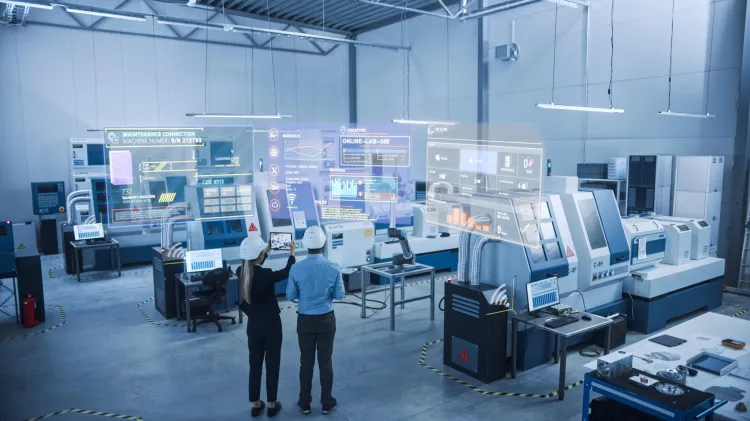
Lower latency will help to accelerate the development of autonomous vehicles through V2X (Vehicle to Everything) technology. The same goes for remote surgery, machinery control, and industrial automation.
Smart Cities
5G will also support the vast amounts of data generated by future smart cities. Intel and NTT Docomo announced their plans for a 5G technology demonstration at the 2020 Olympic Games in Tokyo. They plan to use the technology for 360-degree live streaming, HD camera-fitted drones, and sophisticated facial recognition software to mitigate risk and manage stadium access. While existing cities are being retrofitted with 5G technology, futuristic towns are being designed to take advantage of the hyper-connectivity 5G offers.
5G in Rural America
In addition to enriching our smart cities, 5G also has a range of applications in rural areas. Consider the fact that the number of adults educated to a degree level in the US is 14% less in rural areas; 5G could bring college-level education to these regions. 5G also has the potential to enable smart farmingor agricultural operations enriched with sensor technology.
Collaboration Efficiency
Employees who collaborate with their teams remotely need access to their company’s applications and good quality video calling. The same goes for off-site job locations such as construction sites or film sets. 5G will offer users a fast, dependable service by replacing traditional wireline connections and providing enhanced mobile broadband.
While 2019 has not turned out to be the “Year of 5G” as promised by some commentators, 5G rollout is happening in several launch cities. Lifewire has provided a definitive list of when and where you can get 5G service from nine major telecommunications companies.