1799 was quite a year. While Napoleon Bonaparte stormed his way across Europe, slavery was abolished in New York state, the Rosetta Stone was unearthed in Egypt, and George Washington died in Virginia.
Meanwhile, in a 400-year old university just south of Milan, Italy, Alessandro Volta developed the world’s first electrical battery known as the Voltaic Cell. The first person to realize that electricity could be chemically generated, Volta paved the way for the future study of electromagnetism and was honored by having the unit of electric potential, the volt, named after him.
More than 220 years later, battery technology has evolved considerably; although you may struggle to convince some disgruntled smartphone users of this fact.
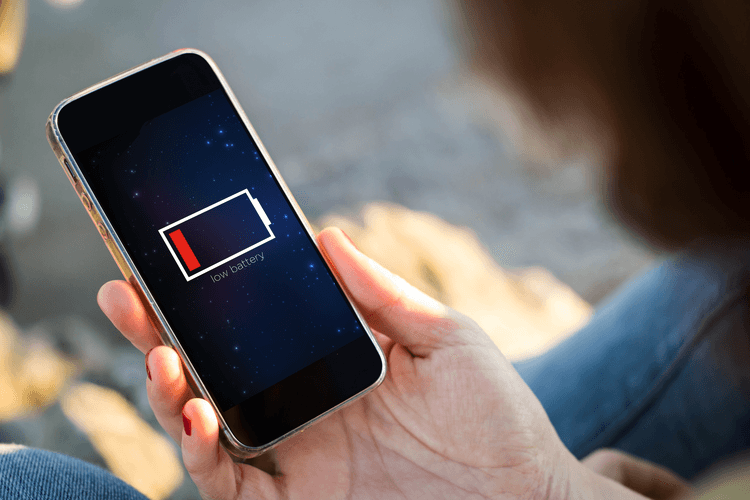
If you’ve ever spent the day using your phone’s personal hotspot, streaming media, listening to music or messaging friends, you’ll know exactly what it feels like to see the battery drain faster than you can say “where’s my charger?”
Battery developments have plateaued in recent years and have not been able to keep up effectively with major advances in smart technology — including smart wearables, smartphones, and smart home devices — or the increased demand for large, sustainable products, such as electric cars or power-grid backups. Lithium-ion (Li-ion) batteries are the most commonly used batteries today, but experts warn that these batteries have already reached 90% of their maximum battery life potential. When you add to this the fact that they contain highly flammable chemicals, it’s clear there is room for improvement.
Here’s the good news: we are currently standing on the cusp of a new era of battery technology. Several companies are working towards what Quartz describes as “the next big battery breakthrough,” delivering a battery that is powerful, long-lasting, sustainable, and safe.
Tesla’s One-million-mile Battery
On December 26, 2019, Tesla Motors filed a patent (“Dioxazolones and Nitrile Sulfites As Electrolyte Additives for Lithium-Ion Batteries”) for a new Li-Ion battery technology which promises to radically outperform existing Li-ion batteries in terms of range and lifetime.
To date, Tesla’s best cars have a lifespan of 300,000 to 500,000 miles, but it’s assumed this new patent is directly connected to Tesla CEO Elon Musk’s promise to deliver a “one million-mile battery pack” in 2020. If this is the case, the battery will be able to hold 95% of its life after 1,000 discharge cycles (one cycle equates to using 100% of a battery’s charge). In contrast, a standard Li-ion battery in the same circumstances would already be in the last quarter of its life.
If development is successful, the battery will aid in Tesla’s plans for developing electric robotaxis and long-haul trucks.
IBM Research’s Seawater Battery
In December 2019, IBM Research announced the discovery of new battery chemistry that uses minerals extracted from seawater. If successful, the battery could negate the need to use heavy metals such as nickel and cobalt. It would furthermore outperform Li-ion batteries in terms of power and energy densities. It would also have low flammability rates, charge faster, be cheaper to manufacture, and use less invasive mining techniques than the methods currently used.
These properties would make the battery suitable for use in electric vehicles. IBM Research is currently working with Mercedes-Benz to commercialize the technology.
U.S. Army’s Water-based Battery
The U.S. Army Combat Capabilities Development Command’s (CCDC) Army Research Laboratory has partnered with the University of Maryland and Johns Hopkins Applied Physics Laboratory on the development of a water-based, fireproof battery. This battery uses a water solvent as the electrolyte and a heat-resistant lithium salt, which means the battery can be stored at any temperature. Additionally, it can withstand significant damage without exploding and will work in extreme conditions where traditional batteries would not. The Army hopes to further develop the technology for use in electric military vehicles, with the potential to eventually expand to commercial vehicles.
Amionx’s Battery That Never Explodes
Li-Ion batteries very rarely explode — they have a failure rate of less than one in a million— but when they do it tends to create quite a stir: remember Samsung’s recall of 2.5 million units of its exploding Galaxy Note 7 in 2016. Therefore, it’s unsurprising there’s a demand for a battery that never explodes.
Start-up Amionx has discovered how to make Li-ion batteries that will withstand crushing, shooting, or stabbing. The company has developed a secret, fuse-like system that creates a gap between a battery’s electrode and current collector if it starts to overheat, forcing the electricity to take a slower route through the battery and preventing explosions. These batteries will require less protection, which means less weight and potentially more range for electric vehicles.
Amionx recently announced a major partnership with power-tool giants Stanley Black & Decker, although both companies have remained tight-lipped on the precise details of the deal.
Additional Battery Innovations
Other interesting battery technology developments include:
- Prieto‘s copper foam substrate batteries
- StoreDot‘s 30-second smartphone charger
- Bristol Robotic Laboratory‘s urine-powered batteries, funded by The Bill Gates Foundation