Last year, the World Economic Forum (WEF) and Accenture released an enlightening report, which explores opportunities in the industrial metaverse. In its essence, Navigating the Industrial Metaverse: A Blueprint for Future Innovations underscores the sector’s imperative to gain a shared and comprehensive understanding of the metaverse, urging its leaders to unlock its full value or risk losing competitiveness.
The industrial metaverse is projected to become a $100 billion market by 2030. Here are six ways industrial companies can leverage everything it has to offer.
1. Talent and Learning
The metaverse has the power to transform talent management in the industrial sector, from recruiting, onboarding, and training new talent, to facilitating truly collaborative work environments.
Digital twins, for example, can provide new and existing employees with access to nuanced and real-world learning in complex or high-risk areas. This enables employers to safely and cost-effectively upskill their workforce in a customized, immersive, and engaging way.
This type of learning is proven to improve knowledge retention, accelerate onboarding time, and improve attrition. In addition, it can help to prepare employees for stressful or unfamiliar roles by boosting their capabilities, confidence, and resilience.
Metaverse technologies, including artificial intelligence (AI), cloud computing, and edge computing, also foster what WEF’s report describes as “boundless collaboration.” Shared virtual spaces for manufacturing projects promise to improve efficiency and productivity, break down organizational silos, reduce employee travel time, and drive innovation.
2. Transparency, Traceability, and Efficiency in the Supply Chain
Transparency and traceability in the supply chain promote ethical and sustainable sourcing, encourage collaborative supplier relationships, and bolster brand reputation.
In the metaverse, tools such as immersive simulated supply chain networks and virtual supplier audits are helping global companies to effectively monitor and audit their complex and sprawling supply chains.
Blockchain technology is proving especially critical in driving supply chain transparency. By storing supply chain data on a distributed ledger, buyers and suppliers are securely granted access to identical information in real time, which fosters more trusting relationships. This tamper-proof source of truth can also verify when companies ethically source their products and components.
Growing transparency and traceability in the metaverse can also support risk mitigation activities and improve operational efficiencies. For example, companies can accurately simulate high-risk supply chain scenarios to predict production bottlenecks, logistics and shipping challenges, or component and product shortages. With 3D imaging, it’s possible to acquire granular information, including how suppliers develop, assemble, and deliver their products. This provides increased visibility into lead times, inventory levels, and shipping costs.
Finally, industrial companies are leveraging AI in the metaverse to automate some supplier relationship management (SRM) tasks, including supplier selection, contract negotiation, and onboarding. This ensures SRM activities are in line with a company’s strategic objectives and values.
3. Operational Efficiency
According to Nokia’s 2024 Metaverse at Work report, 80% of those with experience implementing a metaverse use case believe that what they have tested will have a significant or transformative impact on the way they do business.
Indeed, in the industrial metaverse, companies can improve efficiency at every stage of the manufacturing process, from factory floor planning and early stage product development to production logistics, equipment maintenance, and design iteration.
WEF’s research, for example, shows that the combination of virtual simulations and in-depth analytics can detect 78% of planning mistakes, reducing operational costs, driving efficiency, and improving product quality. In a virtual environment, teams can seamlessly adapt and refine their processes and designs, long before production begins and significant funds are committed.
Such technologies also support rapid design, prototyping, and product development, with cross-functional teams collaborating to yield high-quality and cost-effective outcomes.
4. Predictive Maintenance
Predictive maintenance techniques are designed to predict when manufacturing equipment failures might occur to enable timely repairs. Effective strategies can minimize maintenance costs, prevent unplanned production outages, extend the lifespan of equipment and machinery, and improve operational efficiencies.
In the industrial metaverse, predictive maintenance becomes especially sophisticated. For example, IoT devices can be deployed across all processes and systems to collect real-time data and insights, which inform the design of digital twins. With the ability to monitor an individual machine and understand the operations that will be impacted due to its failure, manufacturers can make informed and optimal equipment maintenance decisions. This results in 25% to 30% reduced maintenance costs, 75% fewer mechanical breakdowns, and 35% to 45% less overall downtime.
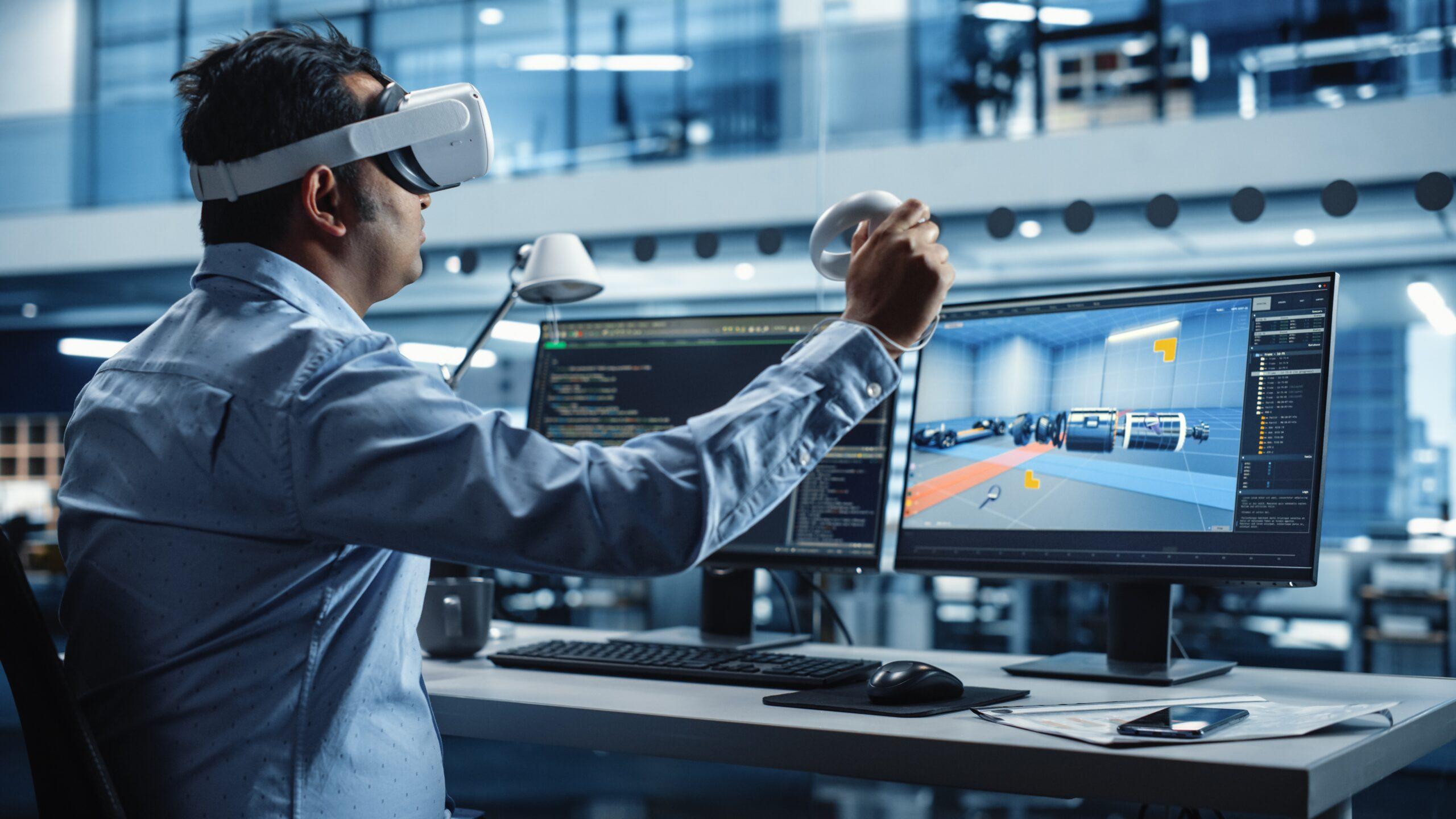
Once anomalies or faults have been identified, XR technology can augment a technician’s view with mechanical guidance and safety warnings.
5. Customer Experience
Thanks to industrial metaverse technologies, including XR, digital twins, and Web3, companies are redefining customer engagement before, after, and during a purchase.
The Harvard Business Review outlines three ways that the metaverse will transform the customer experience:
1. Creating new ways for customers to discover products
Through immersive shopping experiences, customers gain a more comprehensive understanding of the products and services on offer, which results in more informed and, therefore, more satisfactory purchase decisions.
2. Meaningfully fusing physical and virtual product experiences
In a virtual showroom, for example, customers and companies collaborate to achieve new levels of customization and configuration.
3. Connecting people and brands through interactive AI-powered avatars
AI-powered avatars can be trained on the core data of an industrial business to provide end-to-end customer engagement, conduct negotiations, and provide training.
In addition, digital twins can be used to simulate sales models. This helps companies to determine optimal pricing, create effective marketing strategies, and optimize delivery routes, all of which serve to improve customer service.
WEF reports that metaverse technologies are contributing to a 240% increase in brand loyalty and a 60% increase in conversion rates, which reduces churn and boosts revenue.
6. Sustainability
The industrial metaverse is driving sustainability in several ways.
First, thanks to technologies such as digital twins and XR, companies can experiment with a range of processes, materials, and components before a project is commissioned. This results in a much more efficient use of materials and a reduction in physical waste. The same tools can be applied to simulate energy infrastructure and usage to reduce waste.
Second, the metaverse supports on-demand and customized manufacturing models, which enables companies to manage inventory more efficiently. According to Boston Consulting Group, retailers who streamline their operations and improve inventory management could improve their profit margins by $500 to $700 million.
Finally, blockchain technology can track green energy sources from origin to consumption, helping companies to accurately track and enhance their sustainability progress.
Image Source: Shutterstock / Gorodenkoff