Hurricanes. Flash floods. Droughts. Wildfires. Blizzards. Ice storms. Heat waves. In the past few years, the United States has experienced a gamut of weather conditions.
Understandably, the increased frequency of freak weather events is triggering a heightened demand for both heating and cooling systems. But, conversely, the natural gas-powered appliances used by so many American households are contributing to the extreme weather conditions.
Can all-electric buildings help in the fight against climate change by reducing dependence on non-renewable energies, improving energy efficiency, and decarbonizing our buildings?
What Is Building Electrification?
Building electrification, sometimes referred to as beneficial electrification, describes the shift from burning fossil fuels to using electricity for heating, cooling, and cooking.
Today, buildings are one of the biggest contributors to climate change in the United States, responsible for 27% of energy-related carbon emissions. If current practices continue, it will be all but impossible to meet the Paris Agreement’s goal of limiting global warming to 1.5°C.
The alternative is all-electric buildings powered by clean electricity. Fortunately, thanks to recent technological advances, most appliances powered by fossil fuels have electric alternatives that are efficient and cost-effective, as well as being much better for the environment.
But there’s no time to lose. Appliances and buildings that burn fossil fuels have long shelf lives, and so each new installation means a rise in greenhouse gas emissions (GHG) for decades to come. In 2021, Energy Innovation modeling showed that all new buildings and equipment must be electrified by 2025 to fall in line with 2050 net-zero goals and avoid a climate crisis.
7 Benefits of Building Electrification
The benefits of all-electric buildings are numerous. Let’s explore seven benefits.
1. Improves Air Quality
As a direct result of burning fossil fuels, indoor air quality is often inferior to the air outdoors.
Homes equipped with gas stoves may have nitrogen dioxide concentrations between 50% and 400% higher than homes equipped with electric stoves. Children residing in these environments are up to 42% more likely to experience asthma symptoms than those residing in homes with electric stoves.
All in all, commercial and residential buildings that use fossil fuels are responsible for an estimated 18,300 early deaths and $205 billion in health impacts.
2. Lowers Energy Bills
Thanks to technology advancements driving increased production, renewable energies — such as wind, solar, and nuclear power — are increasingly accessible and affordable. This is reducing costs for the end-user.
Research by Rewiring America found that 85% of households would save money on their monthly energy bills if they used modern electric equipment.
3. Increases Energy Efficiency
In general, electrified appliances, including heat pump water heaters and induction cooktops, use energy more efficiently than their fossil fuel-powered counterparts.
An analysis by RMI, for example, found that heat pumps are between two and four times more energy efficient than gas furnaces.
4. Reduces Greenhouse Gas Emissions
About half of all U.S. households have gas appliances, which are responsible for emitting a range of GHGs, including methane, carbon dioxide, and nitrogen oxide.
Gas stoves, for example, pump 2.6 million tons of methane into the atmosphere every year, which is the equivalent of 500,000 cars. Concerningly, these appliances produce methane even when they are not in use.
The International Energy Agency (IEA) estimates that electrification could reduce building emissions by 45%.
5. Creates Jobs
The development and retrofitting of all buildings in the United States is no small task. Indeed, it’s projected that building electrification could create 104,000 well-paying jobs in California alone.
6. Benefits Low-Income Families
Lack of energy efficiency is contributing to rising utility costs that are most punishing to lower-income houses. Last November, it was reported that one in six families in the United States were behind on their utility bills.
Low-income households, frontline communities, and African American and Latino households are also disproportionately impacted by air pollution. Building electrification will improve living conditions for these communities.
7. The Only Viable Alternative to Fossil Fuels
Renewable natural gas (RNG), hydrogen, and synthetic methane are possible solutions to decarbonizing buildings. However, these technologies are high-cost and much more difficult to scale than electric appliances.
Technological Advancements and Opportunities in Building Electrification
Significant technological advancements and opportunities in building electrification include:
1. A Rise in Renewable Energy Sources
A rapid rise in renewable energy capacity is expected to accommodate the transition to electrified buildings and preclude a rise in GHG emissions.
The International Energy Agency (IEA) projects that renewables, including solar, wind, and nuclear power, will meet 35% of global power generation by 2025, which equates to 90% of the increase in global demand.
2. Energy-Efficient Building Materials
Buildings developed with energy-efficient materials require less energy to heat, cool, and run appliances and electronics.
Low-E glass windows, for example, keep buildings cool and block infrared radiation during the summer, and trap heat during the winter. Heat flow can be reduced by as much as 50%.
Vacuum Insulation Panels (VIP), which will soon be available for residential use, provide seven times the traditional insulation. These highly efficient insulators consist of gas-tight enclosures surrounding a rigid core. Spray foam, plant-based polyurethane foam, and structural insulated panels are also effective insulators, with low-to-zero carbon emissions.
Cool roofs, which include coated roofs, foam roofs, and built-up roofing systems, are designed to reflect more sunlight than conventional roofs to keep buildings cool. Historically, cool roofs have been white or light-colored, but newer products offer solar reflectivity even in darker hues.
Steel buildings have high energy efficiency, contribute no emissions, and contain none of the toxic chemicals that are often used to treat the wood products used in construction. Just six recycled cars are enough to frame an entire house, and it’s estimated that steel recycling saves enough energy to power 18 million homes for one year.
3. Smart Buildings
The global smart building market is estimated to reach $201.2 billion by 2031. Smart buildings use advanced and integrated building technology systems, such as smart controls, sensors, and analytics to automate the management of a building’s core systems.
This might include HVAC systems to optimize air conditioning, smart lighting that detects occupancy, and smart thermostats that automatically adjust heating and cooling temperature settings.
Systems like these optimize energy consumption, reduce operational costs, and enable predictive maintenance. It’s estimated that the use of smart building solutions could reduce total global energy consumption by 3-5%.
In addition, building management systems and sensor technologies will support the flow of information between buildings and the electric grid. These are known as grid-interactive efficient buildings.
4. Electric Vehicles and Charging Infrastructure
Advances in smart and flexible electric vehicle (EV) charging technology can leverage unused power from car batteries to provide an additional electricity supply to people’s homes and the grid during times of peak demand.
KB Home, for example, is building homes in Menifee, California, that are equipped with solar and energy storage. It will also test bidirectional EV chargers that enable EVs to supply power to homes during an outage.
5. Advances in Heat Pumps
Natural gas-powered space and water heating systems create more than two-thirds of total GHG emissions from businesses and homes. Electric heat pumps, which move heat from one place to another, are up to four times more efficient, saving energy use and cost.
Though first invented in the 1850s, the popularity of heat pumps has boomed in recent years, thanks to improved efficiency, better resilience to cold weather, and cost reductions. In Norway, around 60% of buildings are heated with heat pumps.
Alongside lower operational costs, heat pumps typically increase the market value of a home by between 4.3% and 7.1%.
5 Building Electrification Supply Chain and Logistics Challenges
Olya Humeniuk / Shutterstock.com
There are a number of key supply chain and logistics challenges associated with electrifying buildings. Let’s explore five of them.
1. Lack of Skilled Labor
Skilled worker shortages could derail the plan to electrify everything in the next couple of decades.
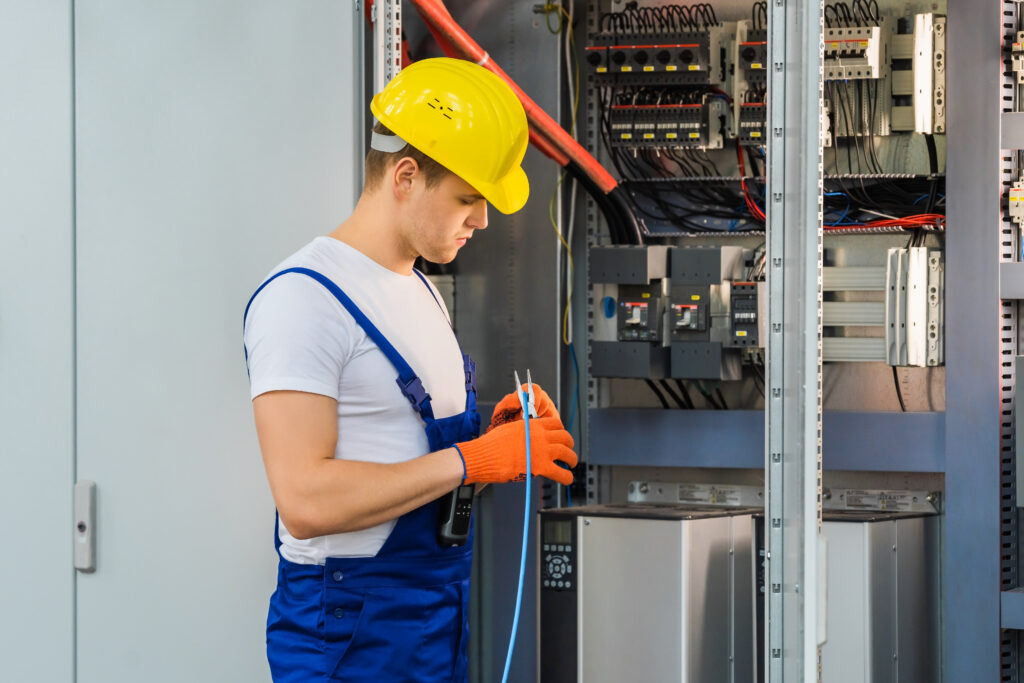
At the moment, most houses are not wired to handle an increased electricity load from EV chargers, solar panels, and heat pump water heaters. As many as 48 million single-family homes in the United States will need upgrades in order to make the switch from fossil fuels to being fully electric for cooking, heating, and more.
Skilled electrical workers will be required in their thousands to rewire homes, make grid modifications, and install new electrical capacity. But these workers are in short supply.
2. Supply Chain Disruptions
Unprecedented supply chain disruptions have plagued every sector in recent years, which has compelled many U.S. organizations to reshore or nearshore their operations.
Unfortunately for the energy sector, this option may not be viable since renewable energy production cannot meet skyrocketing demand. The IEA projects that more than 70% of global electricity will come from China, Southeast Asia, and India by 2025.
3. Permitting and Regulatory Challenges
Securing a permit to electrify both new and existing buildings is dependent on a few factors, including location, the extent of electrical work required, and the regulations and codes in place in that jurisdiction. For more complex work, the process might involve multiple permits and inspections.
4. High Upfront Costs
A typical air-source heat pump costs between $3,500 and $7,500 to install and induction stoves cost around $1,000. While the long-term cost benefits of building electrification are clear-cut, not all households can afford these upfront costs.
Further, electricity prices are significantly higher in certain regions. As an example, customers in Hawaii pay an average of 34.3 cents/kilowatt-hour, which is more than three times the average price in Washington.
5. Grid Capacity
The electrification of everything, including cars, trucks, buildings, and manufacturing facilities will put enormous strain on the grid. If major upgrades are not made, the United States may face increased power outages.
Global Trends and the Future of Building Electrification
The latest polls reveal that Americans strongly support the transition to clean sources of energy, believing that reduced dependence on natural gas as a primary heating fuel will benefit their communities. With this in mind, a pathway to all-electric buildings could be a rise in government incentives, funding, and payment schemes. Several initiatives of this kind are already underway.
The Build Back Better Act, for example, will invest $18 billion in home efficiency and electric appliance rebates. This includes rebates of up to $10,000 for electric heating — and other appliances — in single-family homes and multi-family buildings, which will offset the upfront costs associated with heat pumps, dryers, and cooktops.
Earlier this year, The U.S. Department of Energy (DOE) released a Request for Information (RFI) seeking input on nearly $9 billion for the Home Energy Rebate Program. Funded by the Biden Administration’s Inflation Reduction Act, this funding will help Americans cut energy costs in their homes through energy efficiency and electrification of home appliances and equipment.
Certain states are way ahead of the curve. In 2019, Berkeley, California, introduced a ban on natural gas hookups in new construction. It will also become the first state to prohibit the sale of new gas furnaces and water heaters, starting in 2030. It’s expected that California’s actions will spur other states to step up their building electrification efforts.
Today, almost 60% of new homes in the United States are built all-electric. Though a few challenges remain, it’s evident that building electrification is a vital step in the fight against climate change.
Get More Electrification Insights
- Electrification of Everything: Supply Chain Challenges, Opportunities, and Future Outlook
- Electrification of Heating: Advantages, Challenges, and Logistics Considerations
- Factors Impacting the Electrification of the U.S. Trucking Fleet